
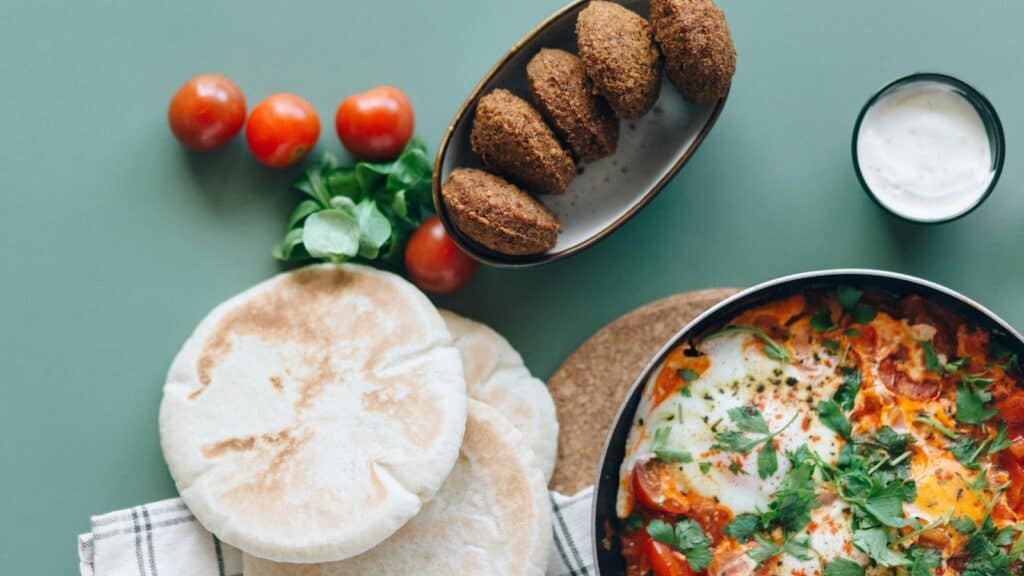
International Falafel Day, observed every June 12, highlights the enduring global appeal of the deep-fried chickpea fritter beloved far beyond its Middle Eastern roots. Once a humble street snack, it appears today on menus from small cafes to mainstream supermarket freezers, celebrated by vegetarians, vegans and food adventurers alike for its flavor, versatility and plant-based profile.
This post may contain affiliate link(s). As an Amazon Associate, I earn from qualifying purchases. See Disclosures.
Falafel’s continued popularity indicates a larger shift in American eating habits. Nearly 3 in 10 adults report reduced meat consumption in 2025, according to the Times of India. Restaurants in the United States are also rapidly adding Mediterranean and plant-centric dishes to their menus.
This shift is also reflected in retail behavior, with the plant-based food market rising 12% year over year. Meanwhile, major food companies expand into meatless products as demand grows among U.S. consumers.
Falafel fits modern eating patterns perfectly
For many diners, the appeal of falafel is nostalgic. It evokes memories of street markets, family kitchens and travel through its aroma, pita wrap and eat-by-hand ritual. Foodies praise its crispy texture, bold spices, seasonings and its versatility in everything from wraps to grain bowls, making it both a comfort staple and a canvas for creative, modern cuisine.
Last year, a study found that many Americans preferred falafel-based options over some plant-based burgers, a sign that this spiced chickpea fritter has secured a place in U.S. menus and in home kitchens as plant-forward eating grows. In a survey of more than 2,000 U.S. consumers, falafel burgers were chosen more often than realistic meat-free alternatives, which underscores falafel’s broad appeal beyond niche vegetarian circles.
According to U.S. News & World Report’s 2025 Best Diets rankings as reported by KSL News, the Mediterranean diet, which is rich in legumes, whole grains and vegetables, once again topped the list of healthiest diets, with nutrition experts highlighting its emphasis on plant proteins such as chickpeas, lentils and greens.
This combination of familiarity, flavor and flexibility is exactly what drives continued interest in foods like falafel. Rather than relying on imitation meat formats, falafel fits naturally into established eating patterns such as Mediterranean-style diets, classic grain bowls and globally inspired fast-casual meals, making it appealing to both flexitarian and plant-forward consumers.
Social media and pop culture boost
Online, falafel continues to trend. Social platforms have helped younger generations discover regional food traditions and then recreate them in new, home-kitchen-friendly ways.
On TikTok, hashtags like #falafelrecipe and #falafelbowl have been used in thousands of short videos, with home cooks and food influencers sharing quick cooking hacks and creative plating ideas.
“Dried chickpeas get blended with onion, garlic, fresh herbs and warm spices until the mixture turns to a gorgeous bright green. That’s how you know it’s going to be good,” says TikTok creator Feel Good Foodie in her viral falafel video. This kind of step-by-step guidance shows why falafel performs so well on social platforms; it’s visually appealing, ingredient-driven and easy for home cooks to replicate.
On Instagram, food creator Maya, known as@fitgreenmind, amassed over 2.2 million views on her classic homemade falafel reel. In the caption, she describes falafel as “crispy on the outside, soft on the inside,” and showcases its versatility as a wrap filling paired with tahini sauce and fresh vegetables.
Falafel as a cultural bridge food
Falafel’s growing popularity also mirrors its role as a cultural bridge, often serving as one of the first Middle Eastern foods Americans encounter. Introduced through street food stalls, immigrant-owned restaurants and increasingly through fast-casual chains, it has become a gateway into a broader culinary world.
This is now evident in fast-casual dining, where falafel has become a core protein option alongside chicken and beef. Chains such as CAVA, Hummus Republic and The Halal Guys have helped normalize falafel bowls and wraps as everyday meals rather than specialty orders. In these formats, falafel appears across multiple builds; layered into grain bowls, wrapped in pita, scattered over salads or served as a shareable appetizer with dips.
That versatility is part of its staying power. Instead of replacing meat, falafel often sits alongside it, giving diners a plant-forward option that doesn’t feel like a compromise. On delivery platforms and restaurant menus alike, it consistently shows up in highly customizable formats, reinforcing its place in the growing build-your-own dining trend.
Complementary flavors also play a key role in falafel’s popularity. Homemade sauces like tahini, tzatziki and herb-based condiments like schug help round out its profile and make it adaptable across various cuisines and settings.
Falafel’s staying power in a fast-changing food world
International Falafel Day has become a global moment for celebrating a dish that has quietly crossed borders, cultures and generations. From street carts to fast-casual chains and home kitchens, it features how falafel has moved far beyond its regional roots to become a worldwide staple.
The day is often marked by restaurant specials, social media recipe sharing and home cooks recreating their own versions of the dish. Many celebrate by making falafel bowls or experimenting with spice blends and regional variations that boast the dish’s adaptability. It’s also a popular moment for food creators online to showcase easy, accessible recipes that bring global flavors into everyday cooking.
Falafel’s staying power is ultimately rooted in its simplicity and versatility. It adapts easily to shifting food trends, from plant-forward eating to globally inspired menus, while still maintaining its identity as a crisp, flavorful and satisfying staple. In a food landscape that is constantly evolving, falafel continues to thrive not because it changes with every trend, but because it already fits so many of them.
Kristen Wood is a photographer, food writer, recipe developer and creator of MOON and spoon and yum. She is also the author of “Vegetarian Family Cookbook,” “Fermented Hot Sauce Cookbook” and “Hot Sauce Cookbook for Beginners.” Her work has been featured in various online and print publications, including NBC, Seattle Times, Elle, Martha Stewart, Forbes, Chicago Sun-Times and more.