
Cocktail bars are competing on a new battleground this year: texture. A drink that feels different from the first sip to the last, with a foam that holds its shape or a liquid clarified until it pours almost like cream, is no longer a novelty trick from one ambitious bar. It has become the standard way serious bars try to win a regular’s order over a competitor’s.
This post may contain affiliate link(s). As an Amazon Associate, I earn from qualifying purchases. See Disclosures.
The appetite for texture in drinks did not start in one city or spread from one bar. Drinks researchers, major distributors and hotel groups all landed on the same conclusion that drinkers want a cocktail that does something beyond tasting good. Foams, fat-washed spirits and clarified milk punches have moved from technique to competitive advantage, and what used to be a garnish is now the whole point.
What the data says
The numbers are hard to ignore. Bacardi’s annual Cocktail Trends Report found that 76% of drinkers value heightened, memorable experiences at bars. Edible pearls, theatrical presentations, layered flavor builds that change from sip to sip: all of it falls under the same consumer demand for drinks that do something beyond taste good. The same survey found that 70% of people say emotional engagement drives their loyalty to a bar or brand. The report put it plainly: a cocktail is not just ordered anymore, but is experienced.
Foam, fat and the feel of a drink
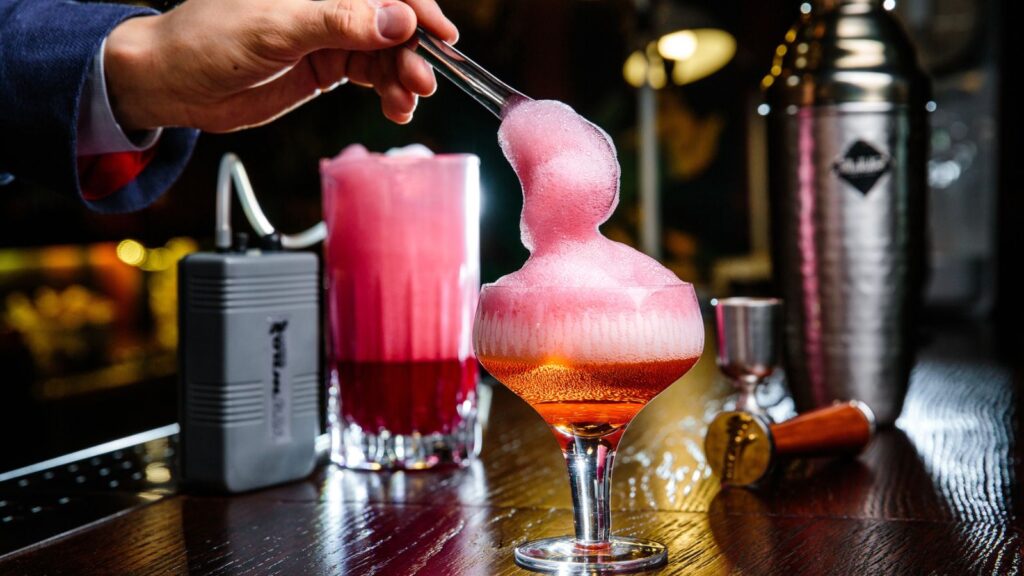
Multi-textured cocktails have become one of the defining movements of the year, with fat-washing and milk clarification leading the charge alongside foams and gels. These are not decorative choices. Fat-washing involves infusing a spirit with fat such as bacon or butter, then freezing and straining it, leaving behind a richer mouthfeel with no visible trace of what created it. A fat-washed bourbon tastes rounder, while a fat-washed gin tastes softer. The flavor changes, but so does the drink’s weight on the palate.
The Amber Cloud is a working example: a gin cocktail topped with chamomile foam and finished with a mist of herbal liqueur. It delivers three distinct sensory moments before the drinker is halfway through the glass. Many bartenders have also been using yogurt in punches, a technique that adds soft edges and tangy brightness without overwhelming the base spirit.
London and Paris set the pace
Southern Glazer’s Wine & Spirits, the world’s preeminent distributor of beverage alcohol, sent a team to 31 bars and restaurants across London and Paris on its Liquid Insights Tour, looking for what is coming to American menus before it arrives. Carbonation and texture were among the trends the tour brought back stateside.
What the team found went well beyond carbonation rigs. Milk punches clarified with Greek yogurt for silky texture and subtle tang, clotted cream folded into effervescent serves and rice pudding worked into a milk punch base. The distributor’s conclusion: texture-forward cocktails are no longer an experiment. They are what certain drinkers have started to expect.
The cocktail as a full experience
Kimpton Hotels & Restaurants named texture one of its defining cocktail trends for the year, with cryogenics and aroma technology joining foams and layered builds behind the bar. Jim Wrigley, beverage manager at Kimpton Seafire Resort + Spa, described layered drinks that are “as beautiful to look at as they are to taste.”
Katherine Wojcik, director of programs and partnerships at IHG Hotels & Resorts, put the broader idea plainly: “Cocktails, beverage programs and food menus have become storytelling platforms, expressions of place, culture and creativity.”
What this means at the bar
Fat-washing requires fat, a spirit, a freezer and time. Foams can be built with a hand blender and an egg white. Custom carbonation rigs are appearing behind bars that would not have been considered an investment a few years ago. The gap between what the most ambitious cocktail programs are doing and what a well-run neighborhood bar can attempt is closing faster than the industry expected.
For the drinker, the upshot is simple: the next cocktail ordered at a serious bar may not behave the way cocktails are supposed to. It might start one way and finish another. It might feel different at the top of the glass than at the bottom. That is not an accident. It is the whole idea.
Mandy Applegate is the creator behind Splash of Taste and seven other high-profile food and travel blogs. She’s also the co-founder of Food Drink Life Inc., a unique and highly rewarding collaborative blogger project. Her articles appear frequently on major online news sites, and she always has her eyes open to spot the next big trend.