
Maine produces virtually all of the commercially harvested wild blueberries in the United States, and the farms and festivals celebrating that berry are reason enough to visit Downeast this summer. The harvest opens in late July, the festivals run through August and National Blueberry Month is the nudge most people needed to finally book the trip.
This post may contain affiliate link(s). As an Amazon Associate, I earn from qualifying purchases. See Disclosures.
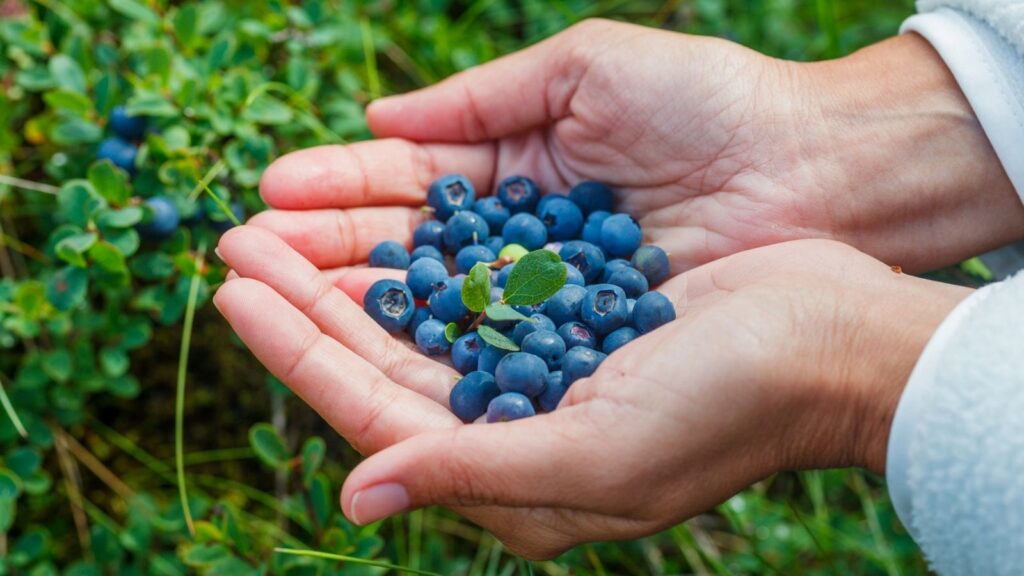
The story of the Maine wild blueberry is older than the state itself. What grows in the barrens is not a cultivated crop in any conventional sense; it is a managed wild ecosystem, the same native Vaccinium angustifolium that has always been here, spread across rocky, low-nutrient soil that resists almost everything else. Smaller and more intensely flavored than the cultivated highbush varieties filling most grocery store clamshells, wild blueberries carry a tartness that bakers and chefs prize because it holds up under heat, acid and competing flavors.
1 state, nearly every wild berry
Nearly every wild blueberry harvested commercially in the country comes from Maine, where the native lowbush berry grows in barrens that exist nowhere else at scale. The harvest window runs from late July through August, which makes July the perfect time to plan the trip, because the fields and the festivals that follow are weeks away from opening.
The farms are worth the drive
Wild blueberries grow commercially nowhere else in the country, which means visiting the farms means going to the source, and the source is spectacular. Welch Farm in Roque Bluffs is a sixth-generation family operation on the shores of Englishmen’s Bay in Downeast Maine. The farm offers tours through the summer where visitors learn about the berry, try hand-raking and take in a working barrens operation that has been in the family since the early 1920s.
Brodis Blueberries is a ninth-generation farm in Hope, in Maine’s Midcoast, where the family has been commercially harvesting wild blueberries for more than 150 years. The property includes a processing center and tasting room, and a member of the family, Jeremy Howard, co-founded Blue Barren Distillery, which turns Brodis blueberries into spirits and pours them at its tasting room on the Camden waterfront.
The Wild Blueberry Heritage Center sits inside a purple geodesic dome on Route 1 in Columbia Falls that is impossible to miss, with exhibits on the berry’s ancient ecosystem, its Wabanaki roots and the farming families who have kept it alive. Lynch Hill Farms in Harrington offers structured harvest-season tours with equipment demonstrations and a walkthrough of the fresh processing operation, ending at the farm store with berries packed and ready to take home.
3 ways to time the trip
Wild Blueberry Weekend on Aug. 1-2 is a statewide event coordinated by the Wild Blueberry Commission of Maine, with farms, breweries, bakeries and restaurants across the state opening for picking, tours, tastings and special menus. A few days later, the Union Fair/Maine’s Wild Blueberry Festival runs Aug. 5-9 in Union, combining one of the state’s oldest agricultural fairs with the official state blueberry festival.
Rounding out the three, the Machias Wild Blueberry Festival on Aug. 14-16 celebrates the 50th anniversary edition of Downeast Maine’s signature blueberry celebration. The event is free to attend, with more than 250 vendors, pie-eating contests and live music in one of the most remote and rewarding corners of the state.
A commodity becoming a destination
Wild blueberries spent more than 180 years as a bulk ingredient, frozen within hours of harvest, shipped across the country, eaten in muffins, smoothies and pies by people who never thought to ask where they came from. What is changing now is visibility. Farms are opening their gates for tours and tastings. Festivals are drawing visitors directly to the barrens.
A state that built its agricultural economy on a fruit it largely gave away to processors is beginning to be known for that fruit on its own terms. The fields look the same as they always have. What is different is that people are finally making the trip to see them.
Jennifer Allen is a retired professional chef and long-time writer. Her work appears in dozens of publications, including MSN, Yahoo, The Washington Post and The Seattle Times. These days, she’s busy in the kitchen developing recipes and traveling the world, and you can find all her best creations at Cook What You Love.