
A January 2025 survey of more than 1,500 adults by the dating app FindingTheOne, now rebranded as Wisp, found 64% of Gen Z can’t cook. Grocery prices now force them to learn. A generation that grew up ordering out heads back to the kitchen, and turns to family recipes to figure it out.
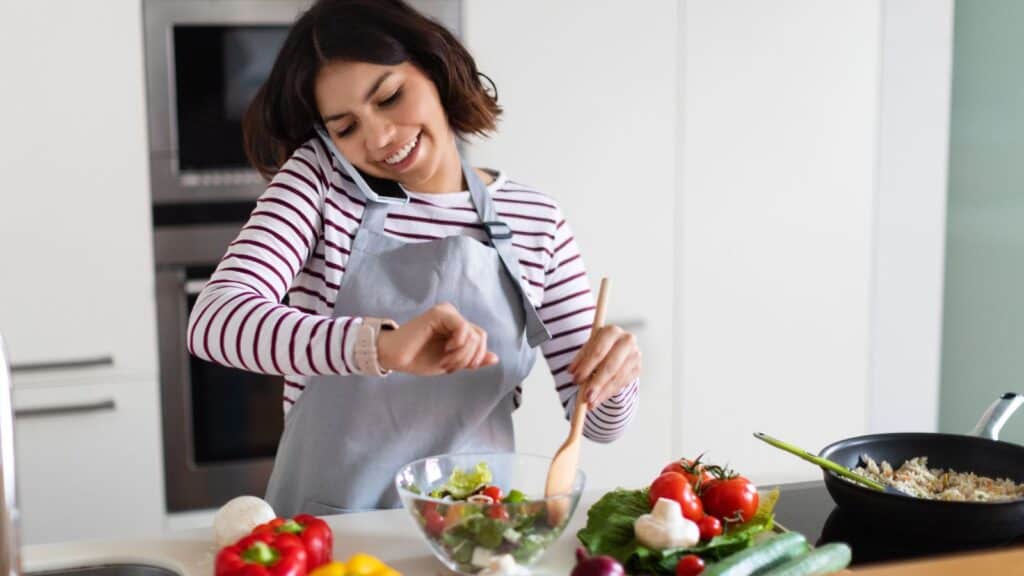
A phone is propped against a stack of cookbooks nobody’s opened in years, a grandmother’s face filling most of the frame while a stick of butter, a bag of flour and a carton of milk wait on the counter. “Wait, what do you mean medium heat?” The voice on the other end laughs and says, “Just medium, not too hot, not too low, you’ll know,” and it gets written down anyway, word for word, because for a lot of people in their 20s and 30s, this is the first time they’ve ever needed to ask.
The generation that never learned
Gen Z came of age during a period when convenience became the norm. While Gen X and millennials see preparing a home-cooked meal as a sign of relationship intimacy, Wisp reports a mere 17% of Gen Z feel the same. Grocery stores expanded their prepared-food offerings, meal kits became a multibillion-dollar industry and food delivery apps made restaurant meals available with a few taps. Those changes gave young adults more ways to eat without needing to develop traditional cooking skills.
Home economics classes have faded from curricula, and delivery apps have been on the rise, so it’s no wonder many young adults haven’t learned to cook. “For Gen Z, the kitchen isn’t just a source of uncertainty but also a space where they feel out of their depth,” explains dating expert Sylvia Linzalone. Many members of Gen Z came through school after decades of declining enrollment in Family and Consumer Sciences courses, as funding cuts and teacher shortages reduced access to cooking and other life-skills classes in many school districts.
What changed and why now
As grocery prices continue to rise, the U.S. Department of Agriculture’s June 2026 Consumer Price Index shows food at home prices jumped 0.1% from April to May alone and was 2.7% higher than the same period last year. Younger Americans are responding unexpectedly: millennials and Gen Z went on a quest to raid grandma’s recipe box for classic dishes at affordable prices, a trend observers have started calling “nonna-stalgic.” It is a recognition of the benefits of saving money with Depression-era cooking and the nostalgia of the comfort food they grew up with.
Last year, 83% of Americans surveyed by outdoor cooking brand Current Backyard predicted dining out costs would climb due to tariffs. They were right, and Gen Z, who then said they planned to cook more in response, seem to be following through. But the same survey revealed a significant obstacle: Gen Z respondents were more than twice as likely as older generations to say cooking knowledge, not time or money, was the key factor holding them back. The will is there, but the skills are still catching up.
Bella Bucchiotti, a Gen Z food blogger at xoxoBella, has observed the knowledge gap among her peers. “The biggest surprise wasn’t that people couldn’t cook elaborate meals,” Bucchiotti said, “it was that some had never been shown the basics. I’ve had friends ask me how to tell when pasta is al dente or how to dice an onion. Once you know a few fundamental skills, cooking becomes less intimidating. Everyone starts somewhere.”
What they’re reaching for first are the dishes that don’t require precision or special equipment, such as a white sauce, because butter, flour and milk are forgiving. An icebox cake, because the refrigerator does all the work.
Where they’re actually learning
The first place is exactly where you’d expect. A 2025 survey of over 1,000 Gen Zers by research firm Attest found that over 70% of the younger generation report liking food content on social media, with TikTok having the highest percentage; over 50% look for food-related content on the app. A no-bake lemon cheesecake tutorial gets as many clicks as a celebrity chef reel, and anyone with a phone and 20 minutes can follow along.
The second instance is the more interesting story: younger adults learning to cook from older adults. Shelby Stover, a food blogger at Fit As A Mama Bear, is part of the generation the data describes. “I have totally called my mom for a recipe within the last month alone,” Stover said. “Her meatloaf is my favorite, and though I can make the base alright, nothing online can replicate the sauce. Her descriptions are for taste, not exact amounts, so much of it was adjusting back and forth. It was worth the call, though, as it turned out amazing.”
A 2025 program launched by Schlegel-UW Research Institute for Aging at the University of Waterloo documented what consistently happens when younger and older adults cook together. Younger participants benefit from the knowledge and experience of older adults, while older participants experience the energy of a meaningful connection with youth.
What older generations are noticing
The generation most associated with delivery apps might just be the one most willing to give them up. A September 2025 FMI analysis found that Gen Z enjoys cooking more than any other generation: 51% say they like or love meal preparation, and 63% say eating together at home is very or extremely important to them.
Enthusiasm and ability aren’t the same thing, though. A May 2025 Current Backyard survey of more than 7,500 adults found that 80% of Gen Z said they don’t cook as much as they want to, and Gen Z was more than twice as likely as older generations to say cooking knowledge was the main thing holding them back.
The knowledge gap shows up in unexpected places. Jere’ Cassidy, a baker and food blogger at One Hot Oven, said her own kids never made the connection between dry and liquid measuring cups despite watching her use both for years. “It seems like such a small detail,” Cassidy said, “but in baking, that small thing can change the whole recipe.” Older generations are noticing that recipes that were put away and forgotten, like a banana daiquiri on a yellowed notecard or a white sauce memorized but never written down, are suddenly being pulled out again. The grandparent whose cooking was always treated as “just something I make” is being treated as a primary source.
Whether the skills stick
The economic pressure that drove younger Americans into the kitchen isn’t easing up. A 2025 State of Home Cooking report by HelloFresh, conducted in partnership with Wakefield Research and surveying 5,000 U.S. adults, found that 93% of Americans expect to cook as much or more in the next 12 months than they did the previous year. Saving money is the motivation for 54% of Americans, and 68% did not buy a food item they usually purchase in the past 12 months because the price was too high, a number that jumps to 72% among Gen Z and millennials. The family recipes are written down now, then they’re photographed and saved in the Notes app.
Heidi is also a vintage recipe blogger at Real Life of Lulu, where she focuses on recipes that are at least 50 years old, many from her grandparents’ kitchens. She has spent eight years developing and testing vintage recipes for a national online audience.
This article inspired me to do more recipes from scratch. Homemade tastes so much better than what can be bought at the grocery store. This is an excellent article.
I’m so glad it inspired you! Happy cooking!