
A spritz, then a mocktail, then a spritz again, and nobody at the table catches the switch. It’s called “zebra striping,” and it turns a night out into a relay instead of a sprint.
This post may contain affiliate link(s). As an Amazon Associate, I earn from qualifying purchases. See Disclosures.
Zebra striping works because nobody at the table has to opt out. A group might include someone training for a race, someone driving home and someone who just wants three cocktails, all ordering from the same menu instead of splitting into separate camps. No one has to explain a lighter round or announce they’re being good. The drink changes, quietly, and the night keeps moving. That’s why the habit has spread from a personal workaround into something bars are now actively designing around.
Nearly half of bargoers are already doing this
People who drink at bars and restaurants report doing this in real numbers, with 47% saying they mix alcoholic and nonalcoholic drinks in the same outing. Another 93% of people buying nonalcoholic beer, wine and spirits also buy the alcoholic version, a sign the habit has moved well past niche status and into the mainstream of how people order.
The many ways to zebra stripe
The most common version is the simplest one, alternating back and forth, drink for drink, with no fixed ratio, just a pattern most people fall into without ever formalizing it. Some zebra stripers stay in the alcohol column for every round but pay closer attention to strength, trading a full-proof pour for something lighter, whether that means a session beer instead of a double IPA or a spritz instead of a martini.
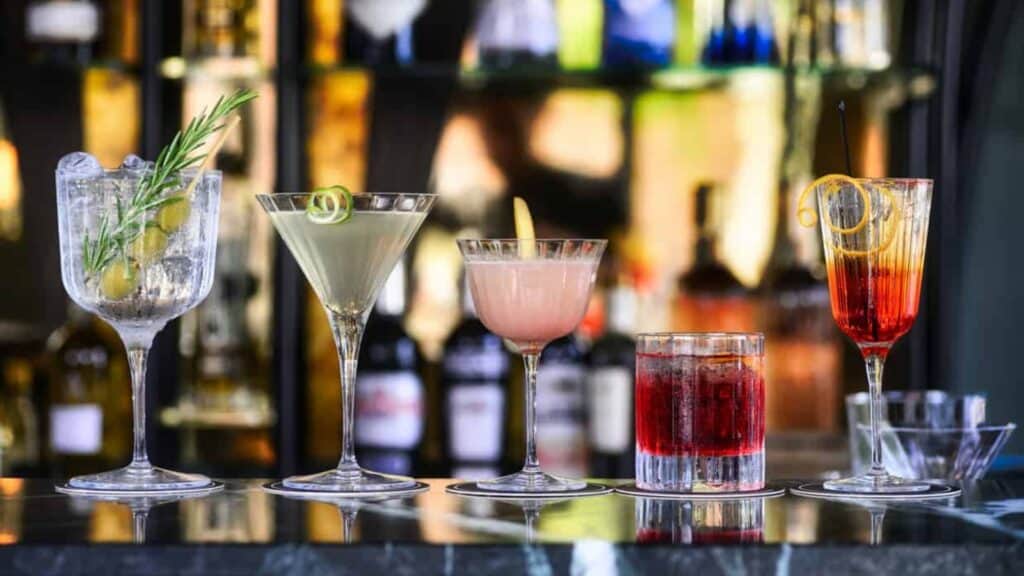
Some bars build the switch directly into the recipe itself. Rather than offering a separate mocktail list, bartenders create a nonalcoholic version of a specific cocktail using the same syrups, bitters and technique, then swap out the alcohol, serving both versions in matching glassware so the two drinks look and taste nearly identical side by side. Beverage consultants describe this kind of mirrored menu as one of the more effective formats specifically because it makes switching between versions effortless.
Fine dining has developed its own version. Several tasting-menu restaurants now let guests order a hybrid pairing that blends wine and nonalcoholic selections, choosing wine for one course and a nonalcoholic pour for the next rather than committing to one path for the entire meal. Some bars have also begun experimenting with the idea earlier in the day, pairing a mimosa with a nonalcoholic version at brunch or running paired flights of a beer and its zero-proof twin during happy hour.
The category keeps growing everywhere
Global volumes of nonalcoholic beer, wine and spirits are on pace to grow 36% by 2029, enough to fill more than 18 billion servings a year, and volumes already climbed 9% in 2025 alone. A related category of alcohol-adjacent drinks, among them hemp-based, adaptogenic and nootropic beverages built to mimic a buzz without the alcohol, is growing even faster. It is up 11% in 2025 from a smaller base. Many retailers follow the same logic as the switch itself, stocking the alcohol-free version right next to the original instead of tucking it into a separate corner.
Where this goes from here
Zebra striping was never really about giving up alcohol. It stretches a night out further and treats whichever drink is in hand, alcoholic or not, as part of the same evening rather than a compromise. The stripes are the point, and for a growing number of drinkers, so is the choice to keep making them all night long.
Jennifer Allen is a retired professional chef and long-time writer. Her work appears in dozens of publications, including MSN, Yahoo, The Washington Post and The Seattle Times. These days, she’s busy in the kitchen developing recipes and traveling the world, and you can find all her best creations at Cook What You Love.