
An estimated 23% of former megaship cruisers switched to small-ship operators in recent years, according to market research firm Market Intelo. The largest cruise ships in the world by passenger capacity, the Icon series from Royal Caribbean, each hold up to 7,600 guests. Small ships, by contrast, hold just dozens or hundreds of passengers.
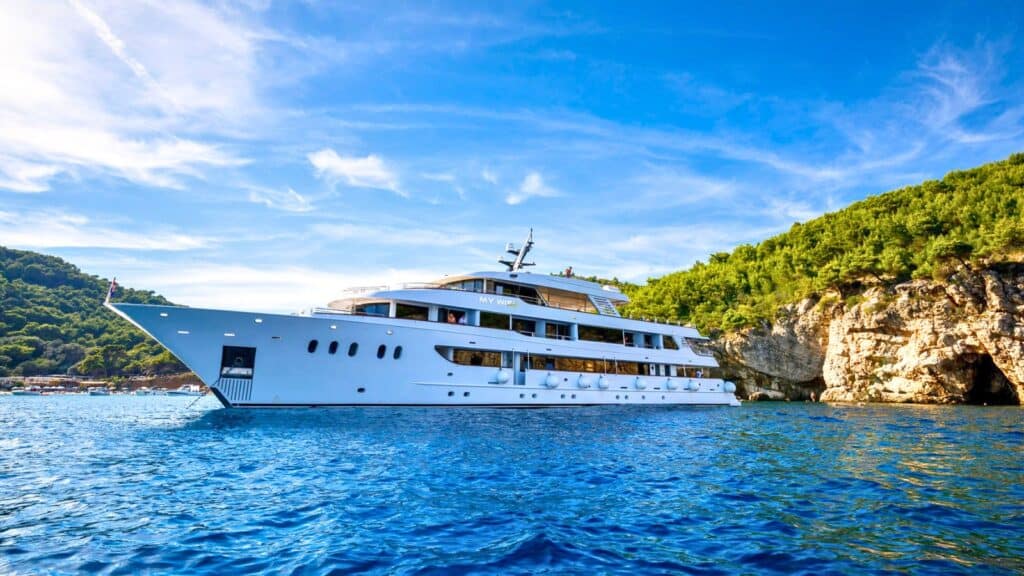
Drawn by crews that know passengers’ names, less-crowded ports and slower itineraries, cruisers will spend more to get to know a place more deeply. Nowhere is this more evident than in Croatia, where large ships hit only the major cities of Dubrovnik and Split before moving on, leaving secluded coves and tiny towns to smaller vessels.
The same study notes that average per-person revenue increased by 64% among the passengers who traded floating cities for yachts. Hospitality brands respond with new options that invite experienced and first-time cruisers to the water in new ways.
Small ships go big time
A main topic in travel this year is the entrance of luxury brands into cruising. Companies like Four Seasons, Ritz-Carlton, Orient Express and Aman all made or will make their debuts on the water with vessels holding 94 to 452 passengers.
Industry-wide, a shift is underway. Cruise lines invest more in both their largest and smallest ships, leaving the middle-size vessels to shrink from 57% to 34.6% of the worldwide fleet by 2037. The largest vessels will increase their share from 19.5% to 31.8% in that time. Similarly, vessels that accommodate 1,000 or fewer passengers will go from a 23.5% share in 2018 to 33.6% in 2037, effectively splitting the fleet into equal thirds.
In the megaship market, customers benefit from an endless choice of amenities and options. For some cruisers, though, the trade-off in amenities on a small ship is worth it for unparalleled access and attentive service.
A taste of yacht life
The MS My Wish from Cruise Croatia holds just 36 passengers. It doesn’t have a casino or a pool. What it does have for big-ship converts is a different version of cruising altogether: stand-up paddleboards for daily swim stops, a modest open-air gym and a crew that knows every passenger’s preferences.
Daily life onboard follows a familiar pattern. The day starts with a buffet breakfast as the ship leaves port. Mid-morning sees the ship drop anchor at a deserted stretch of coastline, where a chorus of cicadas and the scent of lavender entice guests into the impossibly clear water. On a small ship, “sea day” means something very different from what it’s known for on a big cruise liner.
The ship pulls into port in the mid-afternoon, in small towns that don’t make the news, like Rab, Krk and Primošten. It takes just an hour or two to explore the pedestrian-only old towns, leaving plenty of time for dinner at a traditional “konoba,” or family-run tavern, before returning to the ship for a nightcap on the top deck with new friends.
Croatian cuisine shines in small ports
There is a brilliance to arriving in port in the late afternoon and staying until morning, especially in the heat of summer. Rather than sightsee in the hottest part of the day, small-ship cruisers spend this time refreshing in the water. Then, when the sun is less intense, they leave the ship to explore both the local area and arguably the most important part of culture: the food.
When cruising through Dalmatia, plan ahead and preorder a peka for an in-port evening. Croatia’s version of the Sunday roast, “peka,” cooks for hours under a bell-shaped terra cotta lid, slow-roasting lamb or octopus with root vegetables over coals for a deep, rich flavor.
On Rab Island, stop at the Kuća Rabske Torte Museum, which shares the story of the island’s famous almond cake through a hands-on demonstration and tasting session. Throughout the country, don’t miss the opportunity to enjoy fresh, spicy olive oil and decadent honey, washed down with a glass of minerally Pošip or crisp Malvazija wine.
The antidote to overtourism
Tourism to Croatia has been on a tear for over a decade, with set-jetters flocking to Dubrovnik, an important filming location for “Game of Thrones.” In addition to individual visitors, Dubrovnik hosts more than 600 cruise ships annually carrying nearly 900,000 passengers to the city.
All that popularity led to overcrowding and a hollowing-out of Dubrovnik’s Old Town residents. More than 50% of locals have left in recent years, leaving a 27:1 tourist-to-resident ratio. To combat the challenges, Dubrovnik instituted strict sustainability measures that limit the number of people in the Old Town at once, increase fees for accessing cultural landmarks and cap the number of cruise ships in port per day.
Foreign visitor numbers country-wide in the first five months of 2026 still increased by 5.9% over 2025, which was a record-breaking year. Though Dubrovnik continues to tighten its visitor policies, the city saw 50.3% of all cruise arrivals in the country through May 2026. The next highest city, Split, saw just 24.6% of arrivals.
Up north in the Kvarner region, small ships like the My Wish dock three-abreast in ancient port towns. Shallower waters and limited infrastructure keep big ships away, but the Old-World charm is as strong as in any Dalmatian coast city.
Once there, passengers mostly have the towns to themselves, even in peak summer months. Walking into a Michelin-starred restaurant in July is unheard-of just about anywhere, but it was possible at Restaurant Alfred Keller in Mali Lošinj.
What travelers want
Travel advisors, and the clients they serve, see small ships meeting a need that larger ships can’t. The biggest benefits are less-crowded ports and more personalized service.
“One of the biggest advantages of a small-ship cruise is the access it provides,” said Karee Blunt, a frequent traveler. “Instead of spending the day navigating crowded water slides and endless buffets, I spent mine kayaking and exploring secluded areas larger ships couldn’t access. The smaller passenger count also made it easy to get to know both the crew and fellow travelers, creating a much more personal experience.”
Jess Masters, a Bristol-based travel advisor, agreed. “The cruise market is booming, but we’re seeing demand rising for calling into smaller ports where large cruise ships simply cannot enter,” she said.
“Small-ship cruising shares the comfort and lifestyle of sailing on a yacht with a broader audience. Clients want to feel welcomed like a family member coming home, not an ID badge being scanned on entry,” Masters added.
Good things in small packages
Small ships offer a compelling alternative to the rise of megaships. Passengers increasingly choose them to sidestep overcrowded ports, experience destinations in a more authentic way and enjoy personalized service from a small but dedicated crew.
Ashley Wali is a Seattle-based travel journalist and owner of Wanderlux, writing about luxury, family, culinary and wellness travel. Her work has appeared in The Seattle Times, Boston Herald, The Philadelphia Tribune, Sun Sentinel and more. Recent assignments have had her exploring art in Hong Kong and sailing the fjords of Norway.