
Familiar flavors are becoming the biggest bet in the food industry this year, and it is not by accident. Companies are digging through their own back catalogs and childhood memories, then rebuilding what they find into products that did not exist 12 months ago. That familiarity is measurable now, not just a marketing feeling, and it is determining which products actually make it to shelves.
This post may contain affiliate link(s). As an Amazon Associate, I earn from qualifying purchases. See Disclosures.
Two separate studies published this year reached the same read on this, without either one coordinating with the other or citing the other’s work. That kind of agreement is a stronger indication than either study would be alone, and it means something is actually happening in the market, not marketing language repeated until it sounds true. Food and beverage companies are responding to it directly, building new products around how people feel instead of treating comfort as a side note in a bigger flavor story.
The overlap becomes concrete once the numbers sit next to each other. More than half of consumers worldwide say mood drives their flavor cravings, and in the United States, comforting is the single word every generation reaches for to describe why they snack. Vanilla and milk chocolate rank among the flavors tied most directly to comfort, while childhood cookies and biscuits are linked to nostalgia. The same research found that 52% of Americans who buy salty snacks specifically look for nostalgic packaging or marketing.
Old favorites get rebuilt, not reissued
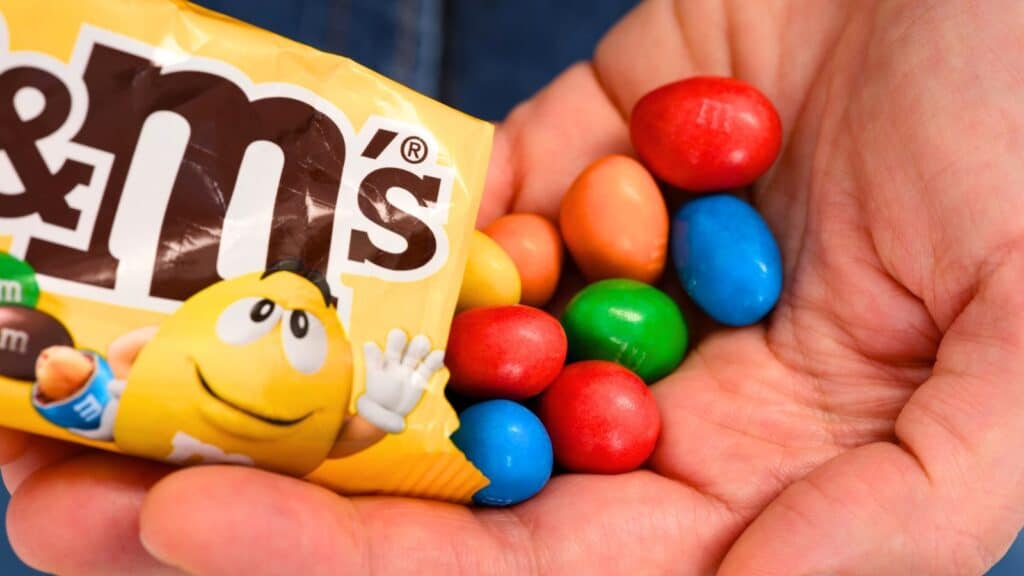
One pattern shows up clearly in how companies are handling their own back catalogs. M&M’s took its caramel flavor, a fan favorite for years, and rebuilt it into a freeze-dried format that reached national shelves in January. Lay’s Bacon Grilled Cheese took a different route to the same goal. The flavor had been gone for years after first winning a fan flavor contest, and its return in January came only after sustained public requests, not a market study predicting demand.
Both moves point to the same underlying behavior: companies are not simply restocking what already worked. They are identifying the single detail people actually remember and rebuilding a new product around that detail rather than the whole original item.
A memory becomes a brand-new product
A second pattern is less about revisiting an old product and more about turning a memory into something that never existed as a packaged item before. Ordering a Shirley Temple used to mean asking for one at a restaurant counter, not grabbing it off a shelf. Poppi’s January release turned that specific memory into a canned product, translating an experience rather than reissuing a formula. That distinction matters, because it shows comfort branding is not limited to bringing back discontinued items. It can also mean building an entirely new category out of something people only remember doing, not something they remember buying.
What ties it together
Companies no longer treat comfort as a byproduct of an older product line, something left over from a formula that happened to feel familiar. They are treating it as a deliberate input, a detail designed in from the start. That lines up with what both studies found independently: familiarity is not something brands are leaning on by accident anymore.
The rest of 2026 is likely to bring more of this, not less. Once two separate research groups agree that comfort sells, betting on the flavor people already love stops looking like nostalgia and starts looking like strategy. The products that succeed will be the ones that understood the difference before the data caught up to prove it.
Jennifer Allen is a retired professional chef and long-time writer. Her work appears in dozens of publications, including MSN, Yahoo, The Washington Post and The Seattle Times. These days, she’s busy in the kitchen developing recipes and traveling the world, and you can find all her best creations at Cook What You Love.