
The sky over the hills above the Costa del Sol turned a strange, dim silver Wednesday evening, then went quiet as the light drained out of the afternoon. Eclipse glasses stayed on through a cloudy sky that cleared just in time, near the village of Canillas de Aceituno in Málaga province, well outside the true shadow of Spain’s first total solar eclipse since 1905.

Our group settled in among the property’s grapevines instead of climbing toward higher ground with the crowds. The light drained slowly and unevenly, and the air turned noticeably colder as the hillside went quiet.
Spain’s Last-Minute Travel Scramble
Málaga reached 94.5% obscuration around 8:38 p.m. local time, and nothing at this end of the country came close to totality. The partial phase began at 7:43 p.m. and never finished where we could see it, because the sun set still eclipsed just after 9 p.m.
Farther north, the shadow crossed provincial capitals from Galicia to the Balearics, with totality lasting up to about a minute and 40 seconds at spots like Picos de Europa and Majorca.
Flight bookings into airports along the eclipse path ran 25% ahead of last year for arrivals between Aug. 7 and 12. Hotel occupancy across Spain and Iceland rose 16%, and nightly rates climbed 36%.
Short trips of one to five days jumped 57%, and solo travel rose 48%. Bilbao led the surge with bookings up 366%, and Asturias followed at 292%.
Madrid and Barcelona’s Near Miss
Madrid’s own eclipse guidance put obscuration at 99.9% or better at 8:32 p.m., and Barcelona reached just over 99.8% at 8:29 p.m. Numbers that close sound like totality on paper. They aren’t.
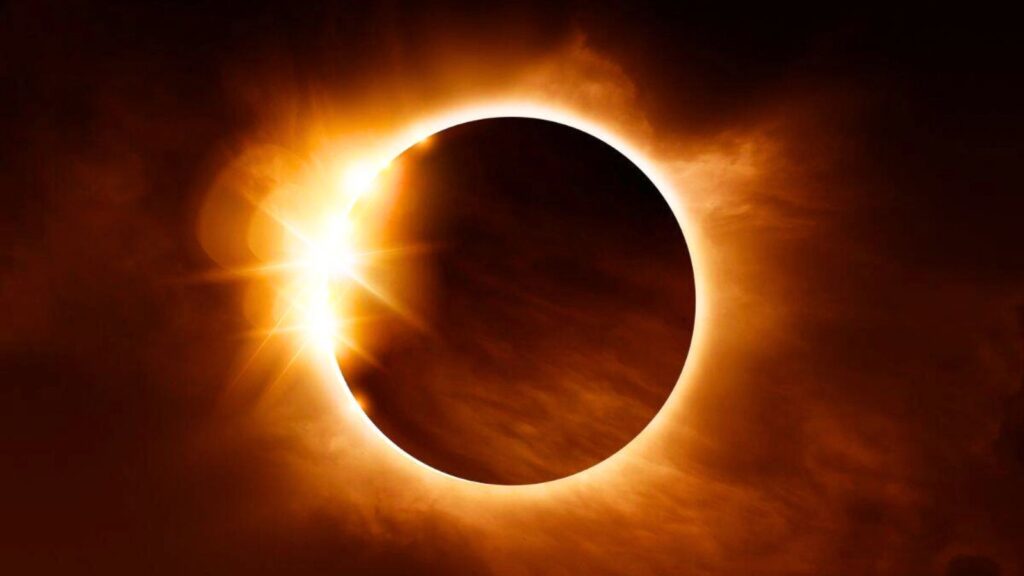
A partial eclipse, even at 99.9%, never produces the darkness, the corona, or the diamond ring of a total one. Spain’s two largest metro areas spent the evening a fraction of a percent short of what other people flew in to see.
Spain’s Next Eclipse Is Already Taking Names
On Aug. 2, 2027, totality returns to the south, running roughly 2 minutes 56 seconds over Cádiz. Gibraltar, farther along the coast, gets 4 minutes 27 seconds. That makes it the longest total eclipse over easily accessible land this century, though the true maximum, over six minutes, falls over Egypt.
New Scientist Discovery Tours has opened registration for a five-day Southern Spain trip built around it, with a private viewing site on an Andalucía beachfront terrace, four nights at a four-star hotel, and excursions to Cádiz, Gibraltar and the Roman ruins of Baelo Claudia. Pricing hasn’t been set yet.
What Americans Are Actually Waiting For
Anyone in the U.S. who chased the 2024 eclipse and wants another has a long wait ahead. The next total solar eclipse over the Lower 48 lands on Aug. 23, 2044, and totality only touches Montana, North Dakota and South Dakota. The first coast-to-coast eclipse since 2017 doesn’t arrive until Aug. 12, 2045, running from California to Florida.
Eighteen years without one is exactly why Bilbao hotel rooms went the way they did this week. Registration for the Andalucía trip costs nothing and doesn’t have a price attached yet, which currently makes it the cheapest way to line up in front of the only total eclipse most Americans can reach before 2044.
Spain just ran the trial version. The real show lands next August, with almost three full minutes of darkness over Cádiz instead of a 94% sunset.