
Remote workers spent years walking while they worked. They answered emails at 1.5 mph, took calls while logging steps and barely noticed the treadmill humming under the desk. Now five-day office mandates are pulling them back to buildings that weren’t built for any of it.
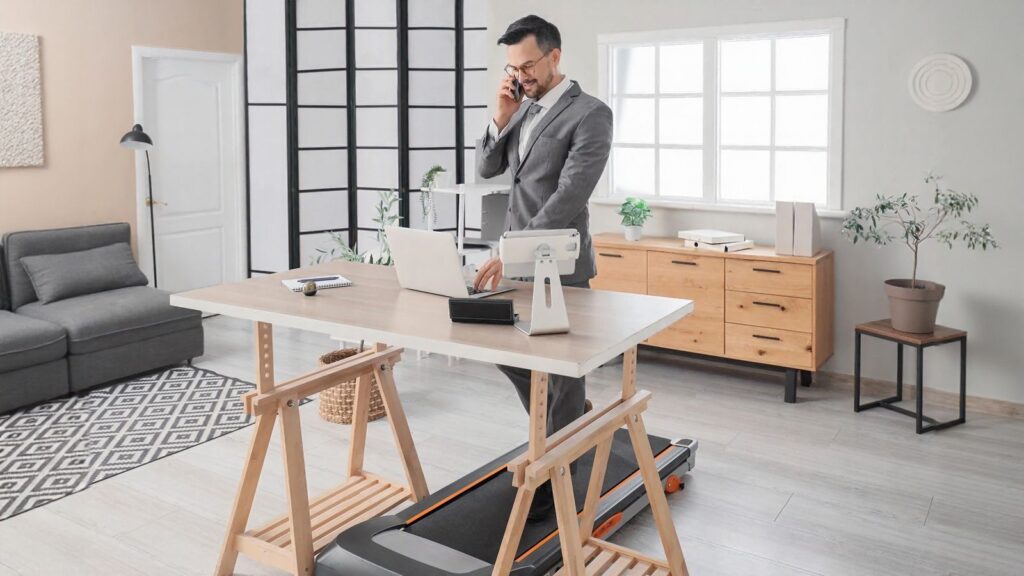
The walking pad fit the home office perfectly. At 1.5 mph, it sat flat under a standing desk, ran quieter than a dishwasher and folded against a wall when the day was done. A power outlet and a pair of sneakers were all it needed, and that simplicity is exactly what a cubicle can’t match.
More Than Half of Fortune 100 Workers Are Back Full Time
A year ago, only about 1 in 10 employees at Fortune 100 companies had to be in the office five days a week. That number now exceeds half. The five-day mandate went from outlier to majority position in about 12 months.
The Mandates Hitting Hardest Right Now
California moved more than 100,000 state workers from two in-office days to four when an executive order took effect July 1, making the state stricter on public-employee telework than most others. Workers protested at the Capitol that same morning.
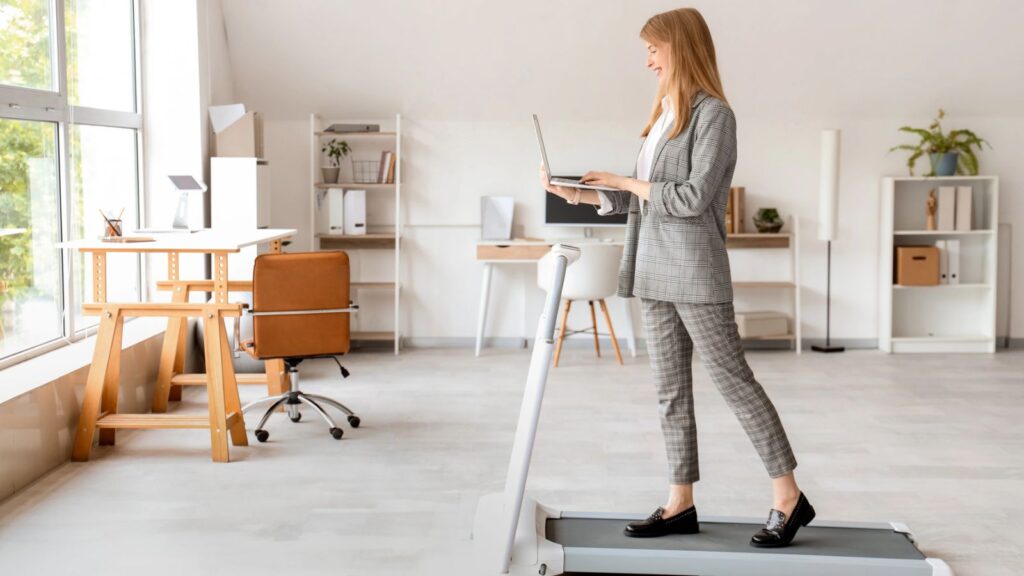
PNC Financial told corporate employees to come back five days a week starting May 4, and social media lit up within days. Fidelity Investments followed in late April, with more than 21,000 employees at four U.S. locations heading back five days a week in September.
The Science Is on the Walking Pad’s Side
A 2021 meta-analysis of 13 studies found that walking at a desk burned an extra 105 calories per hour compared with sitting. Brigham Young University tested 75 adults at 1.5 mph and found only modest cognitive dips, a 9% drop in processing measures and 13 fewer words per minute typed. The researchers said the health gains were worth it.
A Mayo Clinic trial backed that up. Forty-four people tested walking pads, bikes, steppers and standing desks over four days. Reasoning scores went up. Typing accuracy stayed the same.
The Office Isn’t Set Up for This
The gap isn’t about the equipment. Commercial-grade walking desks exist. It’s about whether employers are willing to treat movement as part of the workspace instead of something employees handle on their own time.
If you built a walking habit at home and you’re heading back to a desk that doesn’t move, you’re not alone. The research says the habit was worth keeping. The question is whether your office agrees.