
BYOB has run on a handshake agreement for decades, and that agreement had one quiet assumption baked in: everyone at the party was drinking alcohol. That assumption is cracking. Guests are showing up to cookouts and dinner parties with hop water, botanical aperitifs and zero-proof gin, and four familiar letters on an invitation suddenly come with zero instructions for anyone.
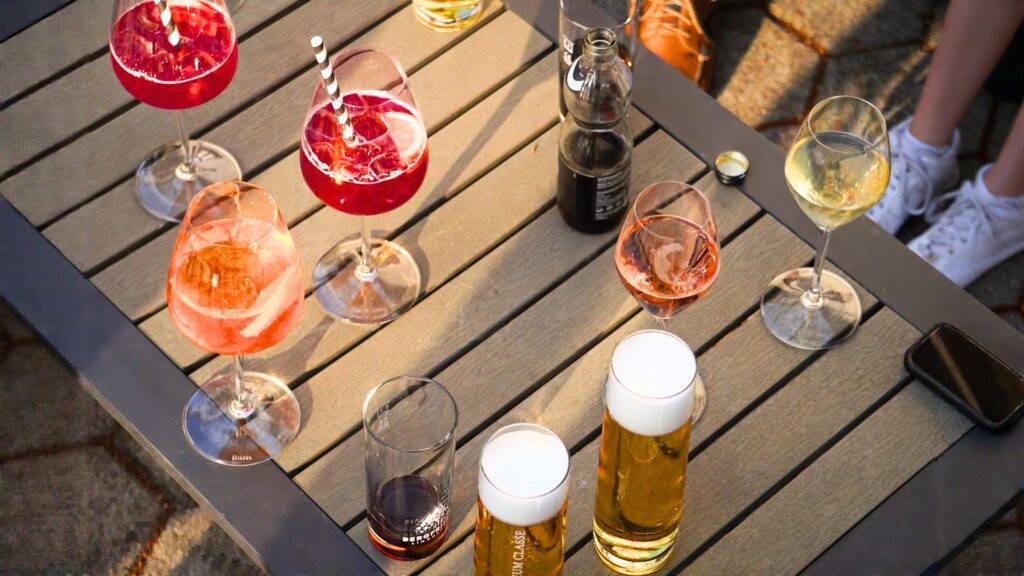
American drinking habits have changed faster than party etiquette has. People cutting back or quitting altogether now span every age group, income bracket and gender, and they are showing up to backyard gatherings in numbers the host did not plan for. Both sides of the invitation are guessing their way through the same unwritten rules, and getting it wrong in the same ways.
The Numbers Behind the Awkward Pause
Only 54% of Americans said they drink alcohol in 2025, the lowest figure Gallup has recorded since it began tracking the question in 1939. That was 62% in 2023 and 58% in 2024, a two-year drop with no precedent in the poll’s history. For the first time, a majority of Americans said they believe even moderate drinking is bad for their health.
What ‘Bring a Bottle’ Means When the Bottle Has Changed
The phrase has always assumed alcohol, and that assumption has splintered. Guests who have cut back can read BYOB as a category that no longer applies to them, and arrive without bringing anything at all. Nearly half of Gen Z consumers plan to reduce their alcohol consumption, and for a growing share of the guest list, the old translation of those four letters does not map to anything they would bring.
The Price Mismatch Nobody Talks About
A bottle of zero-proof gin or agave spirit can cost as much as a respectable bottle of wine, but the social read is completely different. A guest who brings a premium nonalcoholic spirit and a guest who brings a mid-shelf red are both honoring the BYOB contract. The nonalcoholic bottle is still more likely to get a quizzical look than a thank-you. Cost signals have decoupled from social signals, and neither guest nor host has a script for that.
The Host’s Blind Spot
Hosts make every beverage decision before guests walk through the door, and the margin for guessing wrong has gotten wider. Women’s self-reported drinking fell 11 points from 2023 to 2025. Households earning $100,000 or more dropped 13 points over the same period. The old demographic shortcuts are less reliable than they used to be, and the most reliable fix, asking guests ahead of time, carries its own social awkwardness that the etiquette playbook has not caught up to yet.
The Leftovers Nobody Knows How to Handle
Opened wine stayed with the host. Unopened bottles were a judgment call. The beer you brought but did not finish was yours to take home. That logic does not apply cleanly to a four-pack of nonalcoholic beer or a bottle of sparkling water a host bought specifically for one guest. A guest who drank one can of kombucha is not sure whether packing up the rest looks stingy or sensible. A host absorbing that cost is covering something BYOB was supposed to mean the guest handled.
A Phrase That Has Not Kept Up
More than two-thirds of drinkers said alcoholic beverages have gotten noticeably more expensive, and over a third of those drinking less pointed to higher prices as a key reason they cut back. The sober-curious wave and the cost squeeze are landing at the same tables and producing the same unscripted pauses.
What people hear when they read those four letters has already changed, even if the phrase itself sticks around. The simplest fix costs nothing. “Bring whatever you’re drinking” covers more ground than BYOB ever did, and for guests rethinking what goes in their glass, that small change in wording is the invitation they have been waiting for.