
Burnt ends started as garbage: smoky, fatty brisket scraps Kansas City pitmasters used to throw out or toss in a stew. Now they’re sought after instead of tossed. From home cooks to BBQ joints from coast to coast, people are cubing, saucing and smoking meat just for the burnt ends flavor. On Sept. 1, National Burnt Ends Day, Kansas City can only watch its scraps run wild everywhere else.
This post may contain affiliate link(s). As an Amazon Associate, I earn from qualifying purchases. See Disclosures.
Arthur Bryant’s, the Kansas City institution credited with the dish, left burnt-ends trimmings out for customers waiting on their order, according to house lore, less a menu item than something to keep people busy while their food cooked. Food writer Calvin Trillin’s praise of the restaurant in 1972 put an unexpected spotlight on them, and local pitmasters ran with it, turning the once-discarded trimmings into a dish worth ordering on its own. That’s how a giveaway became Kansas City’s calling card.
Burnt ends have spread well beyond Kansas City. A barbecue joint in Colorado, a smokehouse in Maine and a handful of Houston pitmasters have each built their own version of the dish. The American Royal and Zarda Bar-B-Q started the official observance from Kansas City in 2021, a nod to the dish’s hometown even as it turns up everywhere else.
Denver piles burnt ends into tacos and fries
Burnt End BBQ in Greenwood Village, Colorado, spreads burnt ends across its whole menu as an ingredient. The Cowboy Tacos trio wraps the meat in avocado creme fraiche and pico de gallo alongside pulled pork and brisket options. A melt sandwich piles it under five slices of cheese, and a loaded order of fries buries crispy potatoes under burnt ends, cheese, bacon and sour cream. A standalone bowl pairs the meat with beans and cornbread for anyone who wants it served straight, no assembly required.
Maine’s newest smokehouse bets on pork belly
Burnt Ends Barbecue opened on Sabattus Street in Lewiston, Maine, in early 2022 before growing into a 5,000-square-foot smokehouse in nearby Auburn by 2024. Pitmaster Kevin Cunningham has close to 30 years of kitchen experience behind him, and pork belly burnt ends sit on the menu alongside brisket, ribs, turkey, wings and sausage.
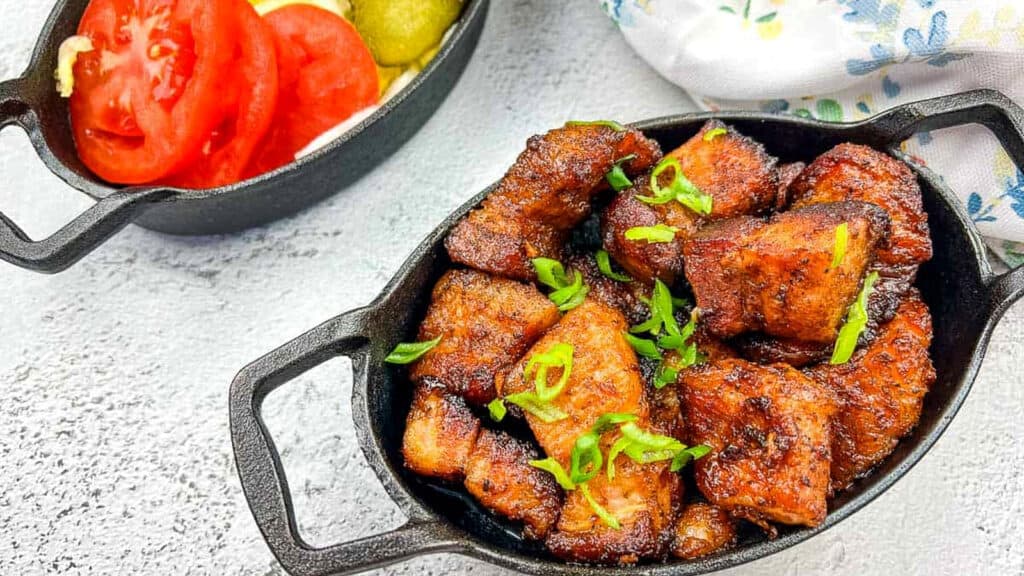
For that dish specifically, pork belly stands in for the brisket point, giving it a shorter cook time and a different fat profile than the traditional Kansas City version. It is one more sign the technique has stopped belonging to a single cut of meat.
Texas barbecue finally makes room for burnt ends
Texas barbecue built its national reputation on brisket, but burnt ends themselves lagged behind. Shoulder clod, not brisket, was the cut most Texas barbecue joints favored before 1950, and brisket became a smokehouse staple only in the 1960s, once meatpackers in Kansas City and Chicago began shipping it nationally in standardized cuts.
Louie Mueller Barbecue in Taylor has long offered burnt ends as a free taste for customers waiting in line, never as a listed menu item on its own. A handful of Houston pitmasters, including Tejas Chocolate & BBQ, Blood Bros. BBQ and Killen’s Barbecue, now serve burnt ends as a dish in its own right, ordered and plated just like anything else on the menu.
Pork belly turns burnt ends into a weekend project
Home cooks do not need a full smoker or an eight-hour cook to get real burnt ends flavor. Pork belly cubes replace the brisket point and cut the process to roughly two to three hours. The cubes take a dry rub of brown sugar, paprika, garlic powder and black pepper, then smoke at around 250 degrees for about 90 minutes until the exterior darkens. Cooks then toss the cubes in barbecue sauce and a touch more brown sugar and return them to the heat uncovered for another 30 to 45 minutes until the sauce tightens into a sticky bark, echoing the same smoke-sauce-smoke approach pitmasters lean on for a full brisket, just condensed into an afternoon.
Burnt ends no longer belong to a single cut of meat or a single region. Pitmasters from Denver to Houston are treating the technique itself, cube it, sauce it, smoke it twice, as the transferable part of the dish, not the brisket point it started on. That’s a different kind of spread than one restaurant chain pushing outward from a home base. A technique that keeps turning up in unrelated kitchens, whatever is driving it, tends to have more staying power than a passing menu trend.
Kansas City can keep credit for inventing burnt ends. Burnt ends clearly left home a while back, and nothing about it suggests a return trip. Whatever cut of meat gets the burnt-ends treatment next, don’t expect it to start in Missouri.
Jennifer Allen is a retired professional chef and long-time writer. Her work appears in dozens of publications, including MSN, Yahoo, The Washington Post and The Seattle Times. These days, she’s busy in the kitchen developing recipes and traveling the world, and you can find all her best creations at Cook What You Love.