
Chili season does not wait for the first cold front. This September, cooks across the country will haul propane burners and cast-iron pots into parks, fairgrounds and waterfront pavilions for competitive and community chili events, despite late-summer temperatures. The calendar, not the thermometer, decides when it begins.
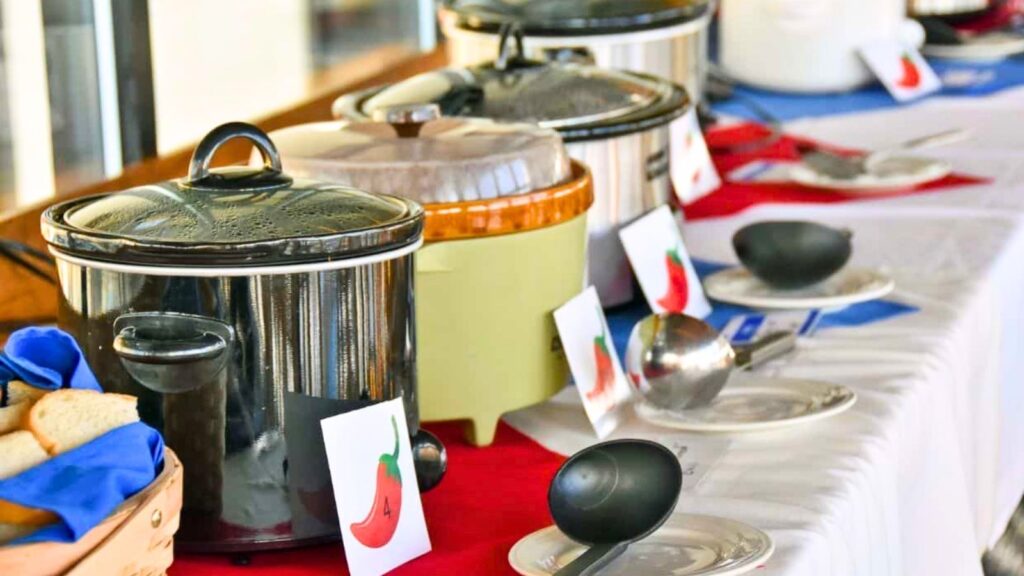
Chili tends to be treated as cold-weather cooking, something to simmer after the temperature drops. The competitive calendar tells a different story.
September is a busy month for organized chili cook-offs, with sanctioned competitions and community events taking place from Pennsylvania and Wisconsin to California, Colorado and West Virginia. The cooks who show up bring recipes developed and refined through the competitive season, competing for prizes, titles and advancement opportunities at events some communities have hosted for more than four decades.
The competitive circuit most home cooks have never seen
The International Chili Society and Chili Appreciation Society International sanction competitive chili cook-offs across the country. ICS sanctions cook-offs nationwide, while CASI says it sanctions nearly 400 domestic and international qualifying events each year.
ICS competitions include Traditional Red, Homestyle, Chili Verde and Veggie. Traditional Red uses meat and red chile peppers and prohibits beans and non-vegetable fillers such as rice and pasta. Homestyle includes beans, which are required and should be visible in each spoonful. Chili Verde uses green chile peppers and excludes non-vegetable fillers such as rice and pasta. Veggie excludes meat and meat by-products, and beans are permitted. Sanctioned events may also include salsa competition.
CASI sanctions cook-offs year-round, and CASI competition rules prohibit beans, macaroni, rice, hominy and similar fillers. The 1967 Terlingua cook-off between writer H. Allen Smith and journalist Wick Fowler became a foundational legend of modern competitive chili. Some September cook-offs, including ICS-sanctioned events, offer formal qualification and advancement opportunities. Many others are independent community competitions with no ties to a national circuit, and the September calendar includes both.
From a sanctioned qualifier to a 47-year city tradition
The Hanover Chili Cook-Off, hitting its 30th anniversary this year, combines community fundraising with a high-stakes ICS-sanctioned competition at Moul Field on Labor Day Sunday, Sept. 6. More than $7,000 in chili prizes are on the line, and the Exchange Club has used the event to raise funds for local charities for three decades. The sanctioned categories give competitors a path toward ICS advancement.
Green Lake, Wisconsin, will host a sanctioned chili cook-off on Sept. 12 at Deacon Mills Park. As many as 40 teams compete under a tent on the waterfront, cooking from 10 a.m. with judging at 3 p.m. and free admission all day. The cook-off is part of the ICS competitive calendar, and top finishers may earn advancement toward the ICS World Championship. Competitors come from across the Midwest.
Not every September cook-off is tied to a national circuit. Sausalito bills the event as its 47th annual Chili Cook-Off, and the city has its own way of doing things. Organizers recommend about 20 gallons, and the city’s chef instructions list a 15-gallon minimum. Judges evaluate three categories: Judge’s Choice, People’s Choice and Best Booth. A hot pepper eating contest, with contestants advancing through increasingly spicy peppers, runs alongside the main event.
Where the harvest and the competition collide
The September chili calendar is not limited to cook-offs. The Pueblo Chile and Frijoles Festival takes over the Union Avenue Historic District in Pueblo, Colorado, from Sept. 18 through 20. The multi-day festival celebrates Pueblo chile, a locally grown pepper associated with the Arkansas River Valley. On-site roasters line the street, and farm stands sell fresh and roasted chile by the bushel.
The festival’s Chili and Salsa Showdown takes place the day before the festival opens, on Thursday, Sept. 17 at the Pueblo Convention Center, with winners announced during the festival on Friday. A Jalapeño Eating Contest, a Chihuahua and Friends Parade and a hot air balloon festival round out a weekend that treats the local harvest like a civic holiday.
September’s final entry comes from the Ohio Valley. The RegattaFest Chili Cook-Off Showdown in New Martinsville, West Virginia, is part of the festival’s 15th anniversary weekend. The chili showdown’s public sampling and judging take place on Sunday, Sept. 27, with entry at $15 per pot and a 1.5-gallon minimum. Entries compete in six categories, including People’s Choice and Judges’ Choice. Attendees vote for People’s Choice, while judges determine the winners in the other categories.
September’s chili events range from ICS-sanctioned qualifying contests to local fundraisers and community tasting festivals. The common thread is not a uniform rulebook or championship path, but the annual return of public chili cooking, well before cool weather arrives. What started in Terlingua as a one-off argument between two writers has grown into a civic tradition that fills weekends from coast to coast, powered by local pride, charity fundraising and the conviction that a great pot of chili does not need cold weather to justify it.
Mandy writes about food, home and the kind of everyday life that feels anything but ordinary. She has traveled extensively, and those experiences have shaped everything, from comforting meals to small lifestyle upgrades that make a big difference. You’ll find all her favorite recipes over at Hungry Cooks Kitchen.