
Walking yoga weaves yoga principles like breathwork and mindful movement into an ordinary walk, and it has become one of the fastest-growing fitness trends. Its appeal is easy to understand for people who find traditional fitness intimidating or hard to fit into their day, and National Yoga Month this September is a good time to find out why. No studio, no mat, no audience and no membership is required.
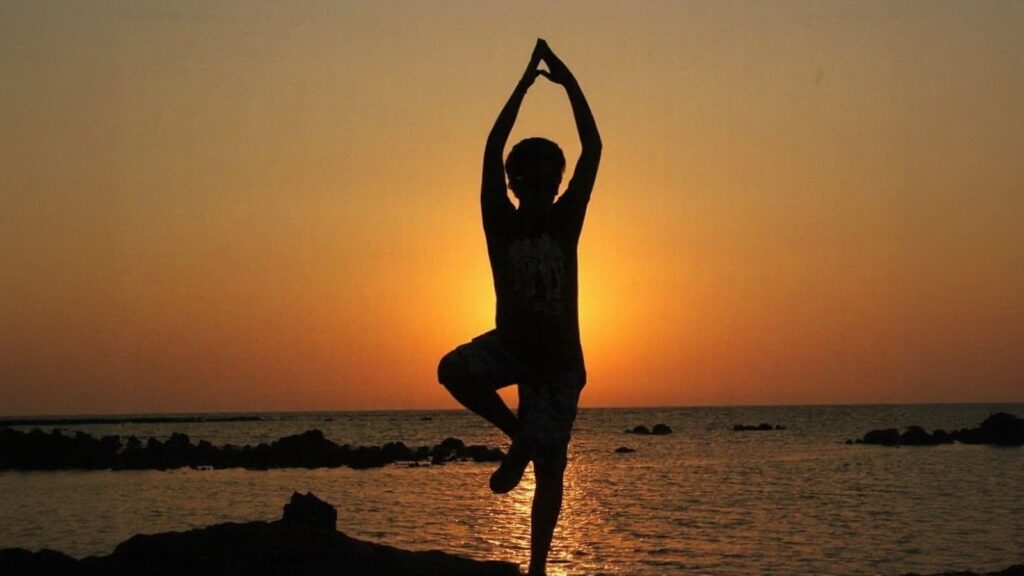
Walking yoga takes the necessary practices that define traditional yoga and weaves them into a walk. Someone trying it might sync each inhale to a four-step count, pause at a park bench for a standing lunge or roll their shoulders between blocks on a Tuesday morning commute. The pace is self-selected, and the structure is loose enough that no two people do it exactly the same way. It fits into a lunch break, a dog walk or 20 minutes before the rest of the house wakes up, and it looks to everyone else like an ordinary stroll.
A 2,400% search surge in one year
Walking yoga saw a 2,414% increase in Google search interest between July-September 2024 and July-September 2025, making it the second-fastest-growing fitness trend in PureGym’s 2026 ranking. It trailed only Japanese walking, a structured interval approach that saw a 2,968% surge in the same comparison. Both belong to a broader wave of walking-based workouts that dominated the report’s trend forecast.
Why the format may feel accessible
More than half of respondents in PureGym’s nationally representative survey of more than 2,000 people don’t currently exercise, and the reasons are specific. Nearly a third say they simply dislike it. Among those who find gyms intimidating, 4 out of 5 say the problem is exercising in front of other people.
Walking yoga avoids some of those gym-specific barriers by design. It is solitary, self-paced and built entirely on an activity most people already do every day. Whether that explains the search surge is an open question, but the match between what keeps people from exercising and what walking yoga avoids is difficult to miss.
Breathwalk research adds early evidence
In two pilot randomized trials at the University of Edinburgh, adults who used a yoga-based breathing pattern while walking had larger reductions in state anxiety than those assigned to normal walking, although the difference between groups was statistically significant only in the second trial. In that second trial, only the breathwalk group saw a significant drop in anxiety over time.
The sample sizes were small, and the findings are preliminary. But they provide early evidence that adding a yoga-based breathing technique to a walk may offer greater anxiety reduction than walking alone. The breathwalk protocol studied is not identical to the broad category of walking yoga, but the two share a foundation in combining deliberate breathing with walking at a moderate pace.
The breathwalk protocol those researchers tested was not a recent invention. Breathwalk has roots in Kundalini yoga and yogic breathing practices and has been taught as a meditative walking exercise for decades. A book formalizing the method was published in 2000, and the technique had a small, dedicated following long before walking yoga searches climbed 2,414% in a single year. The practice itself predates the current surge in search interest.
No gym, no schedule, no gear
Walking yoga takes different forms depending on who is doing it. Some practitioners count steps to breaths, a pattern the Edinburgh researchers specifically studied. Others describe pausing for standing poses at a park bench or tree trunk before continuing their walk. Sessions range widely in length, and descriptions of the practice suggest there is no single standard format. People adapt it to whatever their walk already looks like.
September’s National Yoga Month gives first-timers a calendar prompt, but walking yoga has never depended on one. The practice existed for decades before search interest found it. Whether the trend lasts, the walk was always there.
Mandy writes about food, home and the kind of everyday life that feels anything but ordinary. She has traveled extensively, and those experiences have shaped everything, from comforting meals to small lifestyle upgrades that make a big difference. You’ll find all her favorite recipes over at Hungry Cooks Kitchen.