
Three national parks that required advance reservations all summer just dropped the requirement entirely, and the timing lines up with one of the best windows of the year to actually visit them. Post-Labor Day crowds across the national park network fall sharply from their June and July peaks. The parks are open. The gates are clear. The crowds are elsewhere.

Back in February, the National Park Service confirmed that Yosemite, Glacier and Arches would drop their reservation systems for 2026. Rocky Mountain took the opposite path and kept its timed-entry system. Daily recreation visits across the park network drop significantly from their June and July peaks after Labor Day, per the NPS Statistical Abstract, meaning three now-open parks are hitting their least-crowded stretch right now.
Yosemite Is Open and Running Without a Reservation Gate
Yosemite required vehicle reservations during peak hours in both 2024 and 2025. That system is gone for 2026. The park evaluated traffic and parking data from last season and replaced reservations with real-time traffic monitoring, active parking management in the valley and extra seasonal staff at key intersections. Tuolumne Meadows is still accessible through the fall, though some facilities there close by late September.
Glacier’s Logan Pass Is Completely Open After Labor Day
Glacier ran vehicle reservation pilots from 2021 through 2025. All of that is gone this year. The park ran a ticketed shuttle to Logan Pass and three-hour timed parking at the pass through Labor Day on Sept. 7. After that date, the shuttle tickets and the parking time limits are both done for the season. No reservation requirement, no shuttle ticket, no parking clock running at Logan Pass. Going-to-the-Sun Road typically stays open into October, and fall color hits the higher elevations by mid-September.
Arches Dropped Timed Entry for the First Time Since 2022
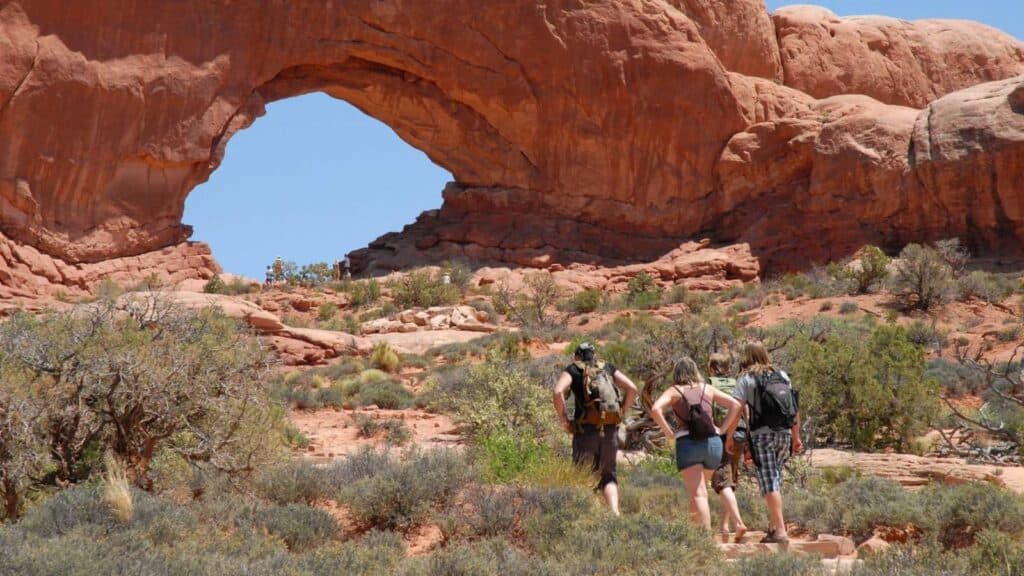
Arches ran a timed-entry system every year from 2022 through 2025. For 2026, it’s gone — visitors can show up during operating hours without booking a window. Entrance lines and weekend parking crunches are still possible, and the park uses a webcam at the gate to monitor congestion in real time. Devils Garden Campground and Fiery Furnace hikes still need separate reservations, but the general timed-entry ticket that controlled access for three years is finished.
Rocky Mountain Kept Its Reservation System but Elk Season Just Started
Rocky Mountain still requires timed-entry permits through mid-October, so it’s a different kind of September trip. The payoff: every Sept. 1, the park closes select meadow areas from 5 p.m. to 10 a.m. to protect elk during the fall rut, and the bull elk bugling that follows is one of the better wildlife spectacles in the park system. Estes Park’s annual Elk Fest typically follows in early October.
Shenandoah Is the East Coast Version of This Same Window
Shenandoah has no reservation system, no timed entry and 105 miles of Skyline Drive generally open in September. The park’s fall color season typically starts in late September at the highest elevations and works down through October and November. Early September puts you ahead of the crowds that pack campgrounds and lodges on fall weekends. Those spots are usually gone by midsummer. Just off the park at Rockfish Gap, the Blue Ridge Parkway hits peak raptor migration in September, with hawks, falcons, eagles and vultures riding the thermals along the ridge.
The Window Is Open Right Now
The NPS recorded 323 million recreation visits in 2025, a 2.7% dip from the record set in 2024. Meanwhile, three parks that were locked behind booking windows all summer are sitting open right now, at the time of year when crowds are historically at their lowest. Check out some alternative national parks if the big names are still too busy, but this September, the big names have room.