
Apple cider donuts have a reputation for selling out early, but this year the apple harvest that makes them possible started earlier than most orchard-goers expect. At orchards known for them, batches are made fresh from the morning’s press and gone well before the afternoon crowds arrive. The window is already open, and daily output is limited by pressing and frying capacity, not by any October timeline.
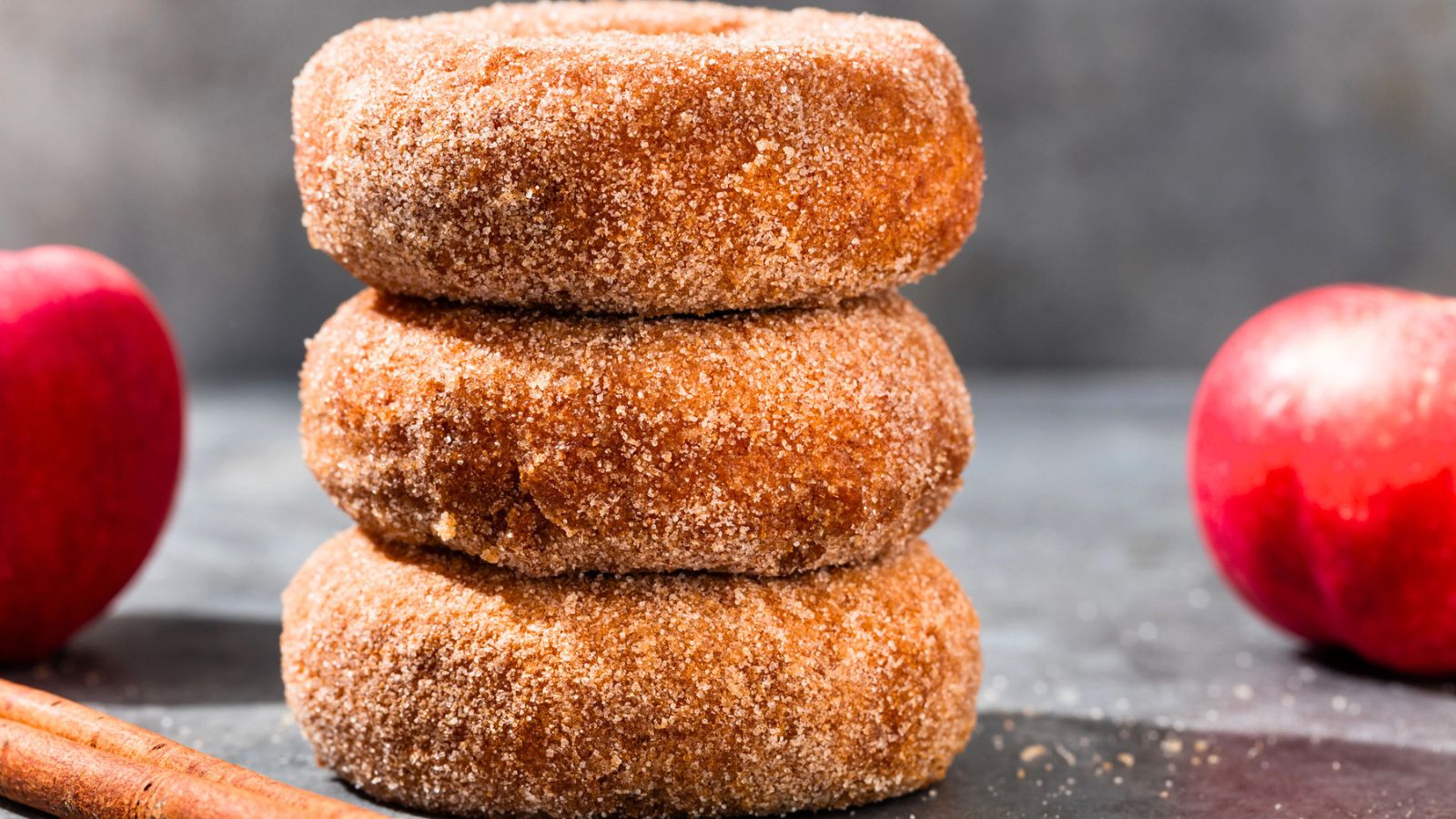
The orchard-fresh apple cider donut has proved remarkably resistant to imitation. Whole Foods, Trader Joe’s, Walmart, Aldi and a rotating cast of regional grocery chains have all put versions on the shelf each fall. Some have earned decent reviews, but what they can’t replicate is the experience of eating one hot from a fryer at the source.
Packaged versions are widely considered best warm and fresh from the fryer; most lose texture and flavor in ways a clamshell can’t solve. At orchards that press their own cider and fry to order, the donut is made from juice pressed that morning from fruit in active harvest, fried in small batches and meant to be eaten warm. A packaged version eaten hours or days later is a different experience entirely.
The season runs earlier
Warm spring temperatures pushed Michigan’s apple harvest one to two weeks earlier than normal this year. It created a window between peak cider production and the cooler fall weekends that send families out to orchards.
Michigan is the country’s third-largest apple-producing state, and what the state’s harvest calendar does in a given year gives a useful read on how the broader season is moving. In 2024, New York growers similarly reported harvest running one to two weeks ahead of schedule in the Hudson Valley, a pattern orchards across the Northeast had to build around.
The mechanics behind the sell-outs are worth understanding because they are not arbitrary. At orchards that press cider from their own current-season apples, an early harvest means an early press, which means peak freshness arrives well before the peak-foliage crowds show up. A freshly fried cider donut’s quality deteriorates quickly, and daily output is limited by what the press and the frying setup can produce each morning. That is not a marketing decision but a production reality.
The donut that outlived the company that introduced it
The modern commercial apple cider donut is younger than it looks. The version Americans recognize today grew out of a Sweet Cider Doughnut mix introduced in 1951 by a company called the Doughnut Corporation of America, designed to have what the New York Times described as “a natural fall appeal.”
The idea of folding cider directly into the batter rather than serving the two things side by side became a commercially popular innovation, and the format took hold at orchards across the Northeast. J. Lyons and Co. acquired Doughnut Corporation of America in the early 1970s, but the donut format it popularized outlasted the company, eventually becoming the kind of food that people build fall weekend trips around.
At orchards that have been pressing their own cider for decades, the donut recipe is tuned to the juice from their own trees, dialed in over years of seasonal production. That specificity is part of what makes the orchard version difficult to replicate at scale in exactly the same form.
What this fall actually means
The season is not gone, and October orchards still have plenty to offer, with Michigan’s harvest calendar running through November for some late varieties. But in some of the country’s most established apple-growing regions, the overlap between fresh early-season cider and fall-weather crowds has become harder to count on.
In Michigan this year, that overlap arrived earlier than expected. Growers who have been navigating this are increasingly building their operations around the reality that consumers may not be ready when the apples are.
For anyone who has driven to a cider mill in mid-October, arrived at the donut window and been told the last batch sold out two hours ago, this is the explanation. The season runs on the apple’s schedule, not the calendar’s. In a year when that schedule arrived early, peak freshness can close before the October crowds even arrive.
Go soon, not later
The orchards producing the best cider donuts this fall are already into their season, and the freshest batches go early in the day. Checking local orchard hours before the weekend is worth doing now, because the Saturday morning window at a good cider mill tends to get shorter right around the time everyone else realizes the season is further along than they thought.
Mandy writes about food, home and the kind of everyday life that feels anything but ordinary. She has traveled extensively, and those experiences have shaped everything, from comforting meals to small lifestyle upgrades that make a big difference. You’ll find all her favorite recipes over at Hungry Cooks Kitchen.