
Standing at a food truck window while the tablet screen swings around, tip percentages glowing, is one of the moments many Americans don’t quite know how to handle. Many food trucks prepare meals to order in tight quarters, but the tipping norms that loosely govern sit-down restaurants and fast food counters have never clearly applied here. That uncertainty makes the order feel awkward, and it plays out differently at each stop.
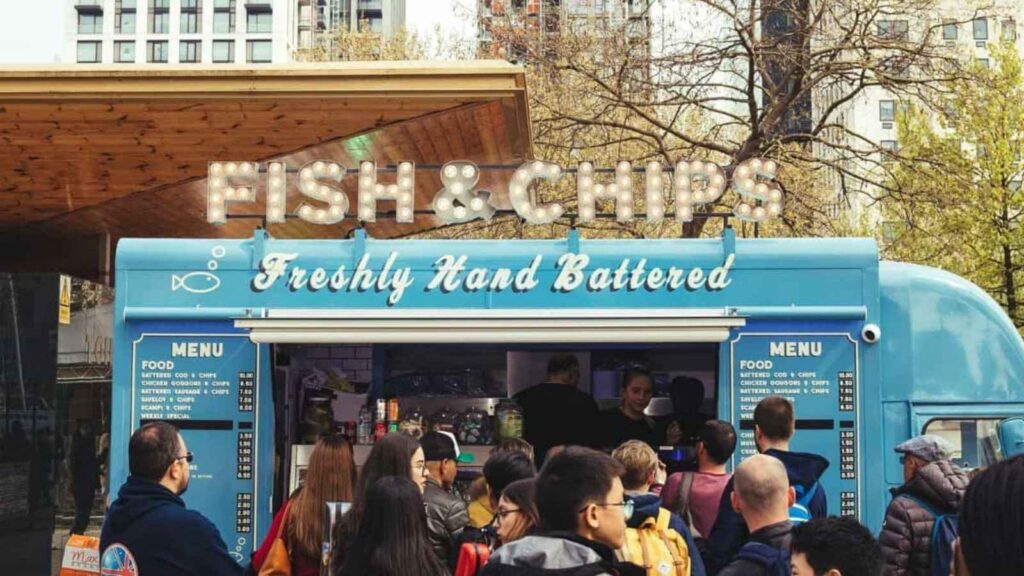
Food trucks can look like counter service from the outside, with one or two people taking orders, handling preparation, packaging and handing them through a window while often managing a line at the same time. That kind of operation involves real hands-on work, which is part of why the tipping question never settled cleanly. More food trucks are operating across the country than ever before, turning up at farmers markets, festivals and block parties, which means more Americans are encountering that window moment with some regularity.
Tipping at food trucks is already dropping
A March 2026 survey of 1,000 U.S. adults found 27% tip at food trucks, down from 32% in September 2025. Five percentage points in half a year. The same survey found that 59% of consumers feel compelled to tip when a digital payment screen faces them, down from 66% six months prior, though that figure indicates responses to digital screens broadly, not food-truck windows specifically.
The data implies a growing willingness to skip gratuities in certain settings. Food trucks sit in genuinely ambiguous territory between counter service and kitchen labor, and that uncertainty shows up most directly in this format.
Appreciated; not required
No universally established tipping percentage exists for food trucks the way it does for full table service. A dollar or two, or somewhere in the 10 to 15% range on a more involved order, is a commonly cited framework and a reasonable one given the work involved. Skipping the tip is not a social offense. The digital prompt carries no special authority on that point.
In the past, customers would see a tip jar sitting on a counter. Today, a glowing screen with three pre-selected amounts is a different kind of ask. The prompt comes from the operator’s point-of-sale configuration and doesn’t establish anything definitive about what the window expects.
The tip jar never put anyone on the spot
The tip jar sat on the counter, usually a mason jar or a plastic cup with a few bills already inside, and it was understood without discussion. Customers finished the transaction, dropped something in on the way past or kept walking, and nobody clocked which choice got made.
The iPad makes the same fundamental request, but it faces the customer, holds for a response and even gives a suggested amount already highlighted. The jar let the decision happen privately; the screen turns it into a brief public moment, with a line of people waiting behind.
Festival crawls are a different situation entirely
Food truck festivals operate under different conditions. At a single truck, a $2 tip is a simple call. At a festival with eight stops, that totals $16 in tips on top of food spending, and many people don’t factor that in. One approach worth considering is to weigh the tip against how much active preparation was visible at each window, keeping in mind that even trucks handling pre-made or partially prepared food involve real labor in sourcing, prep and service. Effort at the window is a reasonable guide, but the screen’s presence alone is not.
The tip prompt fires before the food is even cooked
On many digital point-of-sale setups, the tip prompt appears during the ordering process, before payment or before the food is ready. The gratuity is asked for before the food even exists, and operators can often adjust that order.
Once you understand that detail, the interaction loses most of its strangeness. The screen is running a checkout sequence, not evaluating the meal. The order itself and the visible work at the window are the more useful guides.
The window moment is becoming harder to avoid
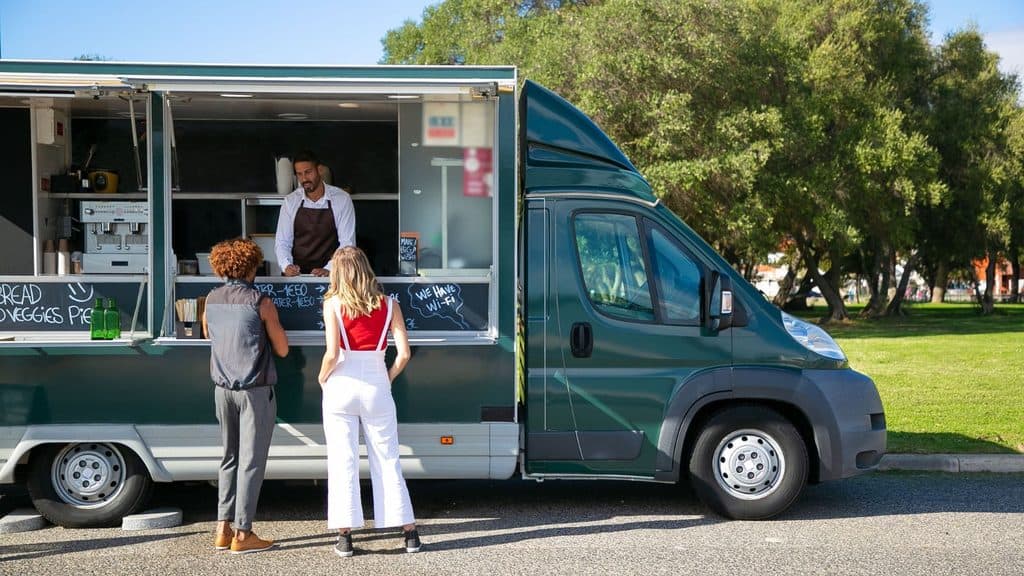
Food trucks have become a steady presence across the country, turning up at farmers markets, festivals, block parties and city lunch crowds with enough regularity that the window moment is no longer rare. The more often it comes up, the more useful it is to have a clear sense of how to read it.
The broader tipping data points to Americans taking a harder look at where and how much they tip. A tip at a food truck is worth thinking through rather than defaulting to the screen’s suggestion. The situation itself usually makes the right call fairly obvious.
Jennifer Allen is a retired professional chef and long-time writer. Her work appears in dozens of publications, including MSN, Yahoo, The Washington Post and The Seattle Times. These days, she’s busy in the kitchen developing recipes and traveling the world, and you can find all her best creations at Cook What You Love.