
Visiting a fall pumpkin patch is one of the season’s great family traditions, and more families are bringing the dog along than ever before. A busy patch can be one of the most sensory-intense outings a dog has all season, full of unfamiliar animals, hay dust, crowds and strangers who all want to say hello. What most owners miss is that a dog working hard to cope in that environment can look almost exactly like one having the time of its life.
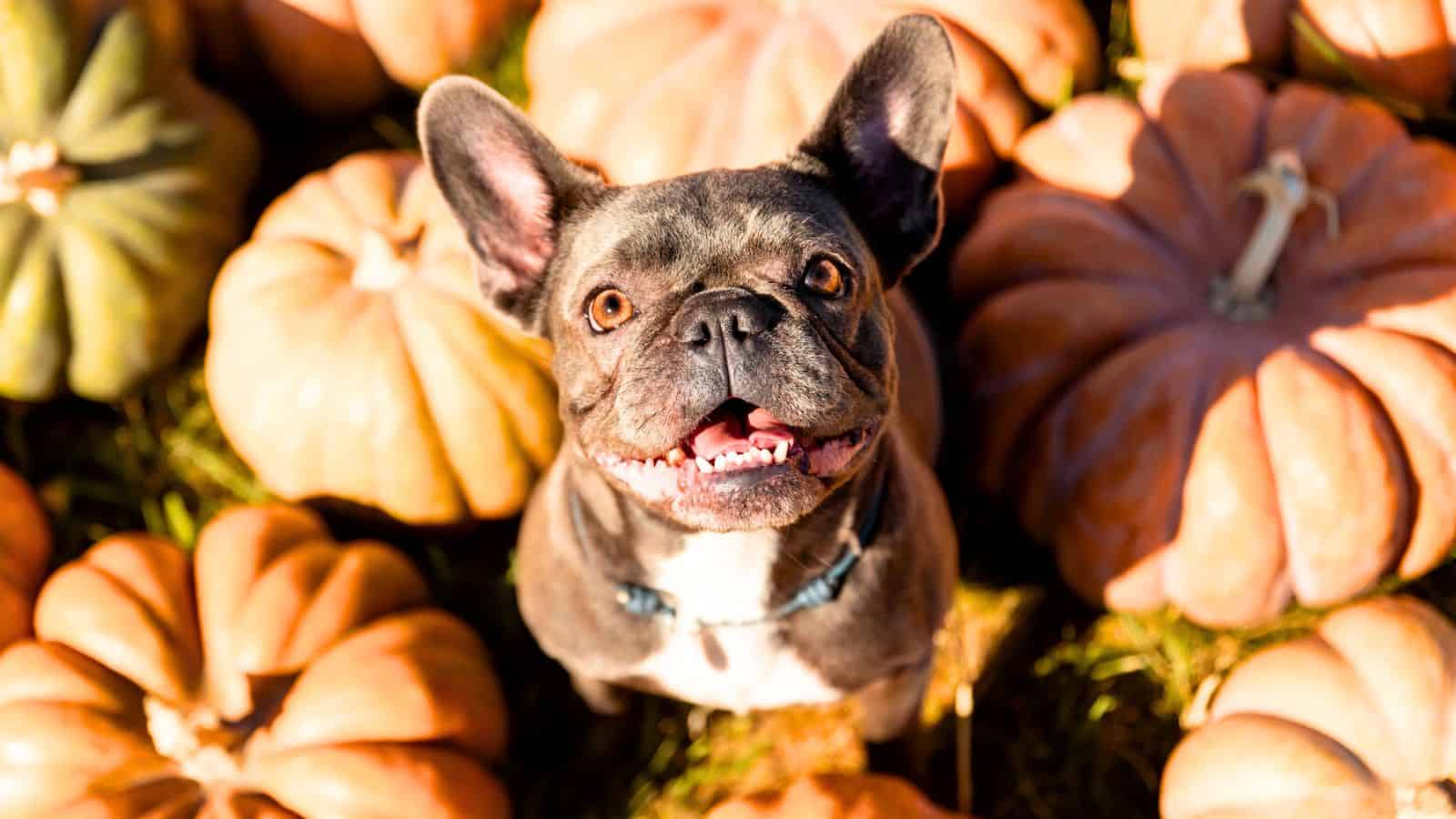
Most owners are focused on finding the right pumpkin, keeping the kids corralled and getting a decent photo. More patches are welcoming leashed dogs than ever before, which is part of why knowing what to watch for matters more than ever. The dog, meanwhile, is processing everything at once, and the two experiences are not as similar as they look from the end of the leash.
The pumpkin patch is more overwhelming for dogs than it looks
Dog ownership in the United States reached 71 million households this year, a 4% jump from the previous year, and dogs are joining dog programs and family outings at a rate that reflects how central they have become to everyday life. A busy patch can combine farm animals penned nearby, loose hay, children, tractor noise and strangers who lean in close the moment they spot a photogenic dog on a leash. Each of those is manageable on its own. Together, on a busy October weekend, they can add up fast.
What dog body language actually means
Dogs signal stress through clusters of body-language changes, and the American Kennel Club, drawing on the work of Norwegian trainer Turid Rugaas, has documented more than 30. Reading several signals together is what makes the list useful. Whale eye shows as a crescent of white visible at the edge of the eye when a dog turns its head away while keeping something in its sightline. Lip licking unrelated to food can signal stress or appeasement, especially when it appears alongside stress yawning, sudden stillness or a body that angles away from the action. Even outgoing, well-socialized dogs can show these signals when a situation tips past comfortable, which catches many owners off guard.
Kids at pumpkin patches run, shriek, crouch down at face level and reach out without warning, which are all behaviors documented as potential stress triggers in some dogs. A dog that handles a calm hello at home may read the same interaction very differently after a long afternoon at the patch. The tail tells one story. The rest of the body tells another.
Hazards hiding in plain sight
Hay dust and airborne particles can irritate dogs’ nasal passages and upper respiratory tracts, and on a dry October day at a farm, the result is often a reverse sneeze: that sudden, rapid honking inhalation that sounds alarming the first time and is usually harmless. Veterinary sources describe it as a reflex response to nasopharyngeal irritation, with most episodes brief and self-resolving, though new or frequent episodes are worth a mention to a vet.
Plain, cooked, unseasoned pumpkin is generally safe for dogs and can support mild digestive health. Decorative gourds are a different story. Keep dogs from chewing them. Pieces can cause choking or an intestinal obstruction, and many decorative gourds are coated with shellac, lacquer or wax that makes them unsuitable for dogs to chew regardless. If a dog swallows a large piece or shows signs of distress, call the vet.
Checking patch pet policies before arrival is worth the two minutes. Some farms that welcome leashed dogs ask owners to keep them clear of petting zoo pens, and knowing that ahead of time means no one’s afternoon gets cut short at the goat pen gate.
The fall photo problem
Part of the appeal of a pumpkin patch outing is the fall photo, the dog on the hay bale, surrounded by orange, everyone looking at the camera. From the dog’s perspective, that same moment involves strangers closing in, kids shifting around and an owner gone tense, waiting for the shot. A dog that stops participating, turns away repeatedly or holds a rigid posture is showing the same signals described above.
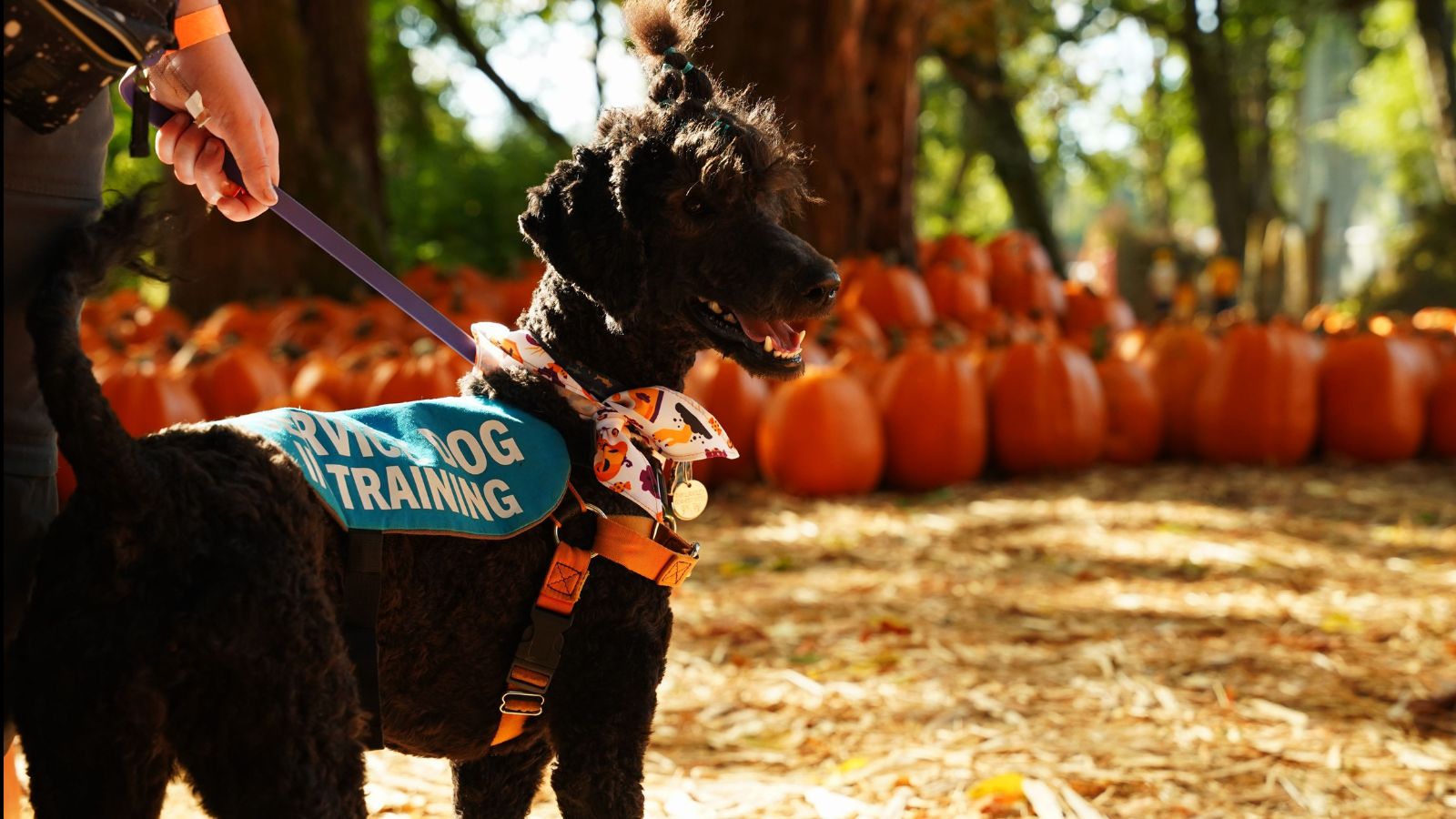
When those signals appear, step away from the crowd, let the dog sniff without being handled, and give it a few quiet minutes to see whether it’s comfortable enough to continue. A dog that cannot relax after a break is telling owners something worth listening to. The patch will be there next weekend.
Mandy writes about food, home and the kind of everyday life that feels anything but ordinary. She has traveled extensively, and those experiences have shaped everything, from comforting meals to small lifestyle upgrades that make a big difference. You’ll find all her favorite recipes over at Hungry Cooks Kitchen.