
A Norse explorer reached North America nearly five centuries before Columbus, and the United States put him on its federal calendar for it. The country first honored the date with a presidential proclamation in 1935, and Congress made National Leif Erikson Day an annual observance on Oct. 9 in 1964. The fanfare, the symbols and the cultural moment that should have followed never quite did.

Leif Erikson was born around 970 AD in Iceland, the son of Erik the Red, a man whose father had been driven out of Norway and who was himself banished from Iceland for manslaughter, and who responded by sailing west and establishing the first Norse settlement in Greenland. Leif grew up there, eventually sailed to Norway, and was tasked by King Olaf Tryggvason with introducing Christianity to Greenland.
On the way home, depending on which 13th-century Icelandic saga one consults, he either set out to follow a route described by a merchant named Bjarni Herjolfsson, or got blown entirely off course and stumbled onto a continent by accident. The two accounts differ on how Leif came to reach the new lands. Either way, around the year 1000 AD, he reached a place he called Vinland, spent a winter there, and sailed back. According to the saga, his crew rescued a shipwrecked group of sailors on the return voyage, earning Leif the nickname “Leif the Lucky.” Back in Greenland, he settled in as chief and never returned to Vinland.
A real place on the edge of Newfoundland
For centuries, the Vinland voyages survived primarily in medieval written accounts, especially the Icelandic sagas. Then in 1960, Norwegian explorer Helge Ingstad arrived at the northern tip of Newfoundland, where local resident George Decker led him to a group of overgrown mounds and ridges near the small fishing community.
Ingstad’s wife, archaeologist Anne Stine Ingstad, led excavations from 1961 to 1968. What they found was unmistakably Norse, dated to the 11th century and consistent with the saga accounts of Norse voyages to Vinland. Eight buildings, iron-smelting equipment and artifacts matching the saga descriptions were among the finds. The site, L’Anse aux Meadows, became a UNESCO World Heritage Site in 1978, one of the original 12 properties inscribed on the new World Heritage List. It still stands on the edge of the island, welcoming visitors each summer and fall.
The immigrant ship behind the date
The date was chosen to commemorate the arrival of the Restauration in New York Harbor on Oct. 9, 1825, the beginning of organized Norwegian emigration to America. The small sloop left Norway with 52 people, including Quakers, Haugean pietists and others, and arrived in New York with 53 after a baby was born during the voyage. Cleng Peerson, who had traveled to America earlier to scout conditions, helped lay the groundwork for the migration.
Wisconsin became the first U.S. state to recognize Leif Erikson Day in 1929, largely through the efforts of a Norwegian-American academic named Rasmus Anderson. Congress made the observance annual in 1964, authorizing the president to proclaim Oct. 9 as Leif Erikson Day each year. President Lyndon B. Johnson issued the first proclamation under the new law that same day, and every president since has issued one annually.
SpongeBob became the holiday’s most recognizable moment
For a day with surprisingly little pop-culture visibility, one of its most recognizable appearances may be a Season 2 episode of SpongeBob SquarePants called “Bubble Buddy,” which aired Feb. 3, 2001. SpongeBob wakes up wearing a Viking costume, announces the holiday to no one in particular, and says “hinga dinga durgen,” a deliberately nonsensical Scandinavian-sounding phrase. The episode’s opening narration jokes that SpongeBob made the holiday up, but he didn’t. By the time the episode aired, the holiday had been a federal observance for decades. The fact that a cartoon’s throwaway gag became the most recognizable cultural moment associated with the holiday says something worth sitting with.
60 years in Columbus Day’s shadow
Leif Erikson Day emerged from a Norwegian-American movement that emphasized the Norse voyages to North America centuries before Columbus. Its founders used Erikson to challenge the idea that Columbus deserved recognition for the earliest known European voyage to North America. Columbus Day is a federal legal holiday, with federal recognition dating to the 1930s. Federal employees generally get the day off, while schools and state governments decide whether to observe it. Leif Erikson Day is a federal observance, which is a different and quieter category.
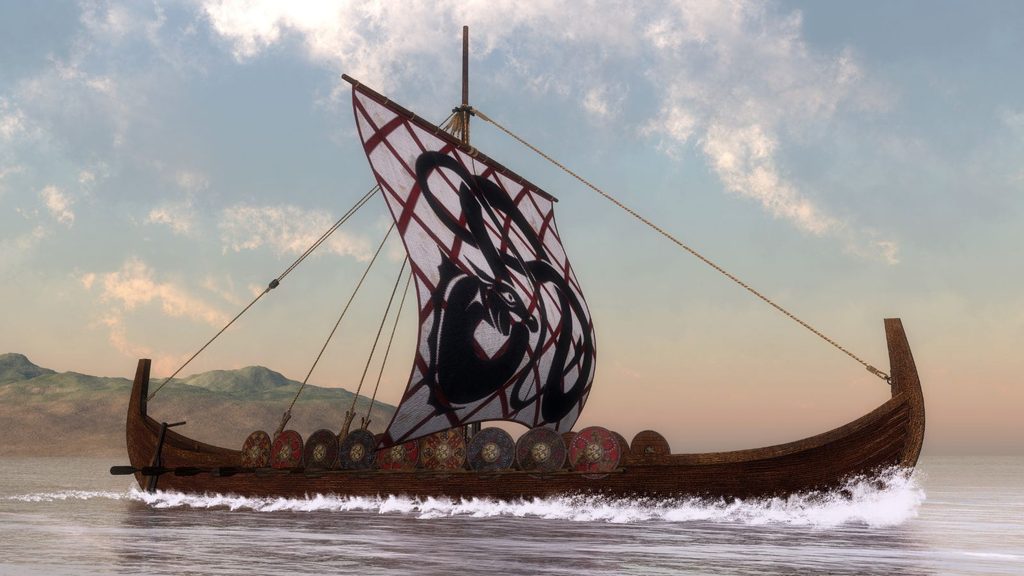
Columbus Day remains recognized in some form by 30 states and three territories, though only 20 states and two territories make it a paid holiday for state workers. The holiday that Leif Erikson Day once challenged is now caught in a different debate, one increasingly centered on Indigenous Peoples’ Day. Erikson remains on Oct. 9, proclamation intact, largely unnoticed.
A holiday still waiting for its moment
Most obscure holidays fade because the history behind them fades with them. Leif Erikson Day is the exception. In 2021, scientists used radiocarbon dating tied to a solar-storm event to establish AD 1021 as the year of Norse activity at L’Anse aux Meadows, the first scientifically precise date ever assigned to the Norse presence in North America. The evidence for that presence has never been stronger, and the federal observance created to commemorate it remains nearly as invisible as it was in 1964. That is a genuinely strange outcome, a story whose proof keeps accumulating, attached to a holiday that history keeps failing to notice.
Mandy writes about food, home and the kind of everyday life that feels anything but ordinary. She has traveled extensively, and those experiences have shaped everything, from comforting meals to small lifestyle upgrades that make a big difference. You’ll find all her favorite recipes over at Hungry Cooks Kitchen.