
One candle inside a grinning pumpkin can turn a porch display into a fire risk. Dried stalks, paper garlands, and crowded plugs also deserve a second look. Halloween hazards aren’t always in the decoration itself. Trouble often starts with where you put it, how you power it, and whether you leave it running.
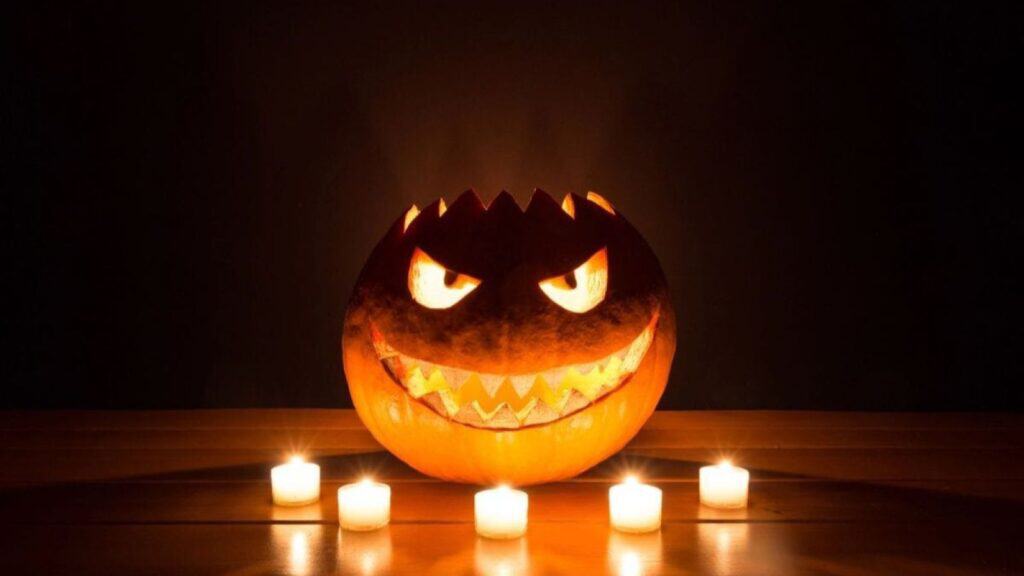
Real Candles in Jack-O’-Lanterns
A carved pumpkin can glow without an open flame. The U.S. Consumer Product Safety Commission recommends flameless lights or glow sticks for jack-o’-lanterns. If you choose a real candle, keep the pumpkin away from doorsteps and landings. A passing costume could brush against the flame.
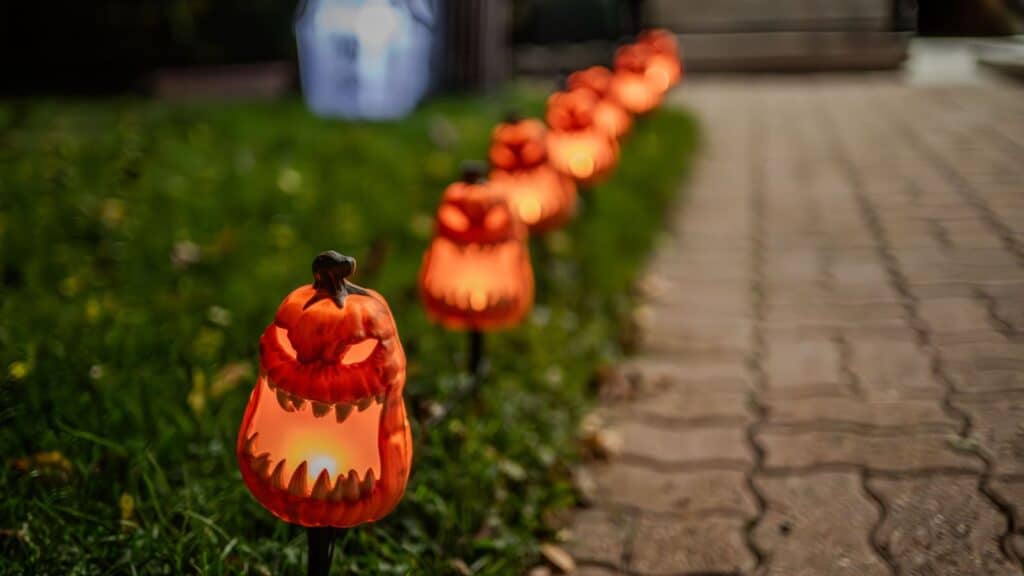
Walkway Candles and Torches
A row of glowing flames along the sidewalk makes an entrance dramatic, but it also puts fire near passing costumes. Tennessee’s State Fire Marshal’s Office recommends flashlights or battery-operated lighting instead of candles and torches along walkways. You’ll still light the path without placing open flames beside trick-or-treaters.
Candles Beside Curtains
A candlelit pumpkin on the windowsill can sit closer to fabric than you realize. The FDNY says to keep candles at least 4 feet from curtains, blinds, draperies, bedding and decorations. A clear, sturdy spot is better than a crowded sill. Never leave a burning candle unattended.
Cornstalks, Hay and Straw
Cornstalk bundles and hay bales look right at home beside a fall porch. They also burn easily. The Electrical Safety Foundation International (ESFI) identifies hay and cornstalks as highly flammable. Keep them away from flames, light bulbs, and heaters. Don’t tuck a burning candle into a display of dried stalks.
Crepe Paper and Dried Flowers
Paper streamers can make a doorway look like a haunted hallway. Dried flower arrangements add a similar effect. Tennessee fire officials warn that crepe paper and dried flowers are highly flammable. Keep these materials clear of open flames and hot light bulbs. Check the whole garland, including any ends hanging near a lamp.
Decorations Near Heaters and Fireplaces
That skeleton beside the space heater needs more room than you might think. The U.S. Fire Administration says to keep anything that can burn at least 3 feet from heat sources, including fireplaces and space heaters. Measure the gap before adding garlands, fabric or paper decorations around a warm spot.
Frayed Light Strings
Last year’s orange lights may look fine until you unwind them. The CPSC advises checking decorative strands for frayed or bare wires, cracked sockets and loose connections. Discard a damaged set instead of hoping it will work for one more Halloween. Give plugs and cords a close look before the display goes up.
Too Many Light Strings on One Cord
More lights do not automatically mean a better display. The U.S. Fire Administration advises you to read the manufacturer’s instructions for how many light strands can connect. Connection limits vary by product, especially between older incandescent sets and LEDs. Check the extension cord rating rather than treating an old three-string rule as universal.
Inflatables and Fog Machines
A giant inflatable and a fog machine can demand more power than a small light strand. Prince William County Fire & Rescue recommends heavy-duty extension cords for high-wattage Halloween equipment like these. Choose a cord rated for the device instead of grabbing the nearest thin household cord. Avoid loading too many powered decorations onto one cord.
Indoor-Only Decorations Used Outside
A light-up ghost meant for the living room does not belong on a rainy lawn. ESFI says outdoor decorations should be marked for outdoor use. It also recommends ground-fault circuit interrupter protection where outdoor electrical products may encounter water. Check every light, cord, and plug before setting up the yard.

Decorations Left On Overnight
Your house does not need to glow after everyone has gone to sleep. ESFI recommends turning off electrical decorations before you leave home or go to bed. Extinguish every open flame as well. Add that check to your evening routine, right after you close the door on the last trick-or-treater.
Think Like a Trick-or-Treater
A Halloween display looks different from a child’s height than it does from the curb. Before the doorbell starts ringing, walk the path your visitors will take and notice what a trailing sleeve or curious hand could reach. A little attention to that view can keep the fun centered on the costumes and candy, where it belongs.