
Ever wonder where the idea of a tea bag came from? A New York merchant’s little silk sample bags usually get the credit for starting the tea bag. However, cloth tea pouches were already on file years before that story began, and an earlier patent describes more of a contraption than a pouch. In the years that followed, new materials and a new style of tea suited the bag well.
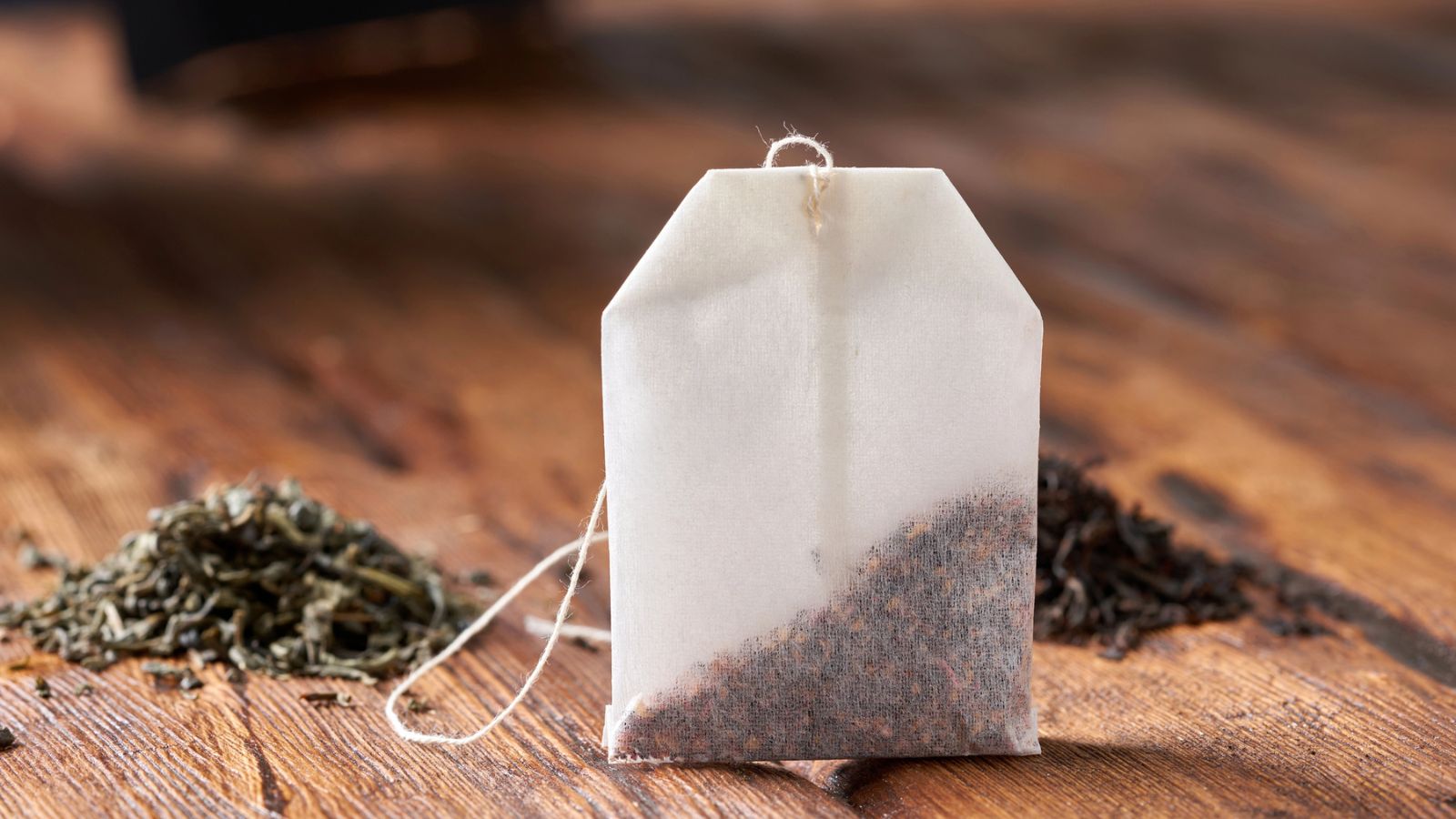
Thomas Sullivan, a New York tea merchant, reportedly sent samples to customers in small silk bags instead of metal tins or wooden boxes. Some customers dipped the whole bags straight into hot water and left them to soak, even though the samples were never meant to be used that way, and they asked for more. The reported trouble was that silk was too fine and costly for single servings made every day.
The earliest patent dates to 1880
The Sullivan silk bag story ranks among the most popular tea legends and is dated to 1908, though little documented evidence supports it. The earliest patent discussed here is 28 years older. Thomas Fitzgerald Jr. of Boston, Massachusetts, received U.S. patent 234,556 in 1880 for a coffee and tea filter, and a world record listing names him the first teabag record holder while calling the patent a precursor to the modern teabag and noting earlier prototypes. Most of the patent text deals with coffee, so it reads best as an early cousin of the tea bag.
The filing describes a gadget more than a pouch. A bag of muslin, cloth or similar porous material is secured to a narrow metal band that joins an airtight metal float, and a rigid stem works as the handle. The pot lid presses the stem down to keep the bag submerged, and opening the lid lets the stem rise so the filter lifts out without a hand reaching below the surface. The inventor even concedes that pairing a float with a strainer was not new.
A pouch for the road and a flap for the cup
Edward Dillingham of Chelsea, Massachusetts, filed his tea strainer patent in October 1892, and it was dated January 1893. His version was a pocket of fine strainer cloth with the open end closed, preferably by stitching, and a looped wire ran lengthwise so its ends could serve as handles.
Brewing meant placing the pad in a cup and pouring in hot water until the cup was nearly full. A clear extract formed within a few minutes, and sliding the pad down to the wire loop and immersing it further made the brew stronger. That is close to the routine the Sullivan story credits to customers roughly 15 years later, and the patent pitched the pad as compact enough for a pocket or the mail and handy for travelers.
Roberta C. Lawson and Mary McLaren of Milwaukee, Wisconsin, followed with a tea leaf holder filed in August 1901 and granted in March 1903. Open-mesh cotton thread formed the pocket, with wire stiffeners running lengthwise and a closing wire across the top. A flap folded over the open end, and the wire ends bent around the pocket to hold it shut. One account says the holder resembles today’s tea bags.
The stated problem was a full pot that goes stale and wastes tea, along with loose leaves that scatter in a cup. The holder held only enough tea for one cup, and a user placed it in the cup and poured boiling water over it. The pair seemingly never brought it to market on any widespread scale.
Silk, gauze and nylon
Sullivan reportedly answered the silk problem with gauze, which went into the first commercial bags. Perforated cellophane was another early option before paper became standard; today, paper bags are often made from wood and plant fibers, such as hemp and banana.
The mesh bags sold for fine teas are not actually silk but usually food-grade nylon or PET. Some higher-grade teas now come in pyramid-shaped packages called sachets or infuser pods instead of flat bags. Early bags came in two sizes, a large one for the pot and a small one for a single cup, and the short string and decorated paper tag have been part of the design since early on.
The tea inside changed, too
Sullivan reportedly moved on to filling the bags with fannings, broken tea stalks and tea dust left over from processing. A CTC machine, short for crush, tear, curl, makes small, pebbly granules that brew faster and stronger and are far easier to fill into bags, and it was invented in 1931 by Sir W.G. Mckercher at the Amgoorie tea garden in Assam. Cheaper bags often hold broken leaf and dust, whose essential oils may evaporate before the tea is brewed, while high-end bags generally use whole leaf.
Convenience drove much of the change, since a bag took less time and was far simpler to throw away than the soggy mess left at the bottom of a pot. Britain, long associated with afternoon tea, was slow to adopt bags, with only 3% of cups made with them as late as 1968.
A bag showed up in print in 1836
A July 1836 newspaper already referred to using a bag to make tea, which is 44 years before the Boston patent and 72 years before the date given for the silk bags. The listing offers no further detail, so the line shows only that brewing from a bag was in print early, not who tried it first. That leaves the title of first inventor open.
Mandy writes about food, home and the kind of everyday life that feels anything but ordinary. She has traveled extensively, and those experiences have shaped everything, from comforting meals to small lifestyle upgrades that make a big difference. You’ll find all her favorite recipes over at Hungry Cooks Kitchen.