
A layer of marshmallows can turn sweet potato casserole from a simple Thanksgiving side into a table-wide debate. Marshmallow fans often call the sticky topping the best part of the dish, while skeptics find it one layer of sweetness too many and want a different finish. The argument usually hinges on whether the dish counts as a side or a dessert, and cooks have more than one answer.
In many households, the family settles the topping long before the dish reaches the table, often because the relative who passed down the recipe already chose one. Guests who grew up with one version frequently notice right away when another turns up. At a relative’s house, an unexpected topping can draw good-natured comments before the first bite. Hosts who have made the dish for years often hold firm on their version, even when newer cooks in the family would prefer a change and say so politely.
Dessert for some, a side for others
Fans of the marshmallow topping value what it does once it browns. It forms a soft, sticky layer that melts into the filling with each spoonful. For some families, that look and texture bring back childhood holiday meals.
Skeptics point out that the vegetable is already naturally sweet. Many cooks also mash it with brown sugar and butter, so a plain or crunchy finish keeps the dish from reading as dessert. Texture matters to them too, because a crisp streusel or a scattering of toasted nuts gives the creamy filling a counterpoint.
The two camps also disagree on where the casserole belongs on the plate. Marshmallow loyalists often treat it as a second dessert beside a Southern sweet potato pie, and the sweetness next to savory dishes is part of the appeal. Skeptics, on the other hand, want it to behave like a vegetable side, so they build the topping around nuts and spices instead of candy.
The 1917 booklet behind the marshmallow topping
Many accounts trace the marshmallow-topped version to a 1917 recipe booklet that a marshmallow company commissioned to encourage cooks to use the sweet confection as an everyday ingredient. Mass production had made marshmallows, once a hand-made penny candy, more widely available. The booklet’s sweet potato recipe topped the mash with browned marshmallows, a combination often cited as the first printed example of the pairing. Sweet potato dishes already had a place on American tables, with recipes in print as early as 1796 and a candied yam recipe by 1889, so the booklet added a topping instead of inventing a new dish. The dish stayed in print, and a 1930s recipe booklet from a marshmallow company celebrated the pairing with several sweet potato recipes.
Crunch and spice beyond marshmallows
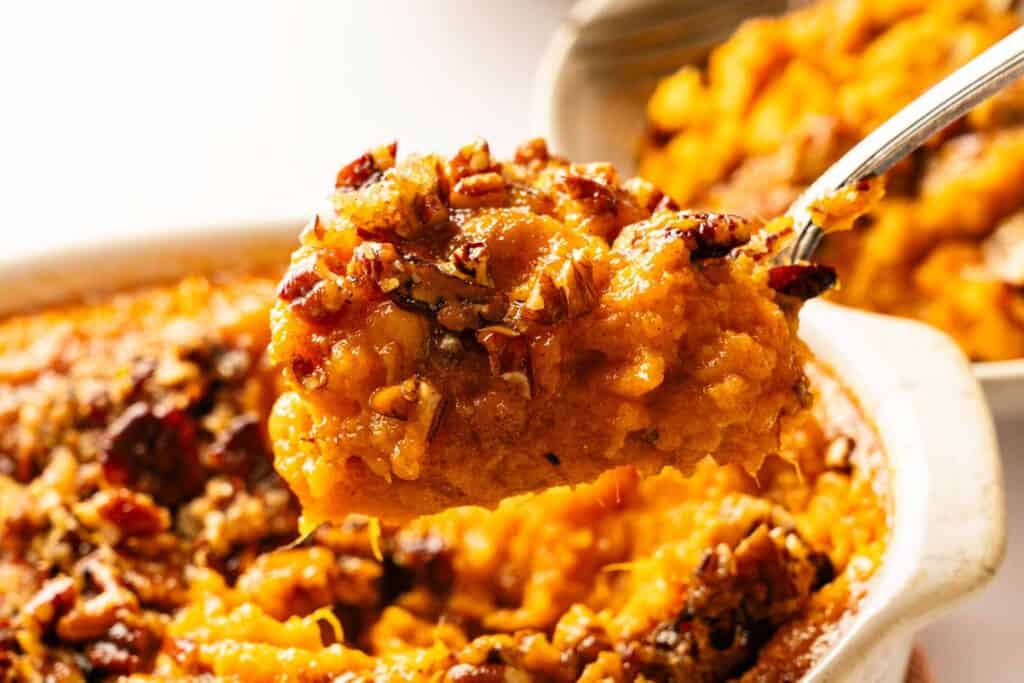
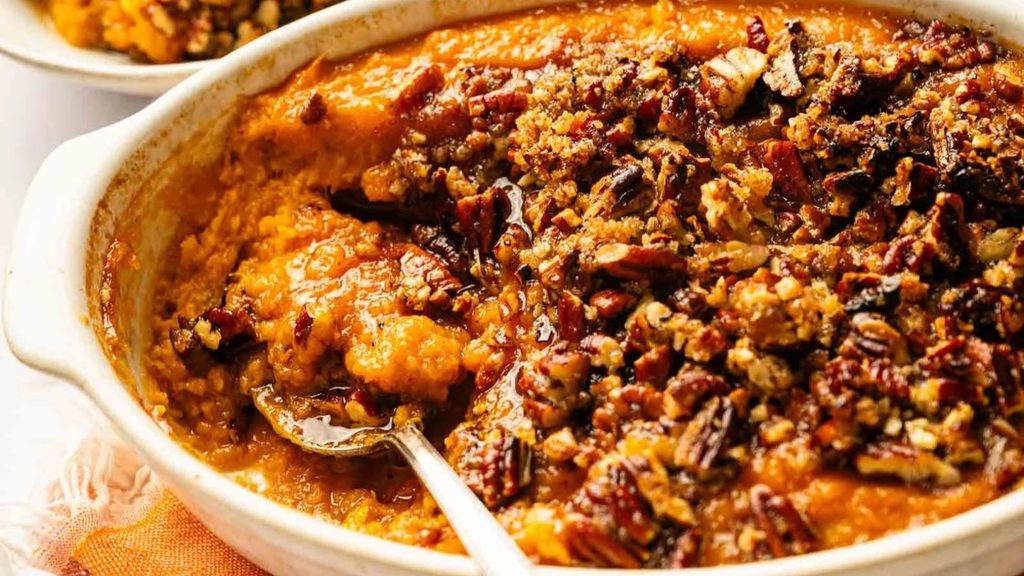
Pecan streusel is a familiar alternative to marshmallows, and cooks often make it by mixing chopped pecans and brown sugar with cold butter and a little flour or rolled oats for a crumbly texture. A praline-style topping skips the flour and bakes toasted pecans and brown sugar with butter into a crunchy, caramelized crust. Walnuts or crushed cereal also add crunch without the stickiness of marshmallows. Toasting the nuts in a little butter before they go on top can give the finish a deeper flavor.
Cooks who want a different flavor can adjust the filling instead of the topping. Orange zest, maple syrup, bourbon and extra cinnamon each bring a different taste, and a pinch of cayenne or chipotle adds a savory edge. Some recipes lean savory, such as a fully loaded sweet potato casserole topped with crispy bacon and sharp cheddar, so the casserole reads like the other savory sides on the plate.
Recipe developers often put their own twist on sweet potato casserole, making it a good canvas for new ideas from filling to finish. Roasting the sweet potatoes before mashing them often gives a thicker, less watery filling than boiling, and whipping the mash with eggs gives a soufflé-style result. Baking the casserole in individual ramekins also lets each guest have their own topping.
Cooks usually add marshmallows near the end of baking and watch them closely, because the sugar darkens fast. Finishing them under the broiler gives deeper color quickly. Streusel goes on before the dish enters the oven and needs the full bake to turn crisp.
A half-and-half dish lets both camps keep their topping
A single baking dish can hold both finishes: spread streusel over one half before baking, then add marshmallows to the other half near the end. Adding the marshmallows late lets the streusel half bake for the full time. Because cooks can portion the halves separately, leftovers can go to family members who prefer one topping.
Mandy writes about food, home and the kind of everyday life that feels anything but ordinary. She has traveled extensively, and those experiences have shaped everything, from comforting meals to small lifestyle upgrades that make a big difference. You’ll find all her favorite recipes over at Hungry Cooks Kitchen.