
Cooks who brine their Thanksgiving turkey split into those who soak it in salted water, those who rub it with salt, and plenty of others who skip the step entirely. Each side defends its method until the bird comes out of its package already done. One line on that label can turn the method a cook trusts into the reason the turkey comes out too salty.
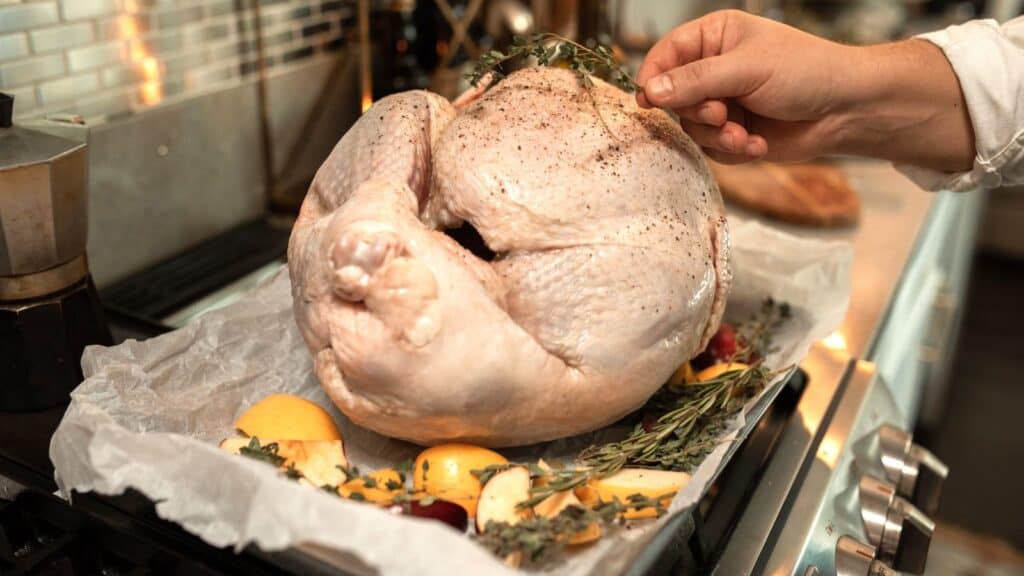
Wet and dry brining rely on the same trick. A wet brine is a soak in salted water, and a dry brine is salt rubbed onto the bird, then left to rest in the refrigerator. Each pulls moisture out first, then lets the muscle take it back in with the salt, so the meat ends up juicier and more forgiving in the oven. They part ways in the work involved and the skin, and this year more money is riding on the bird.
What a turkey costs and what a brine takes
Turkey costs more than it did a year ago. A 16-pound frozen bird averages $23.68, or $1.48 per pound, up 10% from last year, according to the American Farm Bureau Federation, and it was the biggest increase of any item on the Thanksgiving shopping list. The group blames higher production costs and a turkey population that is still recovering.
Wet brines work in 12 to 24 hours but take up a lot of refrigerator space because the turkey must be completely submerged in a covered, food-grade container or bag (never a household trash bag). The standard recipe is ¾ cup of salt per gallon of water, and the whole thing stays in the refrigerator or a cooler with ice, with food held at 40°F or below the whole time. When the soak is done, throw the brine away and pat the turkey completely dry before it goes in the oven.
A dry brine skips the water and seasons the meat with salt and spices. Rub half the salt under the skin and the rest over the skin and inside the cavity, using about 1 tablespoon of kosher salt per 5 pounds of turkey, then leave the bird uncovered on a rack in the refrigerator for 24 to 72 hours. The air dries the skin, which is what makes it crispy. A two-day version in a food-grade plastic bag works too, and although a dry brine takes longer than a wet one, it needs less refrigerator space and gives crisper skin.
When to skip the brine
Some turkeys come already injected with a solution, and the label lists what is in it. These basted or self-basted birds are injected with broth, spices, seasoning and flavor enhancers, and they may contain some salt. Brine one and the turkey could end up too salty, and the extra salt pulls moisture out of the meat, which defeats the point of brining. Start with a fresh or fully thawed turkey that isn’t basted or self-basted; if the bird in the cart is already basted, skip the brine.
Even an unbasted bird can go without. Brining is insurance, not a requirement. Heat dries out a turkey, and too much heat squeezes moisture from the lean breast, so a wet brine mostly gives a cook a buffer against overcooking. A cook who skips the brine has less margin and needs the thermometer more. Slow roasting doesn’t belong in a home oven, though, because USDA says to set the oven no lower than 325°F, which leaves the smoker as the slow route. Pull the bird as soon as it reaches the safe temperature and let it rest before carving so the juices set.
The cooking method matters too
Frying has the strictest rules. The turkey has to be completely thawed and patted bone-dry inside and out, because any water or ice can make the oil boil violently and overflow. Heat the oil to 350°F, and remember that a wet-brined bird must come out of its brine and be thoroughly dried before it goes near that pot.
In the oven, wet skin steams instead of crisping, while a smoker needs the turkey completely thawed first and held between 225 and 300°F, with one thermometer for the smoker and another for the bird. A Traeger smoked turkey skips the brine for a dry rub, then runs at 250°F after its first hour.
Brine or not, aim for 165°F
The safe minimum internal temperature for turkey is 165°F, checked at the thickest part of the breast, the innermost part of the thigh and the innermost part of the wing. The safe minimum internal temperature is the same for a bird brined at home and one injected at the factory. The USDA Meat and Poultry Hotline, 1-888-674-6854, is open from 8 a.m. to 2 p.m. ET on Thanksgiving Day.
Jennifer Allen is a retired professional chef and long-time writer. Her work appears in dozens of publications, including MSN, Yahoo, The Washington Post and The Seattle Times. These days, she’s busy in the kitchen developing recipes and traveling the world, and you can find all her best creations at Cook What You Love.