
Each morning in the weeks before Christmas, children hunt through the house for their Elf on the Shelf, which sat somewhere else the night before. To them, it is hide-and-seek, and the adult stays out of sight. For that adult, moving it is a nightly job in a season already full of other tasks.
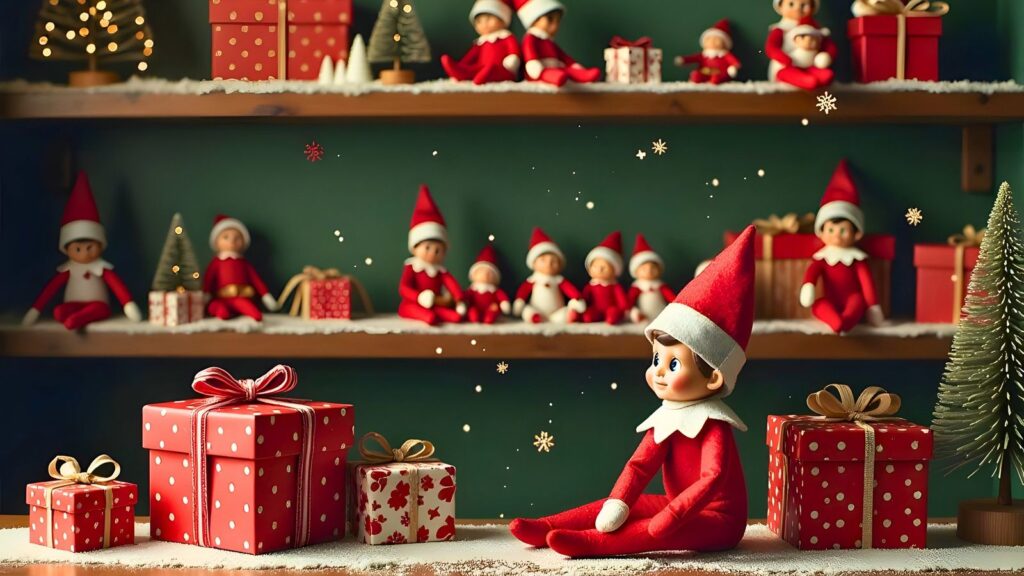
The Elf on the Shelf tradition gives parents a reason to keep moving the elf, since Santa sends it to track which children are naughty and which are nice. Families adopt the elf to watch the children during the day, and it reports to the North Pole each night. The elf stays from Thanksgiving until Christmas Eve, one small part of a holiday season that most American adults already plan to observe.
A recent survey found that 91% of U.S. adults plan to celebrate winter holidays including Christmas, Hanukkah or Kwanzaa. Most holiday traditions, such as a family dinner or a gift exchange, happen on a single day, but the elf needs a new hiding spot every night, and someone has to remember to move it before the children wake up.
Elf on the Shelf began with a family elf named Fisbee
The tradition started as a family game in Georgia in the 1970s. Carol Aebersold grew up with an elf named Fisbee that stayed on the Christmas tree and never moved, much like an ornament. As a mother, she told her own children that Fisbee flew around at night and that nobody could touch him, or he would lose his magic. Her twin daughter Christa Pitts has suggested the rule likely protected the elf from the family’s rambunctious children. Each morning the children raced out of bed to find where Fisbee had landed.
The book about the family elf came decades later, when Chanda Bell, the other twin, suggested writing a story about the family elf. A literary agent showed interest, but publishers sent only rejections, so the family published the book themselves. Pitts left her job and sold her house to join the project, and a local watercolor artist illustrated a first print run of 5,000 copies. Bell took the first product photos in her parents’ backyard. The family sold the book at local trade shows and markets and online, starting with a booth at the Mistletoe Market in Marietta, Georgia.
Children wake up to a search
For a child, the tradition is a search, and because nobody may touch the elf, the child’s only part is to look. Each morning, children search the house for the spot where the elf has landed. In the original family, the elf also gave the children a way to pass wishes and good deeds along to Santa. A child who figures out the secret can become a helper, which turns the game from finding the elf into moving it.
Parents do the nightly job
A news story from last December credits the elf with laughter and the occasional bout of parental panic over where to move it next. For some parents, the nightly move can feel like one more task in an already busy season, and if you find it tiring, you’re not doing it wrong. The story quoted a parent who woke at 3:30 a.m., remembered the elf hadn’t moved, and said new ideas get harder to find after doing it year after year. That parent also keeps the elf around all year and said seeing the children’s faces in the morning makes the effort worthwhile.

A new spot is enough for some, and a full scene for others
The nightly staging varies widely from home to home. Some families move the elf to a new spot each night and call it done. Others add a note asking the children to pick up their dolls, or a small scene. Scenes in that story include an elf in a mermaid costume in the shower and an elf-sized candy climbing wall.
Parents who run short on ideas can search online for pictures, and some pass them along to relatives who go all out. In that story, two parents called the elf stressful or a nuisance at times. Another said she had boycotted it for about three or four years after finding it too much work to keep up. The elaborate scenes parents find online can raise expectations.
Families can set their own limits
The ritual works best when families set their own limits. One parent quoted in the December news story said her children don’t know the difference because their elf has never done anything wild. In her house, the elf only has to appear in a new spot each day.
Mandy writes about food, home and the kind of everyday life that feels anything but ordinary. She has traveled extensively, and those experiences have shaped everything, from comforting meals to small lifestyle upgrades that make a big difference. You’ll find all her favorite recipes over at Hungry Cooks Kitchen.