
Jackson Hole, Wyoming, leads the nation in short-term rental bookings this summer, with 45.5% of the inventory already reserved as of March 28, 2026. June alone has nearly 60% of the capacity locked up, an increase of 20% over last year. That’s impressive for a community best known for its winter tourism attraction.
This post may contain affiliate links that may earn us a commission. For more information, see our Disclosures.
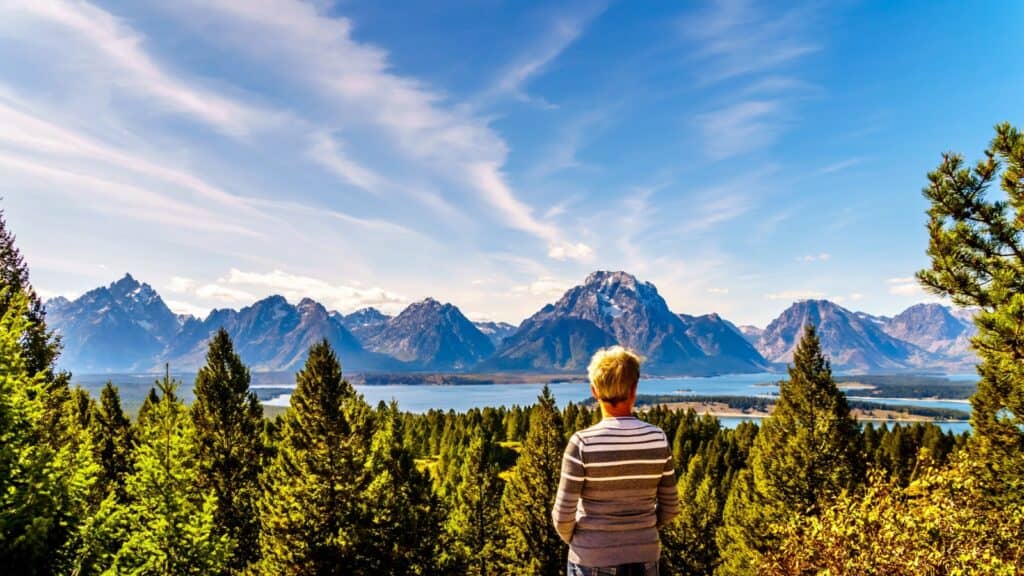
Most people come to Jackson Hole for the obvious things. The skiing is among the best in the country: steepest vertical in the United States, reliably deep snow and runs that make your legs remember they exist. Grand Teton National Park is 20 minutes from town and looks like someone turned the contrast up too high on a landscape that was already unreasonable.
In summer, it draws visitors at a pace that strains the valley’s seams. Teton County’s permanent population sits at around 23,000, but during peak summer months, that number nearly triples when you factor in vacationers, part-time residents and the workers who commute up to an hour each way just to staff the place.
Last year, the tourism generated $1.74 billion, and the numbers are not subtle. What is less talked about is the other Jackson Hole, the one that takes a little longer to find, a museum you’d expect to see in a major city, set on a hill above an elk refuge, and a food scene that quietly outperforms expectations.
And, finally, a town that’s managed to stay both authentically Western and genuinely refined, without either one overshadowing the other. The best way in is through the right hotel. The Rusty Parrot Lodge & Spa reopened last July after a five-year absence following a 2019 fire, and it’s the perfect launchpad for your quiet luxury trip of Jackson Hole.
A small town with big contradictions
Jackson Hole is small enough to walk across in 20 minutes and dense enough to fill several days without trying. The historic Town Square sits at its center, ringed by the famous antler arches and flanked by independent shops, galleries and restaurants that have been there long enough to earn their place.
It is a genuinely strange and wonderful mix. The Million Dollar Cowboy Bar, which has been pouring since 1937, shares a zip code with galleries selling six-figure wildlife paintings. The bar’s kitschy vibe, with saddle seats surrounding the bar, somehow appeals to everyone. Ski bums and second-home owners share the same chairlifts.
Jackson is notably not Aspen, and locals are proud of it. About 97% of the surrounding area is publicly owned: national parks, national forests and wildlife refuges. That constraint is what keeps the valley from becoming something else entirely.
The tension the valley lives with daily is real, with most workers unable to afford housing in Jackson proper and commuting from as far as Victor, Idaho, nearly an hour each way. Vacant housing units have climbed from around 1,200 in 2018 to 2,000 just two years ago, even as the workforce scrambles for anything affordable. Housing prices remain high, with 31 homes listed for $10 million or more in 2024, but no affordable housing units are currently listed on the Jackson Teton County Affordable Housing Department’s website.
The Jackson Hole Travel and Tourism Board recently launched a public-facing tourism dashboard that tracks not just hotel occupancy and room rates but daily population swings, bus ridership, wildlife collisions and water and electricity use. It’s an acknowledgment that the full story of tourism here is more complicated than any single number captures. The dashboard shows permanent residents largely agree that tourism matters to the local economy. Whether it benefits them personally, they’re less sure, and most would prefer fewer visitors in summer.
That ambivalence is part of what makes Jackson interesting. It is a place living honestly with its own contradictions: beloved, overrun, fiercely protective of what it has, and still, genuinely, stubbornly, itself.
The quieter side of the valley
The mistake most visitors make is moving too fast. Jackson Hole rewards people who slow down enough to find what’s actually here.
Start at the National Museum of Wildlife Art, which sits on a hill above the National Elk Refuge and is one of the most quietly impressive institutions in the American West. Around 5,000 pieces in the collection, 500 on display at any given time. The museum features the country’s largest collection of Carl Rungius, a painter working in the early 20th century who made animals the sole subject of his canvases rather than scenery; it’s an instinct that still feels radical.
A separate gallery honors Rosa Bonheur, a 19th-century French artist who legally fought for the right to wear men’s clothing so she could access slaughterhouses and horse fairs to study animal anatomy for her paintings. The free docent tours run every Wednesday morning and are worth planning around. “People assume culture will be nil here,” says museum guide Lynne Whalen. “I love to dispel that myth.”
For wildlife beyond the canvas, Jackson Hole Wildlife Safaris runs the largest guide operation in the Greater Yellowstone Ecosystem. Forty-five guides, 35 vehicles and the kind of encyclopedic local knowledge that makes the difference between spotting a moose and actually understanding what you’re looking at. Guide Jeramey Hutchison has lived here for 20 years and still treats every sighting like it surprises him, because apparently it does.
A full day through Grand Teton or Yellowstone is a different category of experience from most wildlife tours: unhurried, deeply informed and harder to shake than you’d expect.
Astoria Hot Springs, about 45 minutes south, is a natural mineral pool in a mountain setting that’s less a tourist stop and more something the locals quietly kept to themselves for years. Go early as they open or in the late afternoon, after the day hikers have left and there’s more room for everyone.
Come hungry, leave surprised
The food scene in Jackson is better than its reputation suggests, mostly because its reputation is still catching up. Dine at Jackson Drug, which has been on its corner since 1919 and in its current building since 1937. The original soda fountain, tile, bar, milkshake machines and candy jars are all intact and in use. It is a working piece of American history that also serves a great burger and an old-fashioned milkshake that tastes exactly as it should.
The Kitchen is the kind of dinner restaurant that refined mountain towns need and rarely have: modern and approachable without being self-conscious about either quality. Meanwhile, Bin22 runs Spanish and Italian tapas in a room that feels more like a neighborhood wine bar in a much larger city, the kind of place you stumble into and come back to deliberately.
Palate, the restaurant inside the National Museum of Wildlife Art, earns its own mention. The food, the art and the view of the refuge come together in a way that makes lunch feel like an event. It is one of those meals you keep describing to people months later.
The hotel that came back stronger
Ron Harrison opened the original Rusty Parrot in December 1990 with two promises: it would feel like a home, and it would always smell like something was baking. He broke ground alongside his teenage son Brandon, pulled stones from a nearby creek for the fireplace, sourced the art from local makers and ran the property as a family operation for nearly 30 years. Locals came weekly for breakfast or dinner, while regulars asked for the same rooms. It was the kind of place that accumulates meaning slowly, the way good places do.
In 2019, the hotel burned down, and what the Harrison family did next says a lot about who they are. They rebuilt from scratch: 40 rooms where there had been 32, a library, a rooftop deck called the Perch, a 12-person outdoor hot tub, a wildlife-viewing deck overlooking Flat Creek and Saddle Butte, and the Body Sage Spa relocated inside the hotel itself, making it the only property in downtown Jackson with both a full restaurant and a spa on-site.
The rooms, designed by local firm WRJ, have gas fireplaces, Italian bedding and balconies facing either Snow King Mountain or the creek. Furthermore, the two suites have vaulted ceilings and living rooms that make checkout feel genuinely difficult.
What came back from the original: the cast-iron cowboy lamps. Local artwork, much of it salvaged or sourced from the Harrison family home, with two deliberate outliers hang upstairs, including a portrait of the Mad Magazine founder, which is exactly the kind of touch that tells you something real about the people who run this place. The teddy bear on the bed, a house tradition since day one, is still there and still for sale. The cookies in the library still arrive every afternoon, without fail.
Brandon Harrison is now the General Manager. Guests often comment on how one person seems to be doing everything. They’re not wrong, and it’s one of the better things about staying here. The Rusty Parrot has the rare quality of feeling personally managed rather than professionally administered. In a valley where tourism now generates billions, and an industry large enough to require its own data dashboard, that is not a small thing.
A menu written by the land
The Wild Sage, the Rusty Parrot’s on-site restaurant, is open to the public for breakfast and dinner. It is also one of the more interesting kitchens currently operating in Jackson.
Chef Hugo Goodwin grew up in Outremont, a Montreal neighborhood with a specific dining culture: exceptional food, no ceremony, served by someone who genuinely doesn’t need your approval. He trained under Jacques Pépin at what is now the Institute of Culinary Education, cooked at Nobu in TriBeCa and did a season at Palme d’Or in Cannes.
Just seeing, Goodwin says, how seriously they treated produce was enough. He came back to the United States, spent almost eight years as a private chef, quit just before COVID, drifted through Montana, landed at the Yellowstone Club and, from there, arrived in Jackson, bringing a French-Canadian instinct for rigor without pretension to a menu built almost entirely on local and regional sourcing.
The menu runs 12 to 14 items and changes constantly. Ranchers inform Goodwin with what they have on surplus; that becomes the creative brief, and local farms Canewater and O.K. Ranch are regulars in his supply chain. Wednesday, when deliveries arrive, is the most exciting day of the week in his kitchen, with the seasons, in a real and literal sense, writing the menu. Goodwin didn’t run out of local carrots until February, and regional squash until January, while for two months each winter, no local produce comes in at all. “My sous-chef and I go into the walk-in and cry,” Goodwin says, without entirely joking.
The beef tartare, made with chili oil, lovage and balsamic from O.K. Ranch, has been on the menu since opening day and never left; it is the one fixed point. The pig’s head terrine, made from whole animals sourced from local farms, is the dish that tends to shift how people engage with the rest of the menu. “If we’re going to slaughter those animals,” Goodwin says, “we need to make sure we’re honoring them.”
There is no chicken in their menu; the industrial supply doesn’t meet his bar, the well-raised alternatives don’t exist at the volume a restaurant needs, and the executive chef is not interested in pretending otherwise. “We’re in Wyoming,” he says. “We live amongst the bison and the elk and the trout that’s in the river. Our menu has to respect that.”
Breakfast runs from 7 a.m. to 10 a.m. and is open to anyone, hotel guest or not, which Goodwin is emphatic about. The Snake River Rancheros, made with house-roasted green chili sauce and pickled red onions, is exactly what you want after a morning of cold air and big scenery. The homemade focaccia is not optional.
Plan your trip
Jackson Hole Airport is located within Grand Teton National Park and offers direct flights from most major U.S. cities. Salt Lake City is a four-and-a-half-hour drive north if you’d rather come by road, through scenery that makes the trip worthwhile on its own.
The Rusty Parrot Lodge & Spa is just steps from Town Square, with rooms ranging from King Fireplace options to two full suites with vaulted ceilings and private decks. The Body Sage Spa and Wild Sage Restaurant are both open to non-guests.
June through August is peak season, warm and busy, with the valley’s population nearly tripling at its height. September is the sweet spot: the crowds thin, the light turns golden and the wildlife doesn’t let up. Winter is quieter and, for skiers, the whole point. If that’s when you’re going, book early. Jackson fills up fast, no matter the season.
With its mix of wilderness, history and genuinely good food, Jackson Hole rewards visitors who stay long enough to get past the obvious. The Rusty Parrot is a good place to start.
Ksenia Prints is a food and travel writer from Montreal, Canada. She blogs over at We Travel We Bond, writing about family travel off the beaten path.