
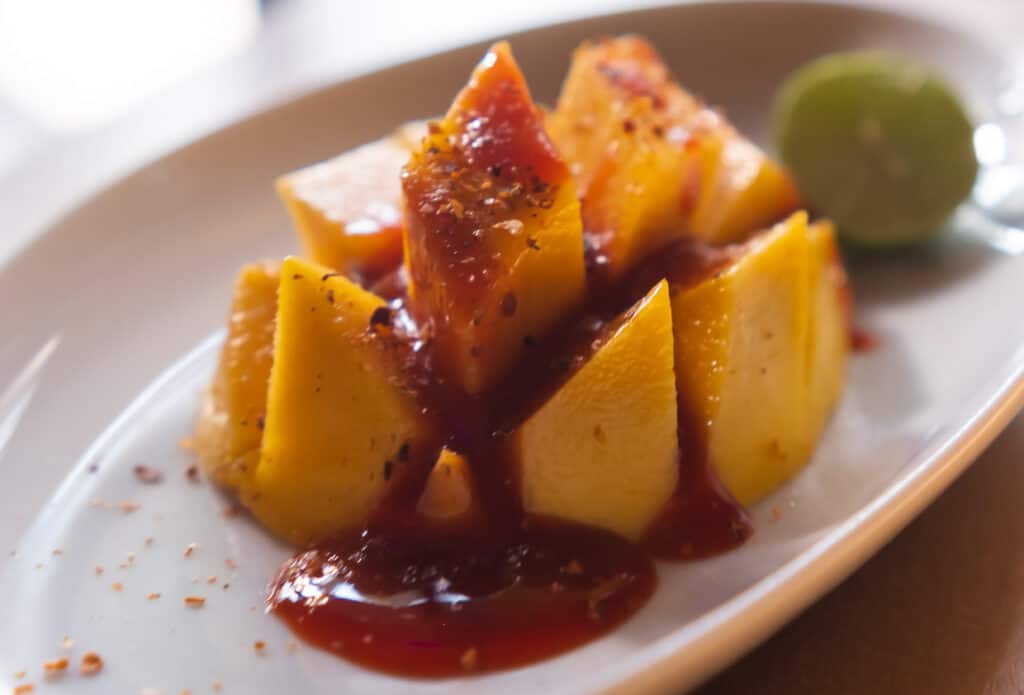
“Fricy,” a combination of fruity and spicy, is the defining flavor profile of summer 2026, showing up on restaurant menus, in supermarket condiment aisles and in home kitchens. It builds on the swicy wave of 2025 by replacing refined sugar with real fruit: mango, watermelon, passion fruit and citrus. The heat stays; the base ingredient changes, and for home cooks, the applications are practical and the ingredients are already on the shelf.
This post may contain affiliate link(s). As an Amazon Associate, I earn from qualifying purchases. See Disclosures.
The term fricy is one of the breakout culinary terms of the year, and its addition to the dictionary in February suggests the fruity-spicy flavor instinct has firmly entered the mainstream. The science explains why it works: capsaicin binds to taste receptors while fruit sugars blunt the sting and amplify the fruit’s own flavor, a loop that makes the combination feel addictive rather than punishing.
Mexican kitchens have been dusting mango with Tajín and lime for generations. Thai som tam has always paired green papaya with chili and citrus. The Japanese condiment yuzu kosho, fermented citrus peel and chili, has been a staple long before Western menus caught on. What is new is the American kitchen finally making fricy its own.
Bringing the trend to the grill
A mango-habanero glaze applied in the final minutes of cooking, not used as a marinade before, is the move that keeps the fruit flavor intact. Marinades break down over sustained heat and cook the brightness out. A finishing glaze caramelizes against the grill grates and stays vivid. Blend ripe mango with one habanero, fresh lime juice, a small pour of honey and salt until smooth, then brush it onto chicken in the last three to four minutes over direct heat.
Habanero is the right pepper for the glaze because its heat profile is fruity and floral rather than purely sharp, which means it extends the mango rather than overpowering it. One pepper per batch for four portions is the right starting point. The lime juice keeps the glaze from tightening into candy and delivers the acidity that distinguishes fricy from a standard barbecue sauce. Two minutes per side with the lid closed, and the result is lacquered, slightly charred and built around a flavor combination that works because of chemistry, not accident.
The no-cook entry point
Watermelon makes the strongest case for fricy with the least effort. Cut cold watermelon into thick cubes, dust with Tajín or Aleppo pepper, squeeze over fresh lime, add torn mint and finish with flaky salt. Nothing is cooked. The whole thing comes together in under five minutes and benefits from no resting time. The contrast depends on the fruit staying cold against the dry heat of the chili. Tajín brings mild heat and a built-in citric tang that reinforces rather than duplicates the lime. Aleppo runs warmer and earthier, with a faint dried-fruit note that sits well against the melon’s sweetness, and either works.
A spicy fruit salsa applies the same logic to something more versatile: dice ripe mango or pineapple, add finely minced serrano, red onion, fresh lime juice, cilantro and salt. The fruit’s juice becomes the salsa’s base, with no additional liquid needed. Pineapple skews sharper and more acidic, which holds up better against a hotter pepper. Mango leans sweeter and works particularly well alongside grilled fish or spooned over rice bowls. Both versions come together in under 10 minutes and improve slightly after 20 minutes of rest, which lets the serrano heat bloom into the fruit rather than sit on top of it.
A pantry staple for the season
A batch of fruity hot sauce made once and kept in the fridge door is what turns the swicy or fricy instinct into a cooking habit rather than a one-time experiment. Use mango or passion fruit as the base. Both have enough natural body to give the sauce weight without thickening agents. Add one or two scotch bonnets, a splash of apple cider vinegar for acidity and shelf stability, one garlic clove and salt. Blend and bottle.
Passion fruit produces a sharper, more tropical sauce that holds its own against scotch bonnet heat. Mango gives a thicker, slightly sweeter result that works better brushed on proteins. Once either is in the fridge, the applications multiply without effort: over fried eggs, stirred into grain-bowl dressings, across grilled fish tacos, alongside aged cheese. The sauce holds well for a week. Make a double batch.
The fricy approach to fish
Fish is where fricy works as a marinade, and where the acidity of fruit does something different. Because the acid in citrus and tropical fruit begins to cure the flesh on contact, the fruit goes in before cooking rather than after. A marinade of passion fruit juice, minced scotch bonnet, lime zest, garlic and a neutral oil gives firm white fish, halibut, mahi-mahi or swordfish both flavor penetration and a surface that caramelizes cleanly on a hot grill or cast iron pan.
Fifteen minutes is enough. Beyond 30, the acidity starts to break down the texture, particularly with thinner fillets. The scotch bonnet should be seeded for a gentler heat that stays in the background behind the fruit rather than leading. The goal is a piece of fish that tastes unmistakably fricy, bright and tropical with a slow heat that builds at the finish, without the marinade overpowering the fish. Serve with the spicy fruit salsa, and the pairing completes itself.
A flavor trend that isn’t going anywhere
Fricy points to something broader than a seasonal trend. American cooking is moving toward heat that carries acidity and complexity rather than sweetness as its primary companion, and the global pantry driving that fad is more accessible now than ever. As Tajín, yuzu kosho, chamoy and fermented chili pastes settle into mainstream grocery distribution, the fricy instinct is not going back in the cupboard.
Jennifer Allen is a retired professional chef and long-time writer. Her work appears in dozens of publications, including MSN, Yahoo, The Washington Post and The Seattle Times. These days, she’s busy in the kitchen developing recipes and traveling the world, and you can find all her best creations at Cook What You Love.