
June 19 is National Martini Day, and the drink it honors has ranked among the world’s most-ordered cocktails for a second consecutive year on terms its midcentury reputation never anticipated. Younger consumers drive the category through mini pours, afternoon occasions and flight menus that remove the intimidation of ordering a full, spirit-forward drink. For bars, the behavioral changes behind that number still play out in real time.
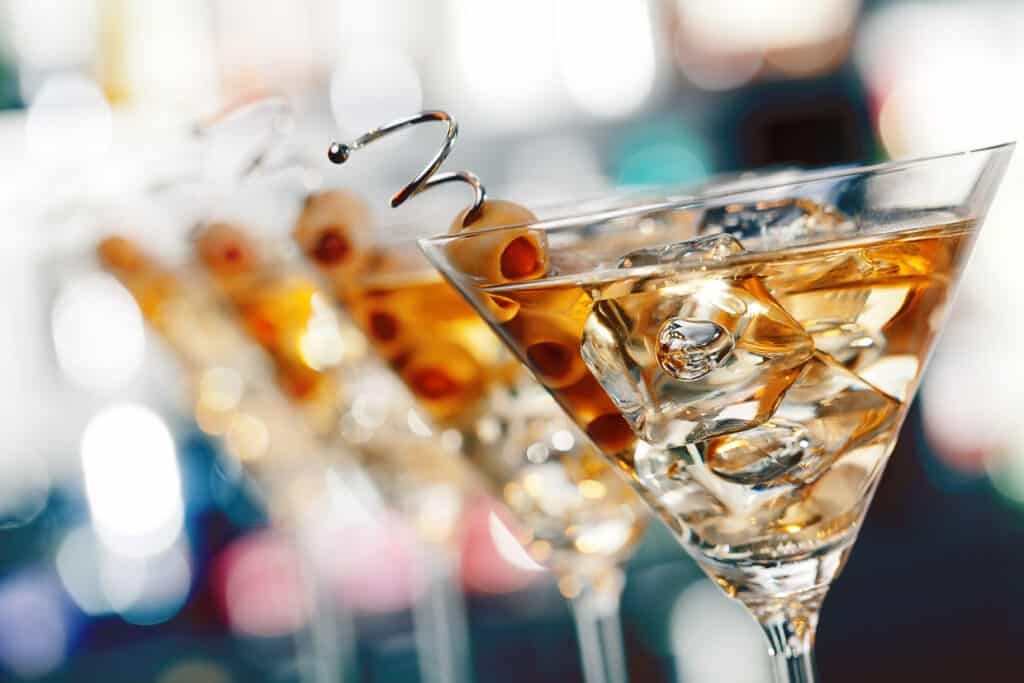
The dry martini entered the global top 10 most-ordered cocktails for the year, landing in 10th place in the annual Bacardi Cocktail Trends Report. More than a third of consumers in the United States are moving toward earlier-evening socializing and smaller-format serves, including mini martinis, that brought younger drinkers into the category. The martini arrived at exactly the right intersection: spirit-forward enough to feel like a real occasion, compact enough to fit how people go out now.
The flight format changes the whole occasion
Mini martini flights have moved from novelty to standard menu feature at cocktail bars across the country. The format typically includes a classic gin martini, a vodka martini and a variation such as a Vesper or a dirty martini, solving a problem that long kept the martini from being an easy order. A mini stays cold, limits the ABV commitment and opens the door to comparison. For operators, it brings premium spirits and boutique vermouth onto a check at an approachable price point.
The Bacardi report named martini flights specifically as a vehicle for what it calls “rewilding connection”: the consumer-driven move toward analog, screen-free social moments where the ritual of ordering matters as much as the drink itself. Bacardi also found that more than three-quarters of consumers value heightened, memorable drinking experiences, making the format a natural fit for current drinking habits. A martini flight, presented tableside with three glasses lined up and a brief walkthrough of the differences, is exactly that kind of moment.
The dirty martini made savory the standard
The dirty martini led what bartenders now describe as the savory cocktail wave, and bars have not stopped there. Blue cheese-stuffed olives, house-pickled jalapenos and smoked brine variations have appeared on menus across the country. Truffle-infused gins and yuzu-expressed builds have given the format a culinary credibility it did not carry a decade ago.
That direction connects to what drinkers want from the ingredients in their glass: 77% of consumers now check ingredient origin labels, driving bars toward locally sourced garnishes, regional gins and transparent sourcing as part of the serve. The dirty martini made the category feel edible, and the bars that followed that instinct now build entire menus around it.
Younger drinkers found it through smaller serves
The mini martini serves as an on-ramp, offering a fundamentally different experience from a full serve and giving hesitant drinkers a lower-commitment entry point into the category. Bars report that customers who once avoided martinis often return for the full version after trying a smaller pour.
The cultural context is in the data: 84% of consumers say technology has made social interactions feel less personal. And the martini’s inherent ceremony is precisely the kind of high-touch, analog ritual that fills that gap; the choice of gin or vodka, the shaking-versus-stirring debate and the garnish call. The same report identifies the “daycap” as a named trend, which is cocktails taken in the late afternoon to close the workday, in smaller formats with lower commitment. The mini martini was purpose-built for that opportunity.
A drink built around the occasion owns the moment
The martini has always been about the moment more than the liquid, which is exactly why it benefits when drinkers start prioritizing significance over volume. No classic cocktail lives more naturally in the current appetite for high-drama glassware and theatrical serves. The V-shaped glass, the condensation on the stem, the olive or twist presented separately; the martini was theatrical before theatrical was a bar strategy.
The martini’s two consecutive years as one of the world’s most-ordered drinks suggest that drinkers are no longer willing to trade down on occasion. The flight format, the culinary garnish, the daycap ritual. Each one points to the same appetite for a drink that earns its place through craft, not convenience. The question for bars now is how far that instinct can take the category before the next version of this drink looks just as different from the last one.
Jennifer Allen is a retired professional chef and long-time writer. Her work appears in dozens of publications, including MSN, Yahoo, The Washington Post and The Seattle Times. These days, she’s busy in the kitchen developing recipes and traveling the world, and you can find all her best creations at Cook What You Love.
I enjoyed this article…especially the mini-versions. I like that idea even for at home. But the title sorta led me to think there would be some discussion of the original version… did I miss it?