
Home cooks have become more willing to tackle ambitious kitchen projects, from fermented foods to hand-rolled pasta and whole-animal butchery. Sushi remains a notable exception, still carrying a reputation for requiring professional training, expensive equipment or restaurant-grade fish. International Sushi Day, observed June 18, is worth using as a prompt to reconsider because the real prerequisites are considerably more modest.
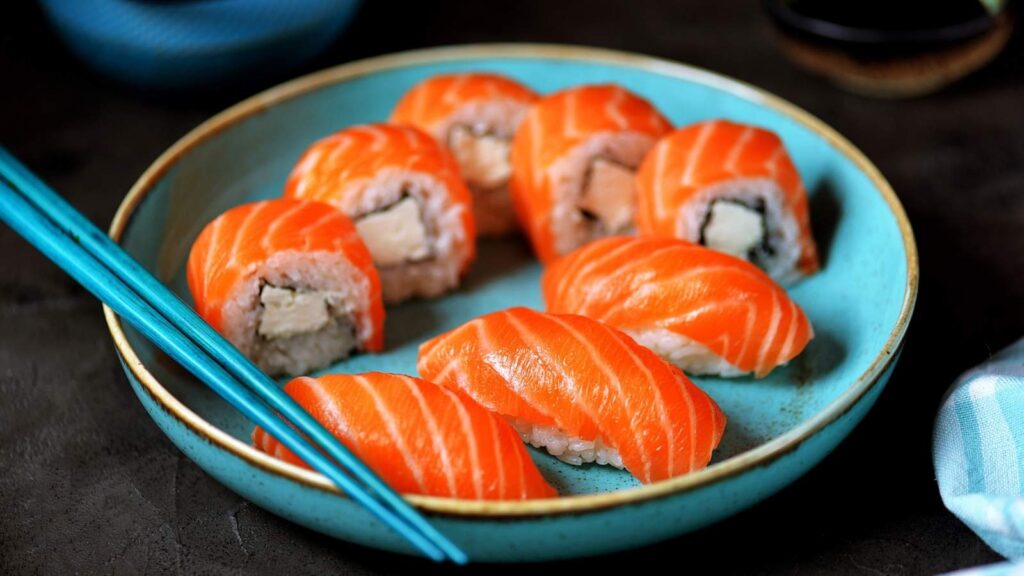
With 93% of Americans expecting to cook as much or more than they did the year before, sushi’s reputation as a restaurant-only food is becoming harder to justify. The same research found that 71% consider cooking more stress relieving than stressful, a sign that confidence in the kitchen continues to grow. In practice, a homemade sushi spread costs a fraction of a restaurant order and takes about the same time as most high-end weeknight dinners.
Great sushi begins with good rice
Short-grain Japanese rice is nonnegotiable. Long-grain varieties lack the starch structure needed to hold together, and generic sushi rice blends vary widely in quality. Koshihikari and Calrose are the two varieties most reliably available at U.S. grocery stores; both perform well.
Once cooked, the rice needs to be seasoned while still warm with a mixture of rice vinegar, sugar and salt, then spread on a flat surface and fanned or folded gently until it cools to room temperature. Stirring compresses the grains and ruins the texture. The ratio matters less than the method: season, spread, fan, do not rush it.
Rolls worth attempting on the first try
For a first attempt, the California roll remains one of the most practical places to start. Imitation crab, avocado and cucumber require no raw fish handling; the flavors are mild and the construction is approachable. Cucumber maki is even simpler: rice and julienned cucumber wrapped in nori, useful for getting comfortable with the mat before adding fillings. A bamboo rolling mat costs under $10 and is the only piece of equipment worth buying before a first attempt.
Home cooks who want to skip it entirely can try temaki, hand-rolled cones of nori packed with rice and chosen fillings. No rolling technique is required and they are eaten immediately, which removes any pressure around timing. Imperfect rolls still taste like sushi, and that is the point.
Sourcing fish without a specialist fishmonger
Sashimi-grade is a marketing label, not a USDA or FDA designation, and it does not guarantee safety on its own. What matters is sourcing from a reputable fishmonger, a Japanese grocery or a seafood counter with high turnover.
Salmon is the most practical starting point: widely available, mild in flavor and fatty enough to hold up well. Commercially frozen fish at sea is a legitimate option and often safer than fresh fish of unclear origin, since the freezing process eliminates parasites. Cooked proteins and vegetables are a perfectly reasonable place to start; the rice and rolling technique are worth practicing on their own terms.
The pantry items that actually make a difference
Even with good rice and fillings, old nori can undermine the final result. Once the package is opened, it degrades fast. Buy full sheets, use them promptly and store any remainder in a sealed bag. Stale nori tears, sticks unevenly and tastes flat in a way that good rice will not compensate for.
For dipping, lower-sodium soy sauce or tamari works better than the standard variety, which can overpower everything else on the plate. Most wasabi paste sold in the United States is horseradish-based rather than true wasabi; either is fine at home. Pickled ginger is a palate cleanser between pieces, not a condiment. A sharp chef’s knife, drawn through the roll rather than pressed down, produces clean cuts. A rice cooker is not required.
Sushi rewards simplicity over complexity
Japanese home cooking is ingredient driven at its core, and the quality of what goes in matters more than the complexity of what is done to it. Sushi is a useful entry point into that approach precisely because it is so transparent. The rice either holds together, or it does not; the fish either tastes fresh or it does not. Most home cooks find the rice intuitive by the second batch and the rolling manageable within a single session. The gap between a first attempt and a genuinely good homemade roll is shorter than it looks.
Jennifer Allen is a retired professional chef and long-time writer. Her work appears in dozens of publications, including MSN, Yahoo, The Washington Post and The Seattle Times. These days, she’s busy in the kitchen developing recipes and traveling the world, and you can find all her best creations at Cook What You Love.