
Before a dish leaves the pass at a restaurant kitchen, a chef reaches for a bottle of garum, a fermented fish condiment that the Roman Empire put on nearly everything it ate. After roughly 1,500 years away from serious kitchens, it’s back on menus that matter, not as a novelty or a history lesson plated with tweezers, but as a tool. Chefs are using it the way Romans did: as the flavor underneath every other flavor.
This post may contain affiliate link(s). As an Amazon Associate, I earn from qualifying purchases. See Disclosures.
Garum’s return isn’t a coincidence. It comes at the exact moment fine dining kitchens have made fermentation a core philosophy, not something to dabble in between seasons, but a technique to master and build a pantry around. The James Beard Foundation‘s 2026 trend report named intentional fermentation one of the defining forces reshaping restaurant menus this year, with chefs describing ferments as tools for building flavor complexity, cutting waste and locking in seasonal ingredients at their peak.
The Roman fish sauce sits at the center of all three: a condiment made from fermented fish, salt and time that produces a concentrated umami punch no single other ingredient quite replicates, doing it with almost nothing, which is exactly the kind of alchemy professional kitchens are chasing right now.
The numbers behind the revival
The fermentation wave carrying garum back to the table is measurable. The global fermented foods and beverages market is forecast to reach $318.20 billion this year, growing at a 6.43% annual rate, driven in part by rising consumer appetite for probiotic-rich, deeply flavored, traditionally made foods. Fine dining is both reflecting and accelerating that appetite.
A Michelin menu survey this year identified preserved and fermented flavors as one of the forces most visibly reshaping restaurant cooking, naming fermentation, aged stocks and umami-forward ingredients as the year’s defining culinary through-line. When that kind of signal shows up across multiple continents simultaneously, professional kitchens pay attention.
What garum actually is and why it vanished
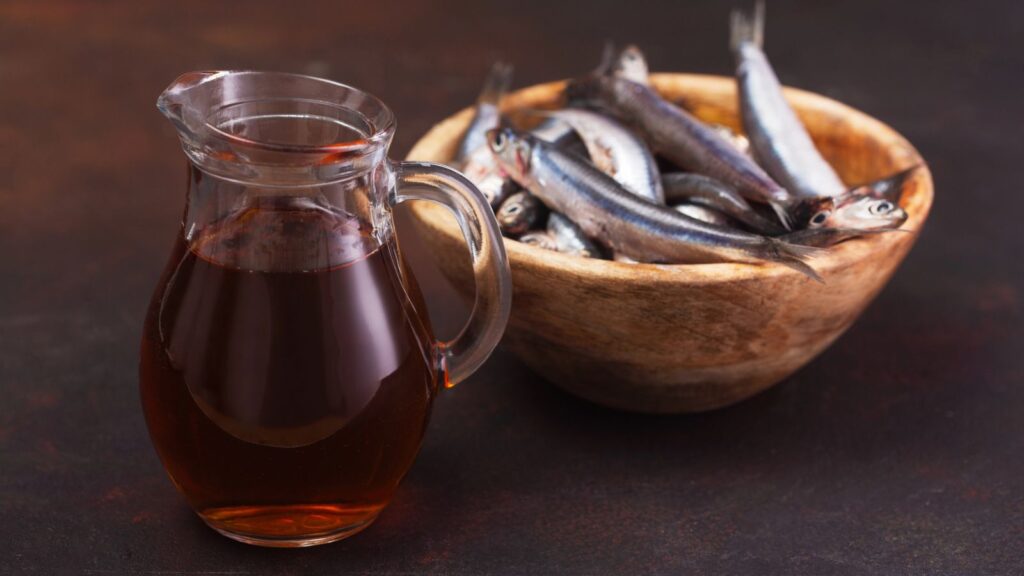
Garum was the Roman world’s universal condiment made by packing fish, typically anchovies, mackerel or sardines, in heavy salt and leaving them to ferment for weeks or months. It produced a liquid dense with glutamic acid, the same amino acid responsible for the savory depth in aged Parmesan, long-cooked soy sauce and mushrooms roasted until their edges go dark. It was, in the most literal sense, Rome’s umami.
At its peak, garum factories lined the coastlines of Spain, Italy and North Africa. It fed legions, flavored the cooking of emperors and showed up in Roman recipes the way salt appears in the United States, automatically, constantly, without question.
Then the empire fell, and the trade routes collapsed. The factory-scale production that made garum affordable ceased to exist, and with it, so did garum itself. Not because it stopped working, but because the world built around it did.
Modern kitchens brought it back
The contemporary revival traces through a specific inflection point. The fermentation lab at Noma in Copenhagen, which popularized koji-triggered garums, versions made not only from fish but from nearly any protein, including beef, venison and mushrooms. This put the technique in front of a generation of ambitious cooks who then carried it into their own kitchens. Koji, a mold used for centuries in Japanese sake and miso production, accelerates fermentation and broadens the range of ingredients from which garum can be made.
What followed was gradual but decisive. Chefs discovered that garum functions differently from other sources of umami. A few drops stirred into a braising liquid, a finishing sauce or in more adventurous hands a dessert component, doesn’t read as fish on the palate. It reads as depth, making a dish taste as though it has been cooking for days longer than it has.
Where it fits now
Garum has moved well beyond the avant-garde. The same review of Michelin-starred menus across Japan, Quebec, Korea and Europe shows chefs building fermentation programs that include fish sauce and garum-style condiments alongside koji, miso and lacto-fermented preparations. Asia’s leading chefs, speaking alongside the 50 Best Restaurants announcements this year, described a movement they called “ancestral tech”: ancient preservation methods executed with scientific precision that wasn’t available to their predecessors. Garum is perhaps the oldest working proof of that idea, and professional kitchens are treating it accordingly.
The condiment that outlasted an empire
Garum’s 1,500-year disappearance ended not because someone decided to revive it, but because enough cooks started asking the same question independently: What is the most efficient way to add irreplaceable depth to a dish? The answer kept pointing to the same ancient bottle.
The condiment that fueled a Roman legion is turning up in the mise en place of restaurants chasing their first Michelin star, and it earned its place there the same way it earned its place in Rome, entirely on the strength of what it does to food. In a kitchen culture increasingly drawn to fermentation as both craft and philosophy, garum isn’t a trend. It’s an argument that the best ideas don’t expire.
Mandy Applegate is the creator behind Splash of Taste and seven other high-profile food and travel blogs. She’s also the co-founder of Food Drink Life Inc., a unique and highly rewarding collaborative blogger project. Her articles appear frequently on major online news sites, and she always has her eyes open to spot the next big trend.