
You remember the mall food court: the pretzel smell drifting past the fountain, a long pizza line, and friends meeting back at one sticky table. Some brands disappeared, some were folded into bigger companies, and a few survived in forms that look very different today. These nine names show how much the food court changed without pretending every familiar sign went away.
Hot Sam Pretzels
Before Auntie Anne’s became the pretzel name many mall shoppers know, Hot Sam was already a fixture. A 2025 history says the chain had 175 locations in 1985. A Mrs. Fields SEC filing says its parent acquired Hot Sam’s pretzel business in September 1996, then acquired Pretzel Time through transactions in 1997 and 1998. By 2005, only 10 Hot Sam stores remained, and Mrs. Fields later converted them to Pretzel Time, according to Tasting Table.
Karmelkorn
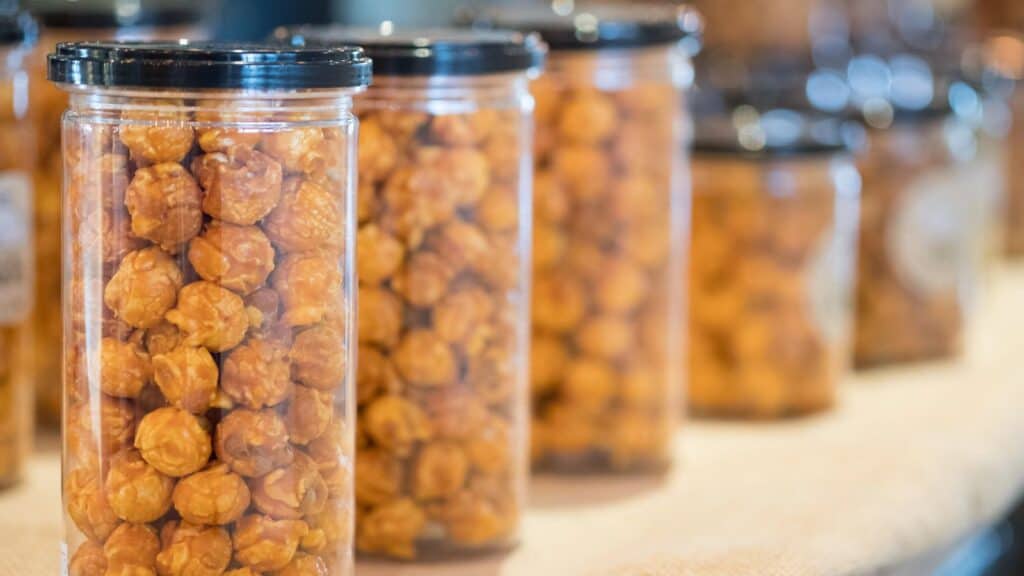
Karmelkorn started in Casper, Wyoming, in 1929 and became a familiar mall popcorn stop. By 1982, it had 270 shops in 43 states. The old draft went too far by calling the brand completely inactive. Karmelcorn’s current history says a small Nebraska business now sells the popcorn locally and ships it across the United States. That is very different from the old national mall chain, but the name and product have not vanished.
Original Cookie Co.
Original Cookie Company ended up under the same corporate umbrella as Mrs. Fields rather than simply being acquired by the cookie chain. A 2004 SEC filing says its direct parent operated about 12 Original Cookie Company stores, no longer franchised the brand, and expected the locations to be converted to Mrs. Fields stores as they were sold to franchisees.
Everything Yogurt
Everything Yogurt opened in New York in 1976. By 1991, it had 227 franchises with another 44 under construction, according to the International Frozen Yogurt Association, which also says the concept became part of Bananas Smoothies and Frozen Yogurt. The name still appears at Kings Plaza in Brooklyn on Villa Restaurant Group’s current location page. That does not mean the original chain survived independently. The location is part of the Green Leaf/Bananas network.
York Steak House
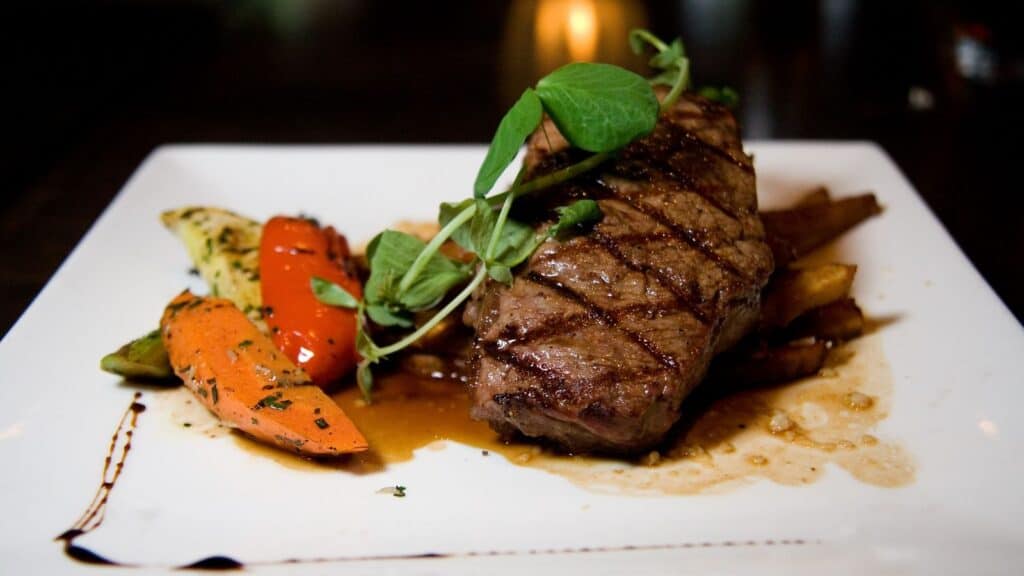
York Steak House opened in Columbus, Ohio, in 1966 and spread through shopping malls. Columbus Restaurant History says the restaurant at 4220 W. Broad St. is the only York Steak House left. It also records a 2024 ownership change, when Tim Burkhammer bought the restaurant from longtime operator Jay Bettin. It is the last remaining location, not a restaurant under its original ownership.
Piccadilly Cafeteria
Piccadilly’s history goes back well before the modern mall food court. Visit Baton Rouge says the cafeteria first opened in Baton Rouge in 1932. Piccadilly’s current location list also includes a restaurant at Mall St. Vincent in Shreveport, Louisiana, at 1133 St. Vincent Ave. The mall connection has not disappeared completely.
Chicken George
Chicken George began in 1979 and expanded quickly. A contemporary Washington Post report called it one of the nation’s largest minority-owned restaurant chains. Chicken George filed for bankruptcy protection in February 1986, filed for liquidation that November, and was auctioned to Hill & Sons Management in January 1987 for $210,000. That sequence is more precise than treating 1986 as a single bankruptcy event.
Orange Julius
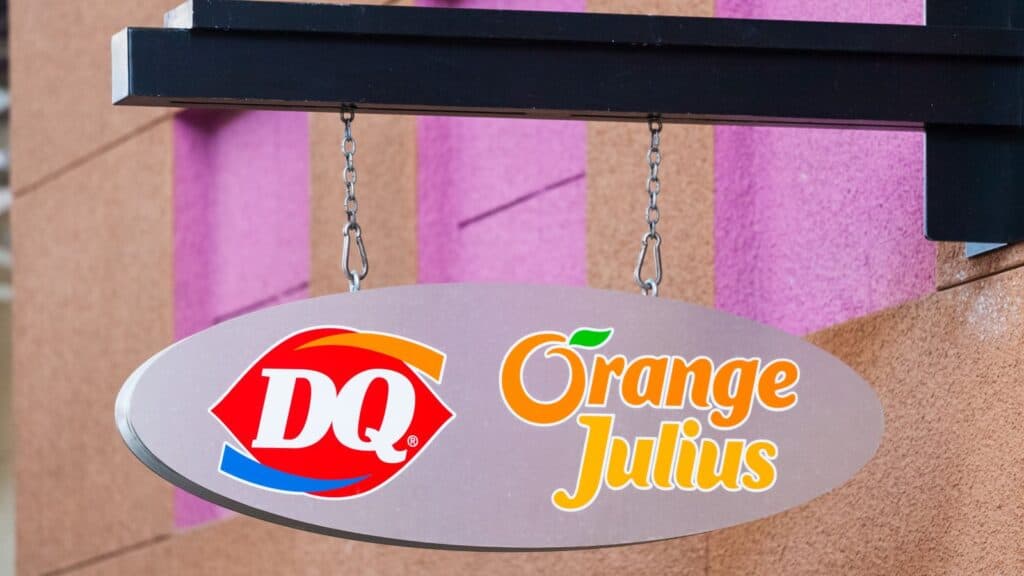
Orange Julius started with Julius Freed’s juice stand in 1926 and grew into a mall fixture. Its official history says Orange Julius became a fully owned subsidiary of International Dairy Queen in 1987. The brand itself did not disappear. The same current site still carries a menu and location finder.
Sbarro
Sbarro is the clearest survivor on this list. The company’s official history says its first mall-based restaurant opened at Kings Plaza in Brooklyn in 1970 and that the location is still open today. The brand is still active, and its original mall connection is not just nostalgia.
The Bottom Line
The old food court did not disappear all at once. Some brands were absorbed into bigger companies, some dwindled to a name or a single location, and others found new ways to keep selling familiar food. That is why a mall can still look recognizable for a moment, even when most of the signs have changed.