
Liuwa Plain doesn’t get crowds. It’s one of Zambia’s wildest corners, and King Lewanika Lodge is the only permanent camp inside it. The lodge just reopened after a full refurbishment, built to get you close to a migration most travelers never see in person.
The reopening brought a redesigned heart of camp. There’s a new poolside sanctuary above the plain, plus an open-air dining pavilion with sweeping grassland views. You’ll also find a spa, an outdoor fire boma and a brand-new yoga deck.
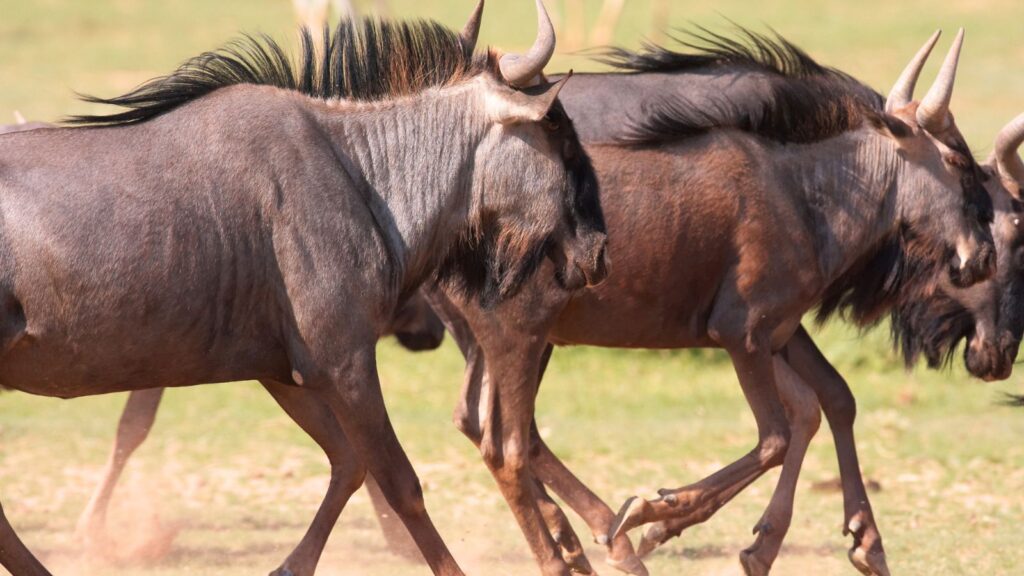
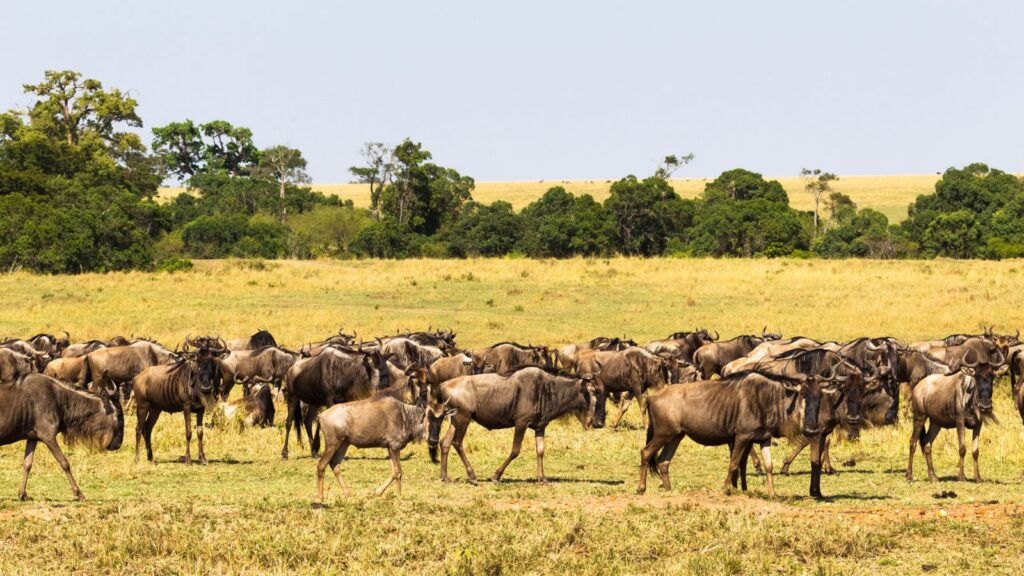
But the real draw is what’s happening past the deck chairs. Herds of wildebeest move across one of Africa’s last true wildernesses, and you won’t share the view with other camps, because there aren’t any.
A Front-Row Seat to Africa’s Second-Biggest Migration
King Lewanika Lodge sits in the migration’s southern range. From camp, you’re close to herds of more than 47,000 animals, part of Africa’s second-largest wildebeest migration. Predator activity picks up here too, with lion prides, hyena clans and cheetah trailing the herds between October and May.
What’s New at the Lodge
Ker and Downey Zambia rebuilt nearly everything on-site. Here’s what you’ll find:
- A new poolside sanctuary with shaded loungers and an open-air dining pavilion above the plain.
- Custom-built game vehicles with rooftop seating and photography beanbags, designed for Liuwa’s terrain.
- Migration sleepouts, so you can track the herd north on a two-day mobile trip, running June through September.
- Full solar power and on-site water filtration, so there are no single-use plastic bottles.
- Daily flights from Livingstone and Lusaka landing at Matiamanene Airstrip, just a 10-minute drive from camp.
- Rates starting at $3,615 per person for a three-night stay, which includes a free full-day “Explore All Liuwa” sleep-out.
150 Years of Conservation History
Zambia has protected Liuwa Plain since the late 1800s, when King Lubosi Lewanika put the Lozi people in charge of it. That relationship still holds today.
African Parks now manages the 1,301-square-mile park with Zambia’s wildlife department and the Barotse Royal Establishment. About 12,000 Lozi people still live inside the park’s boundaries, part of a broader wave of regenerative tourism reshaping safaris across the continent.
Time your trip right, and you might catch traditional fishing methods, or even the sacred Kuomboka Ceremony, when the Litunga travels by royal barge to higher ground.
If you’ve been saving Zambia for “someday,” this is your nudge to move it up. Liuwa isn’t easy to reach, and that’s exactly the point. Book before the migration moves on, while the plain is still mostly yours.