
The yoga trend taking over this September doesn’t look like yoga at all. It looks like a walk to the coffee shop, a dog loop around the park, or a commute through the neighborhood before the day starts. No mat, no studio, no mirror. Just movement that already exists in your day, made a little more intentional.
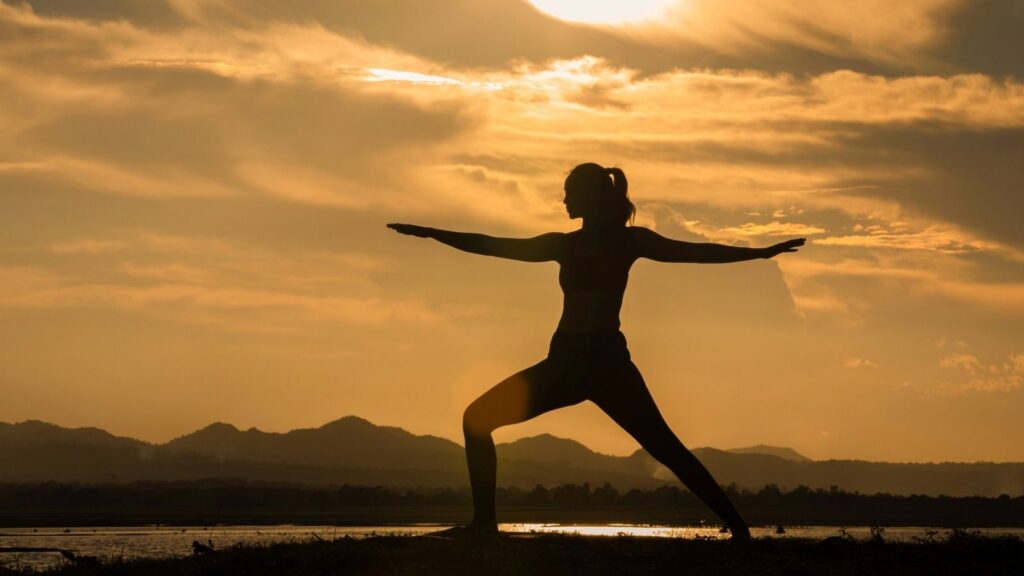
Walking yoga weaves yoga principles into an ordinary walk. Someone trying it might sync each inhale to a four-step count, pause at a park bench for a standing lunge, or roll their shoulders between blocks on a Tuesday morning commute. The pace is self-selected. No two people do it exactly the same way. It can fill a lunch break, a dog walk, or 20 minutes before the rest of the house wakes up, and it looks to everyone else like an ordinary stroll.
A 2,400% Search Spike Has Fitness Experts Paying Attention
Walking yoga saw a 2,414% surge in Google search interest between mid-2024 and mid-2025, making it the second-fastest-growing fitness trend in PureGym’s 2026 ranking. That spike didn’t happen in a vacuum. More than half of people surveyed in PureGym’s nationally representative study of over 2,000 adults say they don’t currently exercise. Nearly a third say they simply dislike it.
Walking yoga doesn’t ask those people to change much. It’s built on something most of them already do every day.
Why the Format Sidesteps What Stops Most People
Among people who find gyms intimidating, 4 out of 5 say the problem is exercising in front of other people. Walking yoga removes that entirely. It’s solitary by default, self-paced by design and requires nothing new. Whether that’s why search interest jumped the way it did is an open question, but the match between the barrier and the format is hard to miss.
Early Research Points Somewhere Interesting
Two pilot randomized trials at the University of Edinburgh found that adults who used a yoga-based breathing pattern while walking had larger reductions in anxiety than those who just walked normally. The difference was statistically significant in the second trial. Sample sizes were small, and findings are preliminary, but they give early support to the idea that adding deliberate breathwork to a walk might do more than walking alone.
The protocol those researchers tested has roots in Kundalini yoga and has been taught as a meditative exercise for decades. A book formalizing the method came out in 2000. The practice predates the current surge by a long stretch.
No Gear, No Membership, No Audience
Walking yoga takes different forms depending on who’s doing it. Some people count steps to breaths. Others pause for a standing pose at a bench or a tree before moving on. Sessions range from a few minutes to well over an hour. There’s no standard format, which means it fits into whatever a walk already looks like.
National Yoga Month this September is a convenient nudge to try it. But the walk was already there. Start on your next one. Sync four steps to an inhale, four steps to an exhale, and see what happens.