
Three high-visitation national parks dropped the reservation systems that kept summer visitors in a booking-window lottery for years, and the timing could not be better. September’s post-Labor Day weeks bring a steep crowd drop while many major roads, trails and visitor facilities across the park system remain open, though seasonal and weather-related closures vary by park. The month delivers a version of these places that only exists in this narrow window, before the calendar closes it again.
This post may contain affiliate links that may earn us a commission. For more information, see our Disclosures.
Yosemite, Glacier and Arches confirmed the rollback in February as part of a coordinating announcement from the NPS Office of Communications covering four high-visitation parks. The fourth, Rocky Mountain, took the opposite approach and retained its timed-entry system through mid-October.
For visitors arriving after Labor Day, the split creates two kinds of September at a time when the 2024 NPS Statistical Abstract shows daily recreation visits across the national park network dropping significantly from their June and July peaks. Three parks are running without reservation gates for the first time in years. The fourth is offering something else entirely.
Yosemite dropped its reservation system again for 2026
Yosemite National Park required vehicle reservations during peak hours in both 2024 and 2025 after a brief pause in 2023. For 2026, the park dropped the system entirely after what it described as a comprehensive evaluation of traffic patterns, parking availability and visitor use during the 2025 season.
In its place, the park is deploying real-time traffic monitoring, active parking management in the valley and additional seasonal staff at key intersections. Tuolumne Meadows remains accessible through the fall, though some seasonal facilities, including the campground and visitor center, close by late September.
Glacier lifted every summer restriction after Labor Day
Glacier National Park piloted vehicle reservation systems from 2021 through 2025. That system is gone in 2026, and no vehicle reservations are required anywhere in the park this year.
During the summer, the park piloted a ticketed shuttle to Logan Pass and three-hour timed parking at the pass, both running July 1 through Labor Day on Sept. 7. After that date, the shuttle tickets and the parking time limits are both done for the season. September visitors arriving after Labor Day will find no vehicle reservation requirement, no Logan Pass shuttle ticket requirement and no three-hour parking limit at Logan Pass. Going-to-the-Sun Road typically stays open into October, weather permitting, with fall color appearing at the higher elevations by mid-September.
Arches dropped timed entry for the first time since 2022
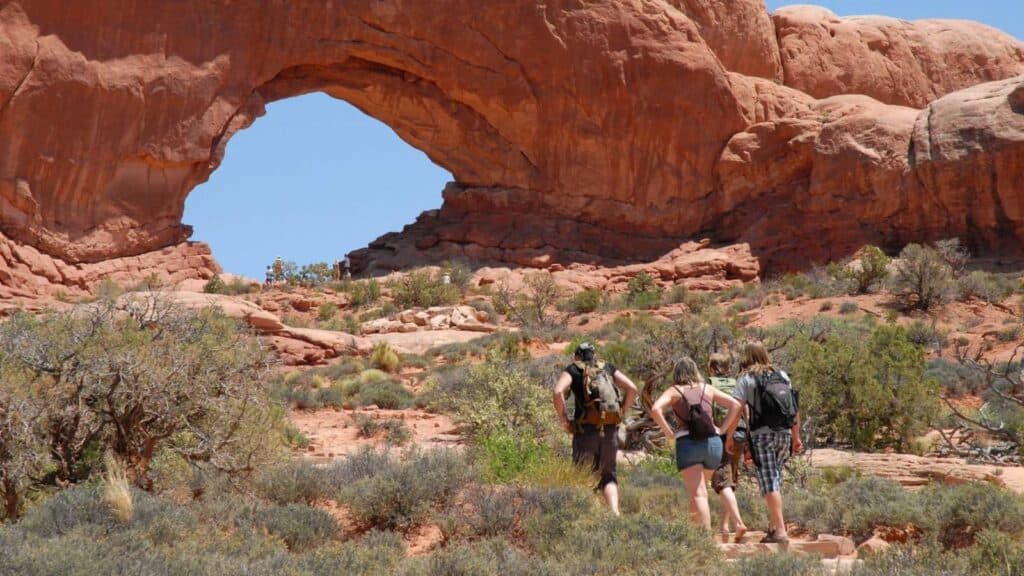
Arches National Park ran a timed-entry reservation system from 2022 through 2025, requiring visitors to book entry windows during peak hours. For 2026, the park dropped the requirement entirely, and visitors may enter at any time during operating hours.
Entrance lines and limited parking at popular destinations are still possible, especially on weekends. The park monitors real-time entrance conditions through a webcam at the gate and may temporarily divert vehicles at the entrance when congestion increases. Devils Garden Campground and Fiery Furnace hikes still require separate reservations. But the general timed-entry ticket that had shaped peak-season access for three years is gone.
Rocky Mountain kept its reservation system, then opened elk season
Rocky Mountain National Park retained its timed-entry system from late May through mid-October while the other three parks in the NPS announcement dropped theirs, managing vehicle access on Bear Lake Road and the rest of the park through reservation permits.
Every year on Sept. 1, the park closes meadow areas in Horseshoe Park, Moraine Park, Upper Beaver Meadows, Harbison Meadow and Holzwarth Meadow from 5 p.m. to 10 a.m. to protect elk during the fall rut.
Bull elk bugling across the meadows during the fall rut is a wildlife spectacle visible from established roads and trails, with a 75-foot minimum distance the park enforces for visitor safety. The adjacent town of Estes Park typically hosts its annual Elk Fest in early October, built around the same season.
Shenandoah offers a different September on the East Coast
On the other side of the country, Shenandoah National Park offers a September with a different payoff. The park has no reservation system and no timed entry. Skyline Drive’s full 105-mile route is generally open in September, weather permitting and the NPS describes the typical fall season there as beginning in late September, with color appearing first at the highest elevations and working down through October and November.
Fall is one of Shenandoah’s busiest seasons, with campgrounds and lodges typically booked solid on weekends by midsummer. Early September arrives before the main fall-color period, which generally peaks later in October. Nearby on the Blue Ridge Parkway, a separate NPS unit connected to Shenandoah at Rockfish Gap, September also brings peak raptor migration, with hawks, falcons, eagles and vultures riding thermals along the ridge.
Shoulder-season interest is climbing
The NPS recorded 323 million recreation visits in 2025, a 2.7% decline from the record 331.9 million in 2024 and the first drop in four years. The February announcement noted that all four parks are working to strengthen seasonal staffing and operational readiness for 2026, regardless of whether they kept or dropped their reservation systems.
The experiment is running right now
The parks that dropped their reservation gates this year are watching September closely. Glacier’s Logan Pass pilot wrapped at Labor Day, Yosemite is deploying additional seasonal staff at key intersections and Rocky Mountain’s continued timed entry gives NPS a direct comparison point.
Whether those approaches hold up as more travelers discover the same post-Labor Day window will shape access decisions for 2027 and beyond. The testing ground is not a planning document. It is the park itself, this month, with the trails still open and the elk already calling.
Jennifer Allen is a retired chef turned traveler, cookbook author and nationally syndicated journalist; she’s also a co-founder of Food Drink Life, where she shares expert travel tips, cruise insights and luxury destination guides. A recognized cruise expert with a deep passion for high-end experiences and off-the-beaten-path destinations, Jennifer explores the world with curiosity, depth and a storyteller’s perspective. Her articles are regularly featured on the Associated Press Wire, The Washington Post, Seattle Times, MSN and more.