
The U.S. fall foliage season is longer and more geographically varied than many travelers realize. This year the central Appalachians are the standout, with favorable moisture conditions setting up what could be one of the most vivid color displays the region has seen in some time. The scenic train routes cutting through swathes of color are already running, and the best seats go fast.
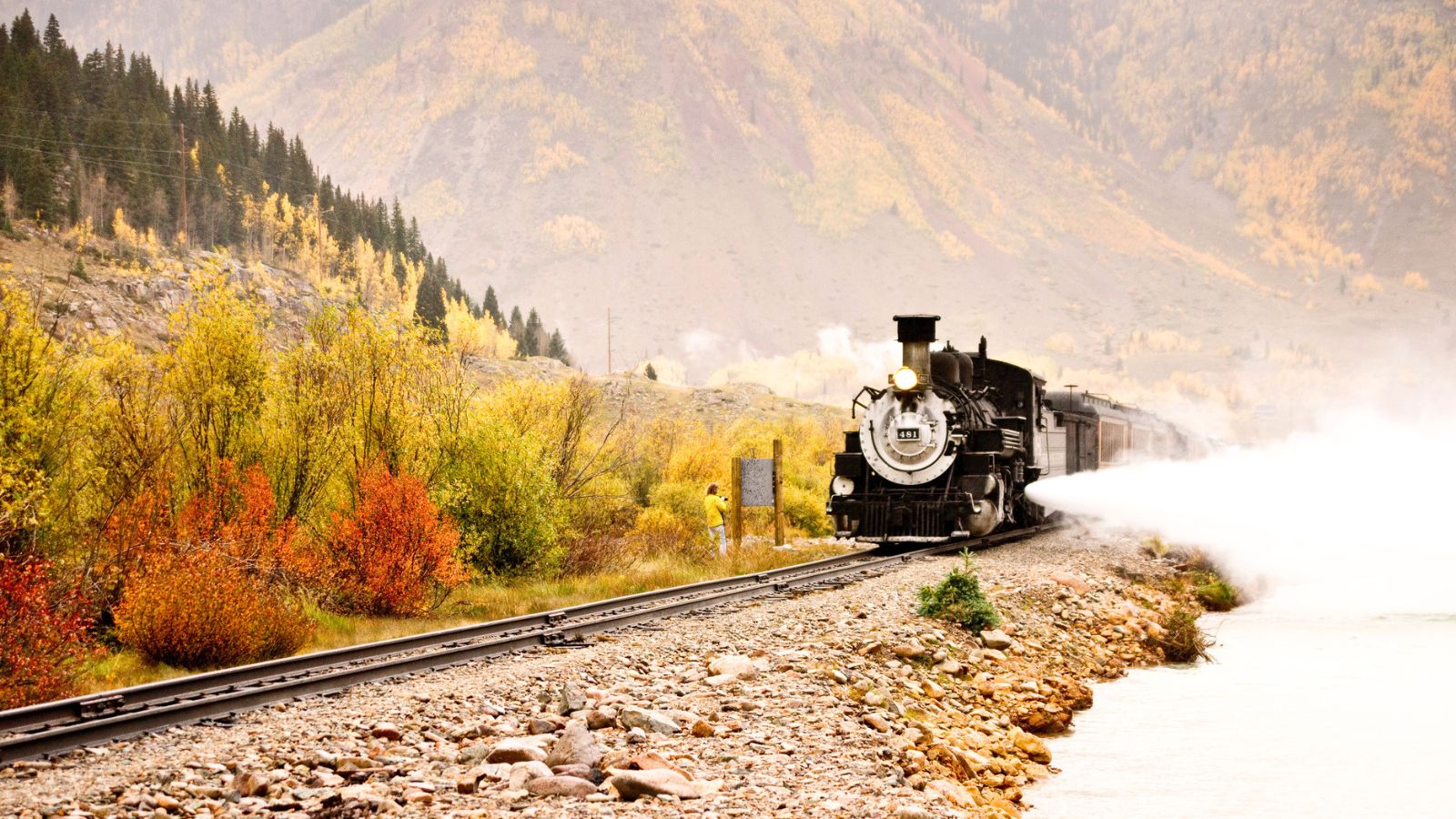
Fall foliage moves across the country in waves, driven by elevation and latitude, not the turning of a page. High-altitude forests in the Rocky Mountains go first, while Southern Appalachian valleys are still deep green. By the time the Smokies hit their peak, ski country in Colorado has been bare for a month. This year’s fall foliage outlook maps a rolling season from late September color in the northern mountains through October in the Appalachians and into early November in the Deep South.
The Farmers’ Almanac’s 2026 central Appalachian forecast covers Virginia, West Virginia and western North Carolina. It rates the corridor as its top pick for 2026, citing favorable moisture conditions and a mix of hardwood species that includes sourwood trees, which add some of the region’s most striking scarlet color. Color above 3,000 feet typically peaks 10 to 14 days before nearby valleys, which means elevation is as important as geography when picking your window.
Where the gold goes first
The Cumbres & Toltec Scenic Railroad is where the season opens, running 64 miles between Chama, New Mexico and Antonito, Colorado, crossing the state line 11 times and climbing to 10,015 feet at Cumbres Pass. It is the longest and highest narrow-gauge steam railroad in North America, jointly owned by the states of Colorado and New Mexico and designated a National Historic Landmark.
By late September, the route passes through aspen forests turning gold at elevation while the valleys below are still green, a contrast sharp enough to feel almost theatrical. The entire route is a day-long commitment, with a lunch stop at Osier Station and stretches of terrain inaccessible by road. Fall excursions run into late October, with late September marking the heart of aspen color along the route.
The forecast’s best bet this year
West Virginia’s Allegheny Highlands are the corridor the 2026 outlook rates above everywhere else in the country, with favorable moisture conditions and a dense hardwood mix setting up what could be one of the most vivid Appalachian seasons in years.
The Cass Scenic Railroad climbs 2,390 feet from the historic logging town of Cass to Bald Knob, the third-highest point in West Virginia at 4,842 feet, on grades reaching 11% in places. The Cass line’s steep grades were well suited to the geared Shay steam locomotives used during the logging era, and they are demanding enough that the ascent itself becomes the experience.
From Bald Knob, the view extends across panoramic Allegheny highlands deep into Monongahela National Forest. On a clear day, the visibility runs to distant ridgelines in every direction. The forecast puts the peak window at Oct. 12 through Oct. 28, and demand at Cass during that stretch is significant. Anyone planning to be there at color peak should already be looking at availability.
A piece of railroading history, still running
Ohio sits just west of the central Appalachian wave, and the Hocking Valley’s color follows as the season moves west and south. The Hocking Valley Scenic Railway operates out of Nelsonville along a right-of-way more than 150 years old, running through hardwood forest as the region turns in October.
The route passes the remains of Hocking Canal Lock No. 19 and cuts through what the railroad calls “scenic Appalachian Ohio,” a stretch of the country most leaf-peepers never think to visit. Fall Foliage Trains run Thursday through Sunday all October, plus Nov. 1, with weekday departures at 1 p.m. and weekend departures at 11 a.m. and 2:30 p.m.
The railway is a volunteer-run nonprofit that has operated since 1972, and the experience leans hard into genuine rail history over the polished tourist-train aesthetic. Weekend trips include a stop at Robbins Crossing, a living-history village on the edge of the Hocking Hills.
When everyone else has gone home
When the rest of the country has gone bare, the Southern Appalachians are still turning. The Great Smoky Mountains Railroad operates Nantahala Gorge excursions from Bryson City, North Carolina, through Oct. 31, covering 44 miles round-trip through river canyon country the forecast puts at peak color from Oct. 18 through Nov. 2.
The route follows Alarka Creek and Fontana Lake before crossing the Fontana Trestle and descending into the gorge, where the train stops for a layover at the Nantahala Outdoor Center alongside the river. Open-air gondola cars seat riders inside the foliage, with nothing between them and the canopy.
The Farmers’ Almanac rates the Southern Appalachians Good to Excellent for 2026, with one of the latest peak windows in the eastern U.S. The season can push into early November at lower elevations.
Follow the season instead of the crowd
The forecast creates a rolling season from late September color in the Rockies through October in the Appalachians and into early November in the Southern Appalachians. A traveler who understands that arc has far more options than one who circles Columbus Day weekend and calls it done.
The central Appalachians remain the 2026 standout, with the forecast window running Oct. 12 through Oct. 28 and conditions that favor rich, lasting color across a corridor packed with hardwood forest. These train routes run through the heart of that window, on schedules their operators have built around decades of knowing when each corridor turns.
Mandy is a luxury travel, fine dining and bucket-list-adventure journalist with expert insight from 47 countries. She uncovers unforgettable experiences around the world and brings them to life through immersive storytelling that blends indulgence, culture and discovery, and shares them with a global audience as co-founder of Food Drink Life. Her articles appear on MSN and through the Associated Press wire in major U.S. outlets, including NBC, the Daily News, Boston Herald, the Chicago Sun-Times and many more.