
Merriam-Webster officially added “cuffing season” to the dictionary last month, finally giving the annual autumn search for connection some real legitimacy. Singles will spend the next few months looking for someone to see the season through with, and many will default to dinner for that first date. However, data points to the walking date and the interpersonal science behind it as a great way to make those all-important connections.
Hinge tracks cuffing season messaging behavior across the August-through-November window, and in 2024, October came out highest. Cuffing season describes the period when single people seek a partner to see the colder months through, and it has been a fixture of fall culture long before Merriam-Webster made it official. The season is already underway, and what’s behind the walking date is specific enough to be useful.
The problem with sitting across from someone
A dinner table puts two people directly face to face with nothing else to focus on. Every silence is loaded. Every pause in conversation becomes something to fill. There’s no shared object of attention, nothing external to comment on and no natural reason to look away.
The face-to-face dinner setup can start to feel like a job interview, generating pressure that uses up energy better spent actually connecting. Add a waiter, a check, a two-hour commitment at a table that can’t be left without it meaning something, and the first date becomes an audition nobody signed up for.
A walk changes everything
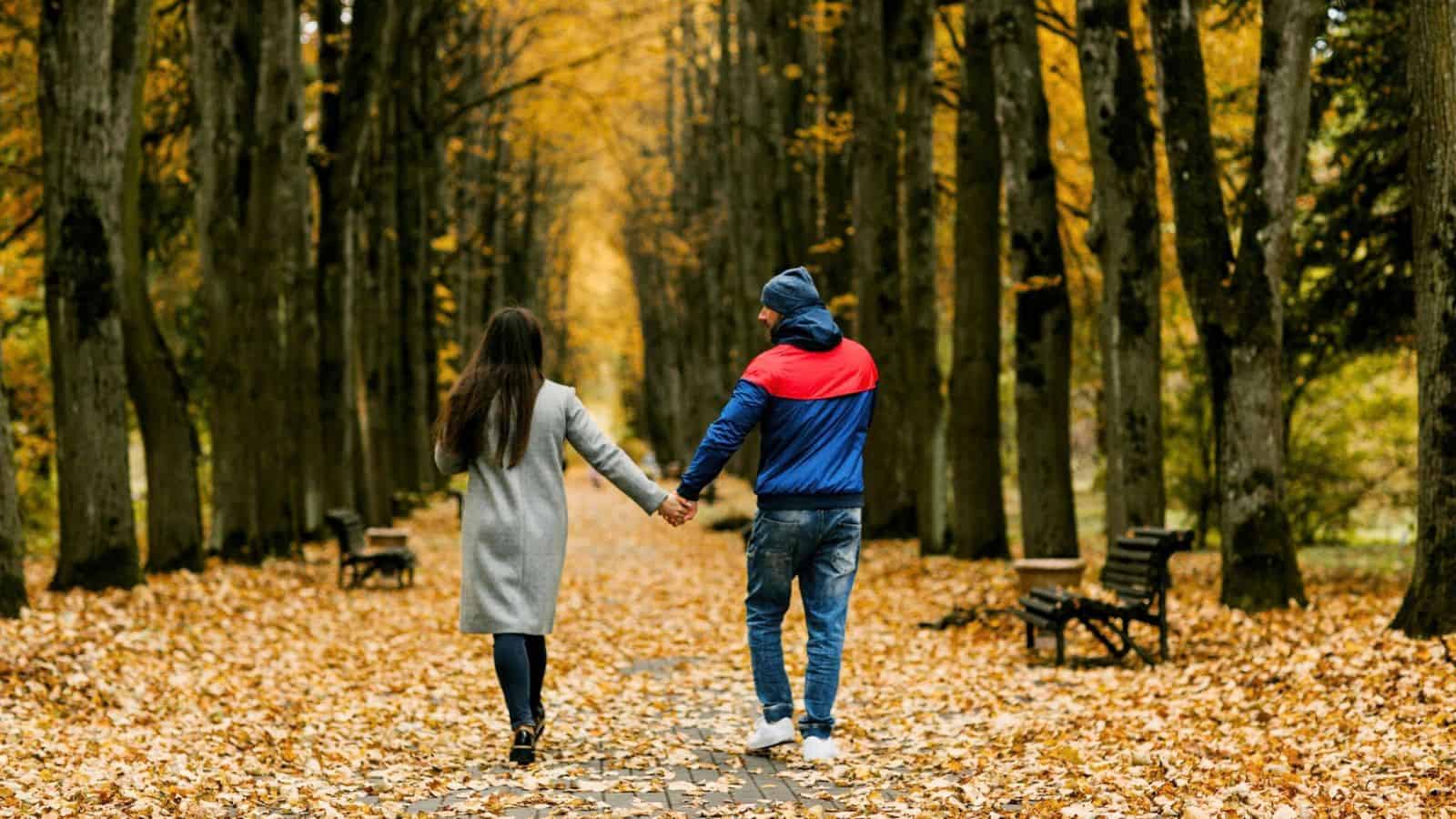
Side-by-side movement changes the dynamic in ways that feel obvious once you experience them and genuinely interesting once the research behind them comes into view. Walking gives both people somewhere to look besides each other. Attention moves outward to the street, the park, whatever is in front of them, taking pressure off the conversation.
On a walk, silence has a job. A turn around a corner or something worth noticing gives it a reason to exist. Across a dinner table, that same pause is a small emergency.
Movement also works on connection in ways that go beyond conversation. A peer-reviewed study found that people walking side by side naturally synchronize their stride, even without talking, and that stronger initial impressions between two people predicted greater walking synchrony. The research suggests the body already registers social information through movement, before words have done much of the work.
A new environment also keeps both people more present and engaged than a familiar setting can, and 48% of daters say they connect most deeply with a potential partner by trying a new activity together. Being side by side in a place neither person knows well creates conditions for that kind of attention in a way a booth reservation rarely does.
Daters are already moving in this direction
Women on the same dating platform say, by an 89% majority, that thoughtful date planning matters more to them than how much someone spends. Hinge’s Date Ideas feature, which lets users signal preferred first-date activities on their profiles, includes “a walk” among its selectable options alongside bookstores, art galleries and comedy shows.
In 2024, October had the highest message volume of the August-through-November cuffing season window on the platform, and more daters are moving away from dinner and drinks as the default opening move toward activity-based dates that create shared experiences from the start.
What makes a walking date actually work
A casual destination helps: a park, a waterfront path, a neighborhood worth exploring, so the walk has direction without feeling like a guided tour. Keeping it to 30 to 60 minutes gives both people enough time for real conversation to develop without the pressure of an open-ended commitment.
A walk that goes well extends naturally into coffee or a sit-down without any awkward renegotiation. One that isn’t going well wraps cleanly at a natural stopping point, with no reservation to cancel on the way out.
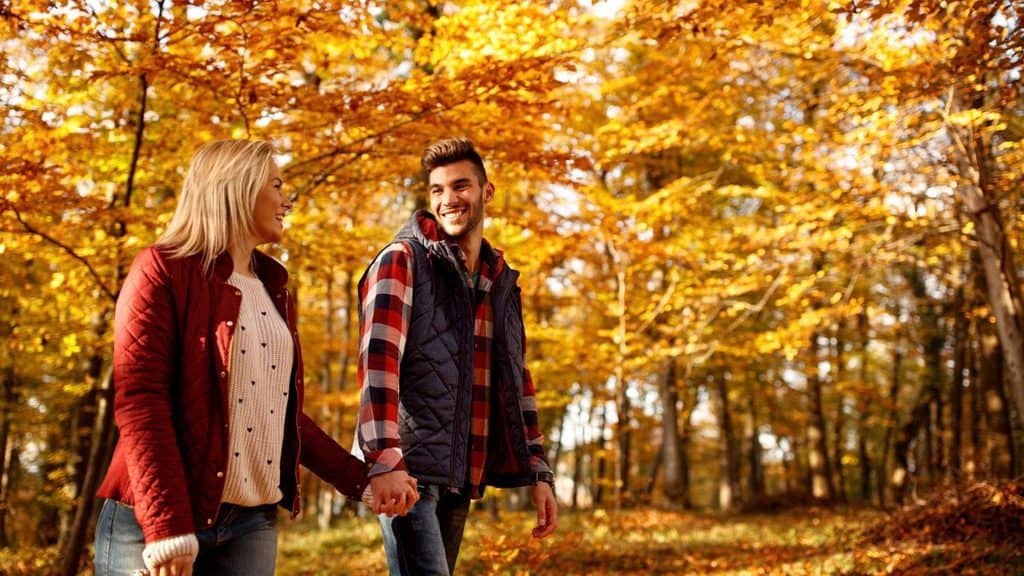
A fall walk adds something to a walking date that no indoor setting can replicate. Crisp air, shorter light and leaves actually changing give both people something to notice and react to together, which is a different kind of shared experience than a menu and a drinks list.
October is earlier than most people think
Hinge’s own cuffing season data tells a more complicated story than the season’s reputation suggests. The platform notes that what people are looking for varies widely and that it can lead to meaningful connection just as easily as a seasonal arrangement.
People moving intentionally at the start of October, choosing dates that ask something real, are not treating the season as a holding pattern. Cuffing season now has its dictionary entry. What people do with it is the more interesting question.
Jennifer Allen is a retired chef turned traveler, cookbook author and nationally syndicated journalist; she’s also a co-founder of Food Drink Life, where she shares expert travel tips, cruise insights and luxury destination guides. A recognized cruise expert with a deep passion for high-end experiences and off-the-beaten-path destinations, Jennifer explores the world with curiosity, depth and a storyteller’s perspective. Her articles are regularly featured on the Associated Press Wire, The Washington Post, Seattle Times, MSN and more.