
Corn, beans and squash have been planted together across much of North America for centuries, and the trio’s name, the Three Sisters, comes from Indigenous stories about plants that thrive only when they stay together. Researchers are now testing what Native growers have long practiced, and schools, campuses and Native communities are planting the crops together again.
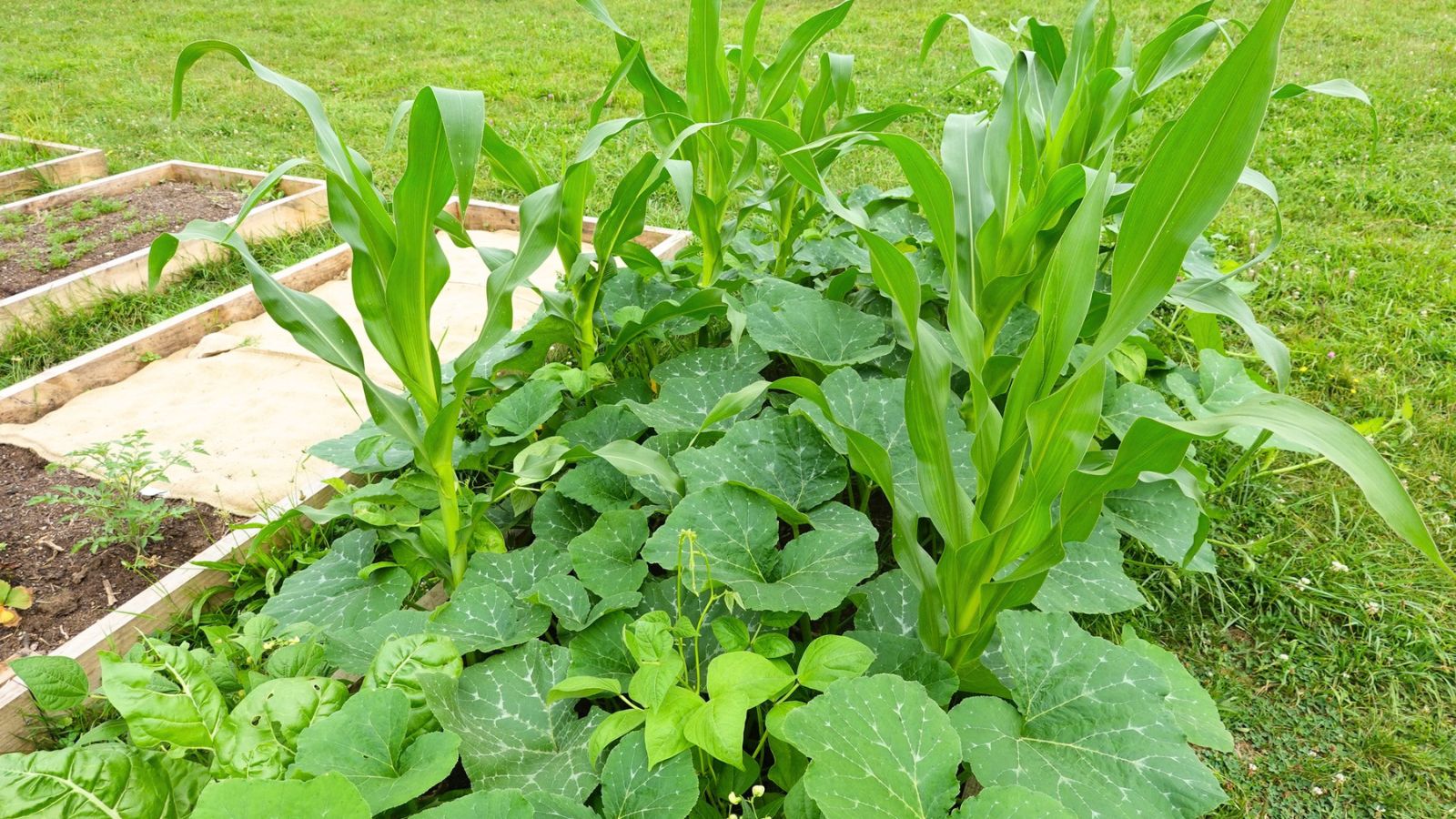
In the Haudenosaunee story, corn, beans and squash sprouted from the body of Sky Woman’s daughter. Haudenosaunee farmers have traditionally planted them together in mounds. In some versions of the legend, the crops are three women who learn they are stronger together.
Corn, beans and squash share a mound
The plants are called “Diohe’ko,” a name recorded as our sustainers and sometimes spelled other ways. At the Green Corn Thanksgiving, the leader says, “We give thanks to our sustainers.” The English name, the Three Sisters, comes out of stories like these, and the planting method is older than any single telling.
Corn goes in first. Two or three weeks later, beans are planted in the same hills and climb the stalks. Squash fills the ground below, and its broad leaves shade the soil. When Europeans arrived, around 1600, the Haudenosaunee had been planting the three together for about 300 years, according to the New York State Museum.
Bacteria on bean roots pull nitrogen from the air. University of Arizona Extension says beans can supply small amounts of nitrogen to the soil and notes the lack of scientific data behind many companion-planting claims. In a replicated Iowa State trial, the combined planting lowered soil nitrate and raised biological activity compared with growing each crop alone.
Nutrition is the clearest payoff. Researchers at Mt. Pleasant found that the system yielded about the same energy as corn alone but significantly more protein, most of it from the beans and squash. Their yields dropped when grown with corn, while corn yields fell only slightly. Beans also supply tryptophan without processing, which corn provides only after nixtamalization.
Where the crops came from
Researchers writing in Agriculture and Human Values say that, spreading from its origins in Mesoamerica, growing the Three Sisters became increasingly common in the Midwest and Northeast by the mid-1500s.
The timing varied by place. At Cahokia, in and around present-day St. Louis, University of Illinois researchers dated the first corn cultivation to roughly A.D. 900 to 1000. Squash was already part of the local diet. In Massachusetts, the Wampanoag grew all three, and Modern Farmer credits Squanto, a member of the Pawtuxet tribe, with showing the English colonists how to plant native crops.
The same idea, adapted to the land
Where water is scarce, the arrangement changes. Native Seeds/SEARCH, which conserves seeds of the desert Southwest and Mexico, says Southwestern growers sometimes plant the sisters together and sometimes in separate fields. In dry-farmed areas such as Hopi and parts of the Navajo Nation, the crops go in separate areas of the field and are spaced widely to conserve water. Where water is adequate, they can go in close together.
Many Southwestern corns, such as Tohono O’odham 60-day and Hopi Sweet, are short plants that mature quickly, the group notes. That saves water but is not ideal for climbing beans. It also says teparies are not recommended for this type of planting, because corn and squash need more water than tepary varieties.
In Tucson, Mission Garden, a 4-acre garden below Sentinel Peak, sits on the site of S-cuk Son, an ancient Indigenous settlement. Its site timeline lists maize as the first crop, beginning in the Early Agriculture period at 2100 B.C. By the Early Ceramic period, which begins in A.D. 50, farmers had added beans and squash.
Archaeologists unearthed a 4,100-year-old ear of small-cob corn there. The garden’s pre-contact O’odham plot grows huñ, a 60-day corn. The Pima County Library notes the Tohono O’odham have long grown tepary beans, planted in the Sonoran Desert between June and August.
Almost lost, and now coming back
The Agriculture and Human Values authors say federal policies undermined Native agriculture, including forced removal to marginal lands, the 1887 Allotment Act and boarding schools. By the 1930s, they write, Three Sisters agriculture had been almost entirely eradicated from Native communities in the U.S. Midwest.
The return has come from the ground up. The Three Sisters Intercropping Network works with Native growers at Nebraska Indian Community College, the Omaha reservation, Dream of Wild Health in the Twin Cities and the Oneida and Menominee nations in Wisconsin. Growers tied the practice to food sovereignty, passing knowledge between generations and seed rematriation.
In 2017, three Zuni elders and a museum educator spent a week with the Smithsonian’s collections, where seed samples may be all that remain of some Zuni heirloom varieties. They discussed starting a community garden.
Schools and campuses have followed. In 2019, fourth graders at North Falmouth Elementary School in Massachusetts planted a Three Sisters garden with Kitty Hendricks Miller, educational coordinator for the Mashpee Wampanoag Tribe. Syracuse University has hosted at least three annual Three Sisters plantings at Pete’s Giving Garden, working with the Onondaga Nation Seed Keepers. Binghamton University’s garden was first planted in 2022 with the Onondaga Nation Farm, a 13-acre farm.
Researchers are now testing it at scale
Scientists are asking whether a garden method can work in a farm field. In the network’s first season, soil respiration rose 24% and extractable nitrate fell 54% compared with monocultures. The authors estimated a land equivalent ratio of 1.28 to 1.53. That means separate monocultures would have needed 28% to 53% more land to produce the same harvest. The range is an estimate because a 2020 derecho damaged the corn, and the authors urge caution since it was one season with a small sample.
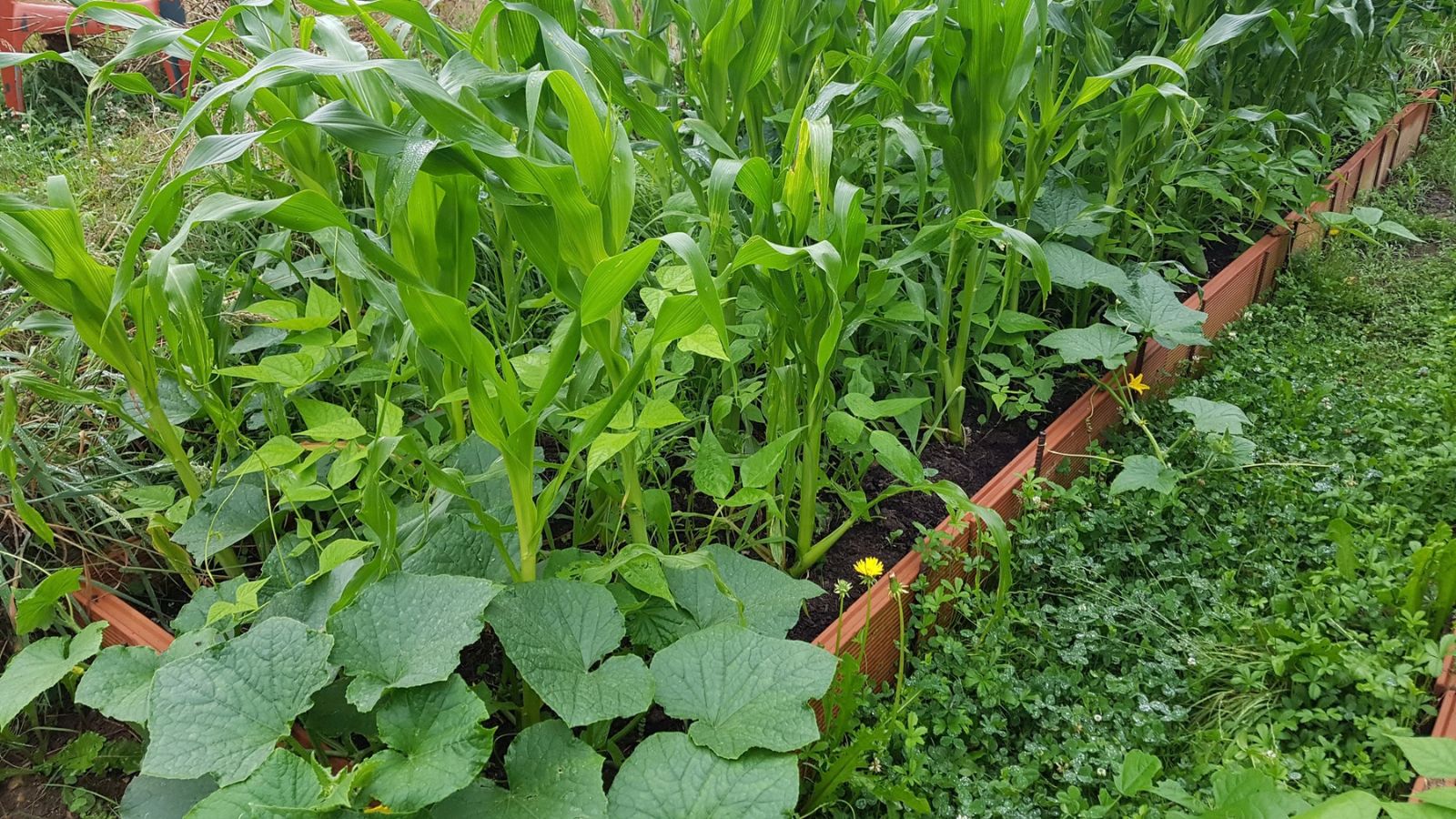
A 2025 study in Agronomy for Sustainable Development tried the system in Manitoba under modern row cropping. Monocultures gave higher yields of each individual crop. The combined plots produced more kinds of produce and a higher total yield of the crops together, according to the authors.
Still planted together
In the story, the three plants thrive only when they stay together. Researchers are now testing that claim against soil nitrate and land use. The research is early: one season of data from Native growers and one Manitoba field study, while University of Arizona extension notes the lack of scientific data behind many companion-planting claims.
The planting itself has outlasted a great deal. The practice traveled north from Mesoamerica, and growers adjusted the arrangement for dry country. By the 1930s, according to researchers, it had nearly disappeared from Midwest Native communities. Today it grows in school beds, campus courtyards and research plots, some planted with seeds returned to ancestral lands. The English name still describes the idea at its center: three crops, grown together by the people who kept the seed.
Jennifer Allen is a retired chef turned traveler, cookbook author and nationally syndicated journalist; she’s also a co-founder of Food Drink Life, where she shares expert travel tips, cruise insights and luxury destination guides. A recognized cruise expert with a deep passion for high-end experiences and off-the-beaten-path destinations, Jennifer explores the world with curiosity, depth and a storyteller’s perspective. Her articles are regularly featured on the Associated Press Wire, The Washington Post, Seattle Times, MSN and more.