
A non-stick pan stays slick only as long as its coating survives, and the habits that wear it down feel harmless at the stove. A metal spatula, a stack of pans in the cabinet and a burner turned all the way up can each wear the coating down faster than a cook expects. Thirteen common mistakes follow, and most come with an easy fix.
Scraping With Metal Tools
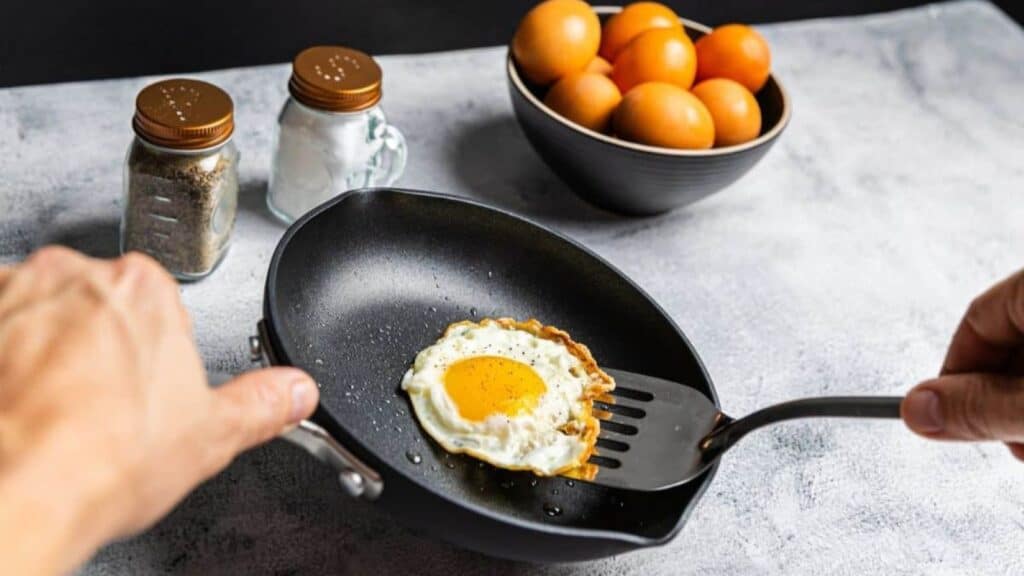
Metal is not safe for a pan just because the pan feels sturdy, and All-Clad says metal utensils may scratch the surface. A few newer or hybrid pans are designed for metal tools, but that exception must appear in the model’s instructions. Otherwise, use silicone, nylon, plastic, or wood.
Cutting Food in the Pan
A knife concentrates force along a sharp edge, which is why OXO specifically warns against using knives on nonstick cookware. Slide a frittata, quesadilla, or baked pancake onto a cutting board before portioning it.

Scrubbing With Steel Wool
Steel wool and harsh scouring pads can damage the cooking surface while they remove stuck food, so OXO recommends soft scrubbers, cloths, or sponges with regular dish soap. A brief soak in warm, soapy water is gentler than grinding at a stubborn spot.
Stacking Pans Without a Buffer
The bottom and rim of one pan can scrape the coating of the pan below it, so Calphalon advises placing a paper towel, napkin, or trivet between stacked pans. A felt pan protector works for the same reason.
Heating the Pan While Empty
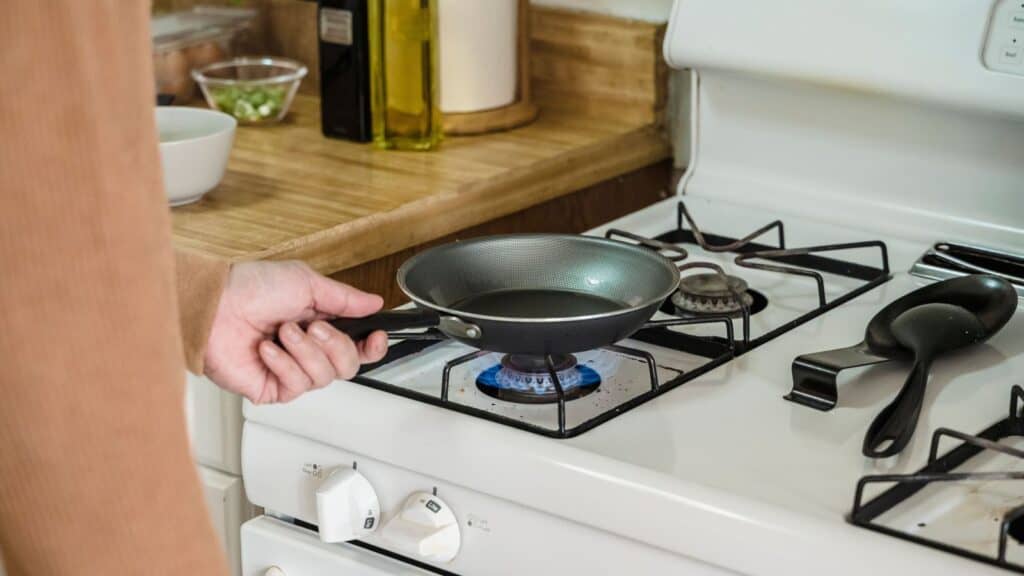
An empty pan has no food or cooking fat to absorb heat, so its temperature can climb quickly, and KitchenAid says not to preheat nonstick cookware while empty, even on low. Add the ingredients or a little oil before turning on the burner when your instructions call for it.
Cooking on Maximum Heat
Nonstick cookware usually needs low or medium heat, and All-Clad calls high heat a leading cause of premature wear that can damage the layer. Reserve maximum heat for cookware and methods designed to handle it.
Letting Gas Flames Climb the Sides
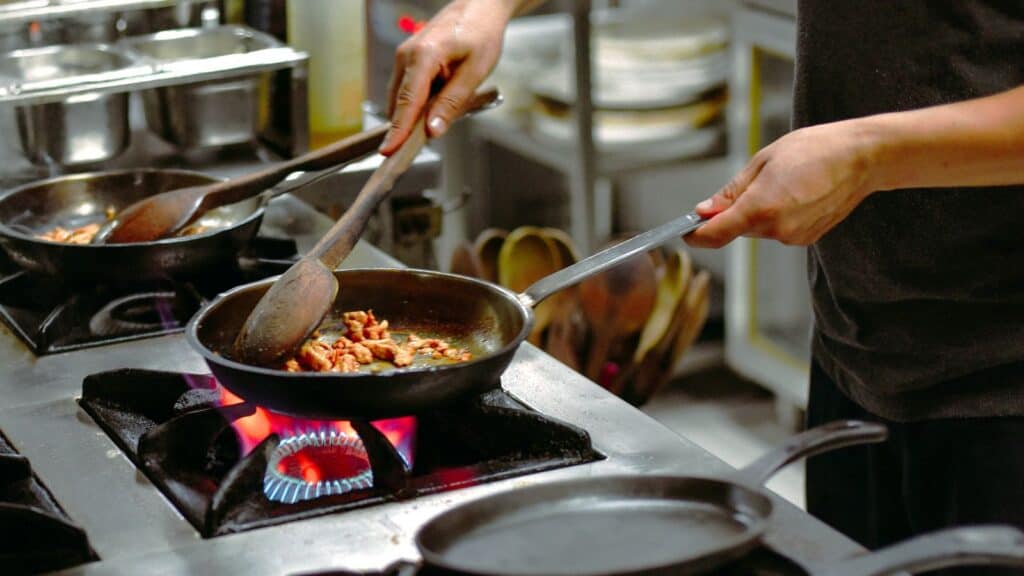
A gas flame should stay under the base and not wrap around the pan, since Le Creuset says flames that reach the sidewalls can damage the product. Match the burner to the pan and turn down any flame that extends past the bottom.
Ignoring the Oven and Broiler Limit
Oven limits vary by collection, handle, and lid, and Calphalon’s current chart ranges from 400°F to 500°F for its nonstick lines. Broiler approval varies too, so check the exact model before moving a skillet from the stovetop into intense oven heat.
Plunging a Hot Pan Into Cold Water
Fast temperature changes can warp a pan and harm its coating, so Le Creuset says to cool the pan before cleaning and not to plunge it into cold water. Leave it on a safe surface until it is comfortable to handle.
Coating the Surface With Aerosol Spray
Convenient spray can leave a residue that lowers nonstick performance over time, and All-Clad does not recommend nonstick cooking spray for its coated cookware. Use a small amount of regular oil or butter if the pan’s guide allows it.
Taking Oil Past Its Smoke Point
Burning oil can carbonize on the coating and create sticky spots, so GreenPan recommends a high-smoke-point oil for hotter cooking. If the oil begins smoking, reduce the heat rather than letting the film bake onto the surface.
Leaving Burned-On Film Behind
Dark residue is not harmless seasoning on a coated pan, and GreenPan explains that carbonized oil can cause food to stick. Clean the surface after it cools, using only the method approved for that specific coating.
Treating Every Pan as Dishwasher-Safe
Dishwasher advice is model-specific, and Calphalon’s guide marks several collections as dishwasher-safe while others are hand-wash only. Check the package or care page instead of assuming, and treat hand washing with mild soap and a soft sponge as the cautious default.
The Care Card Beats a Universal Rule
Non-stick cookware is not one category with one set of limits, since hybrid, ceramic, hard-anodized, and traditional coatings can allow different tools, temperatures, and cleaning methods. Keep the model’s care page or instruction card and follow it instead of relying on a rule heard years ago. Care matched to the actual pan protects the value already in your kitchen.