
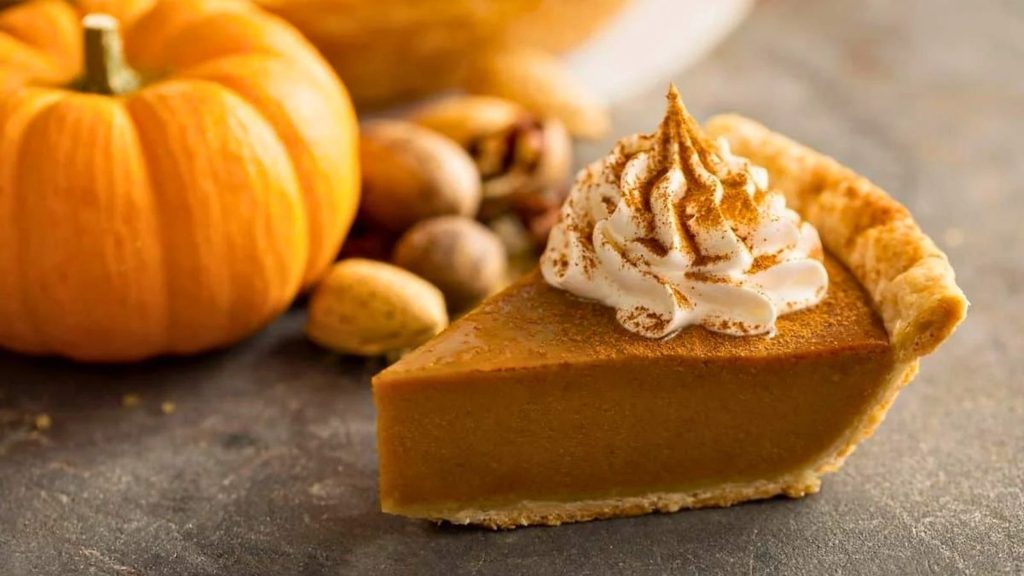
Pumpkin pie is the dessert many Americans expect at Thanksgiving, yet the pie that ends up on the table comes in more forms than its name suggests. Many start with canned pumpkin from a variety more closely related to butternut squash than to the orange pumpkins people carve, then rework the crust and filling. The tradition does not require one recipe, so each host gets to decide which version earns the spot.
New England cooks knew pumpkins long before they became a pie filling. Pumpkins and other squashes were native to the Americas, and Wampanoag women grew them alongside beans, melons and sunflowers. English women cultivated them too. The English called pumpkins and related squashes pompions, and American varieties began appearing in Europe in the early 16th century, following European contact with the Americas.
Today the pie reaches the table in more than one way, because not every host makes pie from scratch, and delivery orders show how it compares with other desserts. Among store-bought pie and cake orders placed on Nov. 26 and 27, 2025, pumpkin pie ranked fourth overall, behind chocolate cake, apple pie and cheesecake.
Pumpkin pie joined the Thanksgiving menu long after 1621
The 1621 harvest table likely included pumpkin in some form, but the settlers probably lacked the butter and wheat flour for a crust. Apples had not reached Plymouth yet either, so apple pies were out too. The earliest written pumpkin pie recipes came after 1621 and treated pumpkin much like apples, with slices that cooks sometimes fried.
Sarah Josepha Hale led a 36-year campaign for a national day of thanksgiving that began in 1827, the same year she published a novel called Northwood that gave pumpkin pie the most distinguished spot at its Thanksgiving table. Hale wrote to President Abraham Lincoln on Sept. 28, 1863, asking him to create the holiday. Lincoln issued a proclamation on Oct. 3, 1863, that set Nov. 26 as a national day of thanksgiving, though Secretary of State William Seward drafted it.
Many tables still save room for a slice
The traditional filling is usually a custard made with eggs and milk, which affects how hosts serve the pie. Food safety guidance says pumpkin pie should not sit out of the refrigerator for more than two hours, so keep it in the refrigerator until dessert. Cooks can bake pies before the holiday as long as they store them correctly, and a pie should cool completely before cooks cover and refrigerate it, to prevent condensation under the wrapping. A pie keeps up to four days in the refrigerator and up to two months in the freezer for the best quality.
Many fillings start with canned pumpkin, and Dickinson Field pumpkin is a common source. The label does not promise a carving pumpkin, since federal policy lets canners label products made from golden-fleshed sweet squash as pumpkin. Cooks who skip the can and start from scratch should look for a pie or sugar pumpkin, which is usually smaller and less stringy than a carving pumpkin.
Twists and flavors round out the spread
Some cooks keep the classic pie and adjust the details. Many start with pumpkin pie spice, a blend of cinnamon, ginger, nutmeg and allspice that reached store shelves by the early 1930s as a pie shortcut, and then change the rest. A gingersnap crust adds crunch, while bourbon in the custard deepens the flavor. Recipe developers take those ideas further, from brown butter to a pecan streusel on top.
Swaps inside the filling change the pie in simple ways, starting with the dairy. Evaporated milk or cream gives a classic custard, while coconut milk makes a dairy-free version. Brown sugar or maple syrup changes the sweetness, and a layer of cream cheese beneath the pumpkin adds tang. For a lighter texture, a chiffon filling turns the pie into something closer to mousse. Toppings range from whipped cream to toasted pecans, and some cooks bake the filling as bars that are easier to serve.
Other desserts use the pie’s flavor or spices in a different form. A pumpkin cheesecake can layer pumpkin over a cheesecake base or swirl it through the batter. A pumpkin roll wraps spiced pumpkin cake around a cream cheese filling, and a pumpkin ice cream pie freezes the flavor in a crust. Sweet potato pie goes the other direction, staying a custard pie while swapping the pumpkin for sweet potato.
The classic still leads, with room for a change
In a November 2025 poll, 28% of U.S. residents named pumpkin pie their favorite holiday pie, more than any other kind, though most picked something else. A host can count on the classic to please the most guests, then add one twist for guests who want something different. Whichever pie has the fewest slices left by the end of dinner shows the host what to bake again.
Jennifer Allen is a retired professional chef and long-time writer. Her work appears in dozens of publications, including MSN, Yahoo, The Washington Post and The Seattle Times. These days, she’s busy in the kitchen developing recipes and traveling the world, and you can find all her best creations at Cook What You Love.