
Gratitude jars need little more than a pen and a slip of paper to turn Thanksgiving guests into writers. Each guest jots down what they appreciate, such as a family recipe or a phone call during a hard week, and someone reads the slips aloud. Families handle the jars their own way, with some filling it in a single evening and others adding to it all through November.
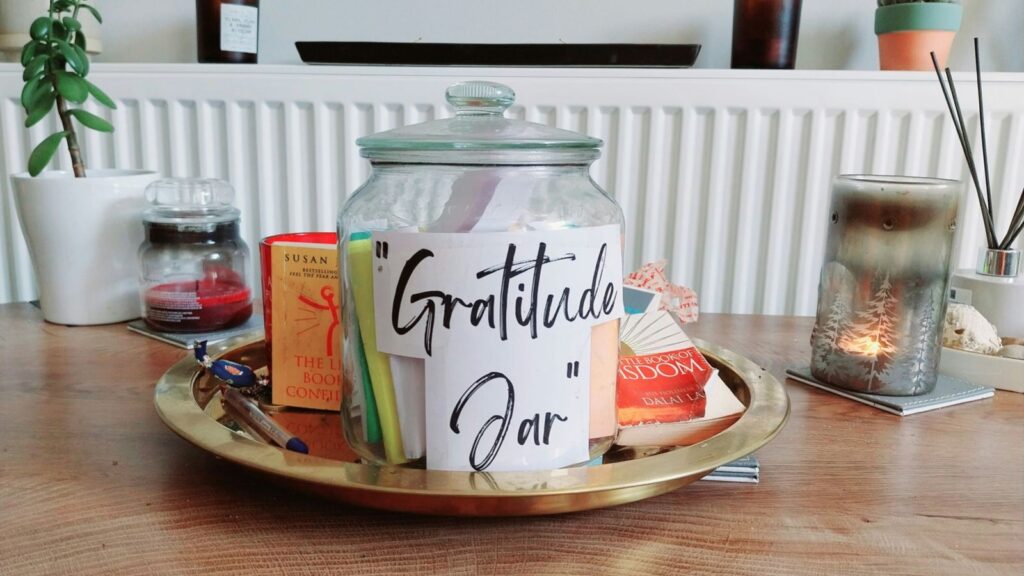
A gratitude jar can be any container, from a kitchen mixing bowl to a store-bought jar. A host can set the container out before guests arrive or bring it out once everyone sits down. The feeling behind the notes is widely shared. A recent poll found that 92% of Americans said they were thankful this year, about the same share as last year’s 91%. The same poll found that 78% planned to celebrate at their own home or a friend’s or family member’s home, a setting where a jar is easy to set up.
Guests can write notes on the day or all month
The simplest version of the jar happens entirely on Thanksgiving Day, with guests writing slips once they arrive and the host reading several after dinner. Some families instead collect notes through November and read them together on Thanksgiving. Notes that guests write during the month capture ordinary days, including small events that could fade from memory by the holiday. A jar on the kitchen counter lets household members add notes on their own schedule. Afterward, slips a family keeps in a box or scrapbook give a later gathering old notes to read aloud alongside the new ones.
Place cards offer another way to collect notes, with a card at each setting that prompts a guest to write what they appreciate about the person seated nearby. The note then addresses one guest instead of the whole table. A guest who prefers writing to speaking can take part without making a speech.
Signed or unsigned, every guest can add a slip
Families that prefer anonymity can shuffle the slips and read each note without a name, keeping the focus on the words instead of the writer. Signed notes, in contrast, tell the room who wrote them from the first line. A host who is unsure can leave the choice of signing to each guest.
Younger guests can draw pictures or dictate notes to an adult, and older children might write short answers to prompts such as something someone did for them this year. Their slips can go into the same jar as everyone else’s.
Relatives who cannot attend may still contribute by mailing a note before the meal or texting one for someone at the table to read aloud. That keeps absent relatives in the reading. The approach also suits a holiday when relatives live in different states, since a note can cross the country more easily than a guest.
A jar needs paper and a plan for the reading
Slips cut from index cards or ordinary notepaper leave room for a short note, which is all the exercise needs. A pen or pencil at each place setting saves guests from looking for one. A few extra slips on the table cover a guest who changes their mind, and they also help a late arrival who joins after the others have finished writing.
Hosts often decide in advance who does the reading. One option is for the host to read every slip, and another is to pass the jar around so each guest draws one and reads it out loud. Passing the jar gives more guests a turn, while one person reading every slip keeps the pace steady in a crowded room.
The timing of the reading also varies from table to table. Some hosts read between the main course and dessert, when guests clear their plates and conversation slows, so the reading does not compete with the first rush of eating. Others wait until after pie, when most guests have finished eating.
Notes name the details a toast leaves out
What goes on a slip varies widely, and some guests name a joke the family retells at every gathering or an effort that went unnoticed. Others thank a relative for a ride to the airport or a timely favor. Because a slip holds only a line or two, guests name the detail itself and skip the longer speech.
Thanksgiving gets personal with a slip of paper
An 1863 presidential proclamation asked the whole country to set apart a day of thanksgiving. It described a national occasion, not a household ritual, and it did not tell families what to say around a table. A gratitude jar brings that broad idea to the table with one specific act of care: a guest writes it on a slip and reads it aloud.
Mandy writes about food, home and the kind of everyday life that feels anything but ordinary. She has traveled extensively, and those experiences have shaped everything, from comforting meals to small lifestyle upgrades that make a big difference. You’ll find all her favorite recipes over at Hungry Cooks Kitchen.