
Every ‘80s arcade ran on the same currency: quarters, and lots of them. Eleven cabinets in particular figured out exactly how to keep them coming, from maze chases and joystick tricks to a hydraulic seat that made a Ferrari feel real. Here’s what made each one impossible to walk away from.

Pac-Man Brought Everyone to the Maze
Pac-Man reached U.S. arcades in 1980 with a very different idea from the shooters that dominated the era. Designer Toru Iwatani wanted a nonviolent game that could appeal to couples, groups, and female players. The maze chase helped Pac-Man pull in people who might not have cared about blasting aliens.
Ms. Pac-Man Made the Chase Less Predictable
Ms. Pac-Man arrived in 1982 with four mazes instead of one. Changing layouts and less predictable ghost behavior made a single memorized route less useful. It became a huge arcade success and spent much of 1982 near the top of U.S. earnings charts.
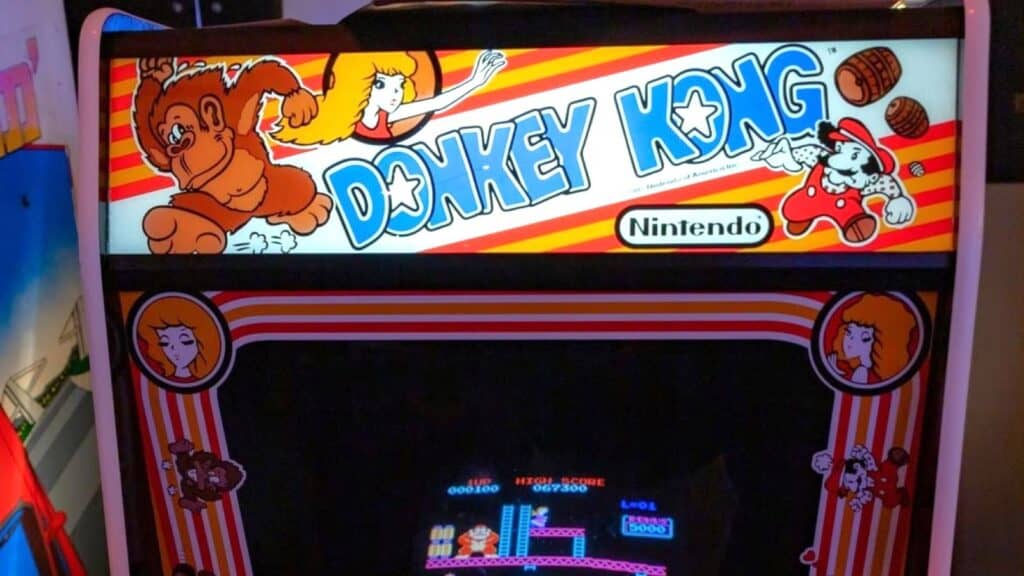
Donkey Kong Turned Jumpman Into Mario
Nintendo’s Donkey Kong landed in 1981 with Jumpman, the character later named Mario. He climbed ladders, jumped barrels, and tried to rescue a kidnapped woman from Donkey Kong. The Strong says Nintendo sold more than 100,000 arcade cabinets in the United States.
Galaga Made Losing a Ship Feel Reversible
Namco’s Galaga followed Galaxian in 1981. A Boss Galaga could capture the player’s fighter, but shooting the captor at the right moment could bring that ship back in Dual Fighter mode. The reward was double firepower with a wider target for enemies to hit.
Defender Made Difficulty Part of the Appeal
Williams released Defender in 1981 with complex controls and punishing action. Operators worried an average player might last only seconds and quit. Instead, players embraced the challenge. By spring 1981, Defender had passed Asteroids as the top-earning arcade video game, and Williams sold more than 55,000 units.
Centipede Reached Beyond the Usual Crowd
Atari’s Centipede, co-designed by Dona Bailey and Ed Logg, used a trackball and bright pastel colors. Logg later said it was “definitely aimed at the women’s market”. The Strong says its look, sound, and controls appealed to male and female players across age groups.
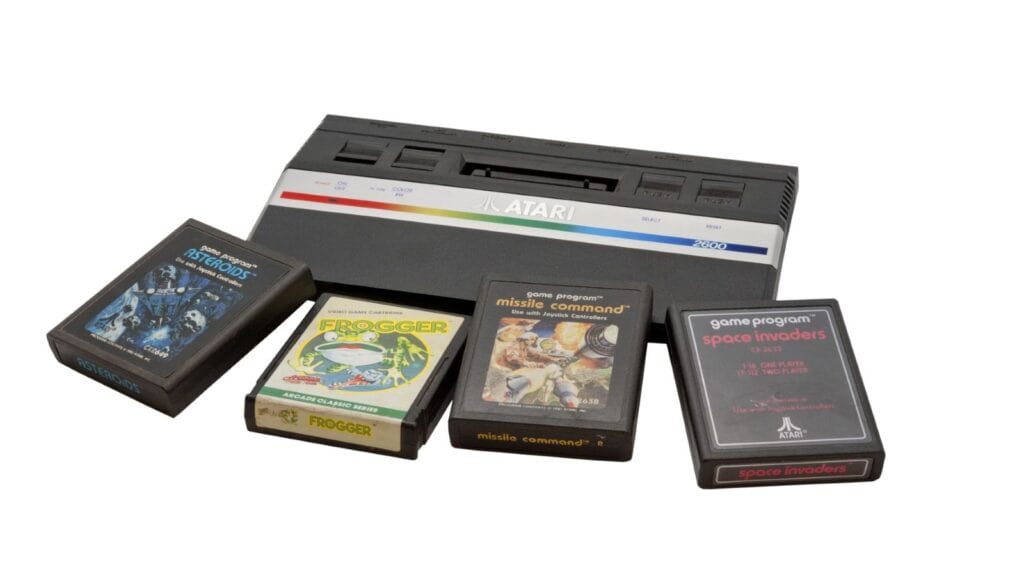
Frogger Made Every Safe Spot Feel Close
Frogger arrived in 1981 with an easy goal: guide a frog across a busy road and dangerous river to reach home. Cars, alligators, snakes, and other hazards turned it into a timing test. One mistake could erase a run that had looked safe seconds earlier.
Q*bert Made One Bad Hop Costly
Gottlieb released Q*bert in 1982. Players hopped across a pyramid of cubes to change their colors while avoiding enemies. The diagonal joystick matched the angled playfield, and jumping off the pyramid meant losing a life.
Dragon’s Lair Doubled the Price of a Try
Dragon’s Lair looked unlike the games around it because it used animated LaserDisc footage. It also charged 50 cents per play, twice what many arcade games cost at the time. Players still lined up to guide Dirk the Daring through quick reactions and spectacular failures.
Gauntlet Let 4 Players Spend at Once
Atari’s Gauntlet brought four players to one cabinet in 1985. Each character’s health steadily dropped, and extra quarters could restore it. Four coin mechanisms, one for each player, kept a group playing without waiting for a turn.
OutRun Put the Arcade in the Driver’s Seat
Sega’s OutRun arrived in 1986 and put players behind the wheel of a red Ferrari Testarossa on branching roads. The deluxe cabinet added a hydraulic seat that tilted and moved with the action. It made the race feel physical as well as fast.
Why the Next Quarter Was Hard to Resist
These games made failure feel temporary. A missed jump, a bad turn, or one lost life rarely felt final. The next attempt offered a clean slate and a chance to prove you had learned something. With friends watching and the score glowing above the screen, a quarter bought more than playtime. It bought one more chance to get it right.