
More than half of Americans now combine prepared foods with ingredients from their own kitchens to create hybrid meals, according to The Food Industry Association. For a growing number of younger consumers, dinner has become an act of assembly rather than cooking.
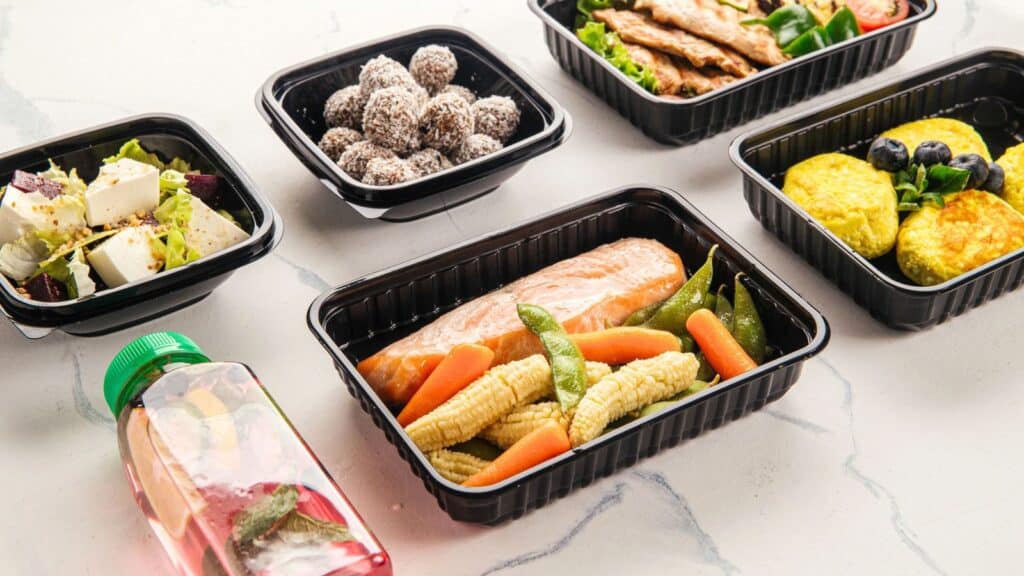
Rather than cooking an entire recipe from scratch, shoppers purchase individual components and combine them into a complete meal in minutes. Dinner might look like frozen rice topped with rotisserie chicken and a bagged salad, a plate of frozen dumplings paired with edamame and packaged slaw or pre-cooked grains mixed with canned fish and a bottled sauce.
FMI’s latest The Power of Foodservice at Retail report reveals the share of consumers who choose grocery-prepared foods instead of restaurant meals has more than doubled, rising from 12% in 2017 to 28% in 2025. Grocery stores respond by expanding deli counters, grab-and-go sections and ready-to-assemble offerings that promise a complete dinner with almost no prep.
The result is a rise in assembly meals. In this new kind of food preparation, the skill lies less in following a recipe and more in assembling a personalized meal from ready-made building blocks.
Assembly meals redefine home cooking
The approach appeals especially to busy professionals, college students and single-person households. Traditional recipes often create leftovers, require specialty ingredients and involve multiple cooking steps. Assembly meals remove many of those barriers. A shopper can customize flavors and portion sizes without needing advanced cooking skills or a detailed weekly meal plan.
Shruthi Baskaran-Makanju, founder of Urban Farmie, says the trend reflects a broader redefinition of home cooking rather than a rejection of it. Previous generations leaned on canned soups and boxed mixes, while today’s shortcuts include pre-cooked grains, chopped vegetables and frozen proteins. “It’s less about abandoning cooking than redefining what home cooking looks like for modern households,” she says.
Maya Levin, senior editor at NYC Restaurant Voice, says younger diners are increasingly drawn to flexible, snack-driven foods and are embracing meals designed for mixing and matching, not the old appetizer-entree-dessert progression. She notes that the boundaries between meals and snacks blur as people eat more casually, often prioritizing customization and convenience over traditional sit-down dinners.
Retailers bet big on the trend
Retailers invest heavily in ready-to-eat and ready-to-assemble food options as shoppers look for meals that require little planning and even less preparation. Foodstorm reports 85% of shoppers say they purchase the same amount of or more deli-prepared foods than they did a year ago, and 18% plan to buy even more this year. These suggest that a growing number of consumers see grocery stores not just as places to buy ingredients, but as destinations for meal components that can be quickly assembled into dinner.
The change extends far beyond a few supermarket shelves. A Towards Food & Nutrition Business research shows that the global ready meals market was estimated at $190.09 billion last year and is expected to grow steadily over the next decade, with North America leading demand for convenience-driven foods. The growth reflects changing eating habits, particularly among younger consumers who increasingly prioritize speed, flexibility and minimal cleanup over traditional meal preparation.
Young adults ditch traditional recipes
Meal planning, grocery lists and even 40-minute recipes like Ruth’s Chris stuffed chicken can feel unrealistic in an era defined by packed schedules, rising food costs and mental overload. A recipe that requires 10 ingredients and several cooking steps may promise a delicious meal, but it also demands time and energy that many people feel they do not have at the end of the day.
Assembly meals allow people to decide what they want in the moment, use ingredients across multiple meals and avoid spending an hour in the kitchen. Cleanup tends to be simpler, too, which adds to the appeal.
Social media has also helped normalize this style of eating. Viral concepts such as girl dinner, snack plates and assembly bowls celebrate meals that are informal, highly customizable and intentionally low effort. The emphasis is less on culinary achievement and more on meeting a basic need in a way that feels manageable.
In some cases, even the traditional dinner plate disappears. More and more people eat directly from takeout containers, grain bowls, meal-prep containers or sectional trays designed for snacking and grazing. The ritual of sitting down to a plated, fully cooked meal has given way to a more casual, modular approach to eating, one that prioritizes convenience over convention.
The drawbacks of assembly meals, according to experts
Assembly meals can make weeknight dinners faster and less stressful, but experts caution against relying on them for every meal.
“The biggest drawbacks are flavor and nutrition,” says Chef Starr, personal chef and owner of The Tastery. “Some ready-to-eat ingredients can lack the depth of flavor you get from homemade meals, while others can be high in sodium, preservatives and additives.”
“If it means you can get protein, vegetables and whole grains on the table in five minutes instead of ordering takeout, that’s a win,” says Shelby Stover, founder of Fit as a Mama Bear. “The key is not relying on ultra-processed convenience foods for every meal and instead building meals around minimally processed staples whenever possible.”
Experts also worry that a steady diet of assembly meals may come at the expense of cooking confidence. When every meal comes from pre-made components, people may lose opportunities to develop basic kitchen skills such as planning balanced meals, preparing vegetables or learning how flavors work together.
Chef Jennifer Allen of Cook What You Love sees the trend as a symptom of a larger issue. “We’ve stopped teaching people how to cook,” she says. “When your entire culinary vocabulary is open bag, combine, done, you’re not a cook, you’re a curator. Take away the grocery store building blocks, and most of them would be completely lost.”
Cooking skills also make it easier to adapt meals to specific dietary needs. Someone following a keto diet can quickly make a cheeseburger pie or another low-carb dinner at home, while relying solely on prepared foods often means navigating ingredient lists and compromising on nutrition goals.
Convenience foods have earned a permanent place in modern kitchens, but experts say they work best as tools rather than replacements for cooking altogether. Keeping a few shortcut recipes in rotation, whether it’s a dump-and-go casserole or make-ahead stuffed meatloaf, can preserve essential food skills while still making weeknight dinners manageable. Knowing how to nourish yourself, they say, remains a skill worth practicing, even in the age of assembly meals.
A shortcut, not a substitute
Assembly meals mirror how many people eat today: quickly, flexibly and with far less planning than previous generations. They can make dinner more accessible on busy nights and lower the barrier to getting a meal on the table.
But convenience works best when it complements cooking rather than replaces it entirely. Knowing how to prepare a simple recipe, balance a meal and work with basic ingredients remains an important life skill. In an era when dinner increasingly comes from assembled components, the ability to cook for yourself still has lasting value.
Jessica Haggard is the creator behind Easy Homemade Life. As a homeschool mother of three managing a real, busy household, she brings years of hands-on experience to families looking to simplify home cooking, natural cleaning and DIY personal care. Her work has been featured on Yahoo, The Washington Times, The Baltimore Post, Chicago Sun-Times and Seattle Times.