
The creamy, pungent, blue-veined cheese on the board comes from months of hands-on work most people never think to credit. Behind every properly developed blue is a specialist managing mold with the same daily attention a vintner gives to a barrel, making adjustments and knowing when to leave it alone. National Moldy Cheese Day is October 9, and the craft behind some of the world’s most distinctive cheeses is finally getting its moment.
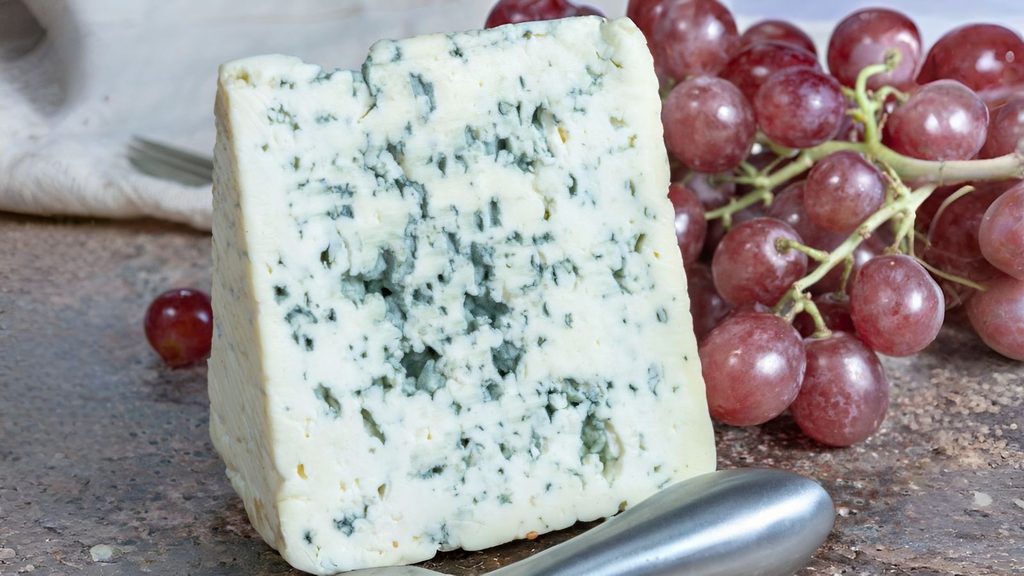
Affinage, the French art and science of aging cheese to its fullest potential, is one of the most demanding crafts in food and one of the least visible. An affineur manages temperature, humidity and the microbial development of a cheese through every stage of its maturation. For blue cheeses specifically, that includes piercing the paste with long needles so oxygen can reach the interior and encourage Penicillium roqueforti to develop its characteristic blue veining. The work disappears entirely into the finished cheese, which is precisely what makes it so easy to overlook.
A competition where the mold is the point
Blue cheese is one of the clearest examples of what affinage can accomplish, but the craft extends well beyond blues. The Affineur of the Year competition, now in its fifth year, drew 47 entries across five cheese categories from cheesemakers and cheesemongers competing on the same platform. The premise is simple and revealing: every entrant receives an identical young cheese from the same batch, declares a Statement of Intent for what they plan to do with it, then cares for it at their own facility before the cheeses reconvene months later for judging.
When the knives came out in the crypt, cheeses that had started from the same wheel looked almost unrecognizable from one another. Chiswick Cheese Market bathed their Baron Bigod, a Suffolk bloomy-rind, in Fuller’s Imperial Stout, then smoked it in collaboration with London Smoke & Cure. Paxton & Whitfield’s Jazz Reeves built a chalky core by wrapping her cheese in cling film to create a microclimate inside, then rolled the exterior in peppercorns. Mike Thomson of Mike’s Fancy Cheese aged his entry in sealed clay pots. Under a gnarly, crater-like exterior, the cheese was smooth and sweet.
The winners and what they proved
The Courtyard Dairy took the top prize for their Quicke’s Cheddar, a wheel they washed regularly in a brine-and-bacteria solution and matured inside a wooden Port wine box, aiming to bridge classic Cheddar’s sharp, brothy character with the umami depth of an Alpine-style cheese. Rising Star honors went to Claire Burt of Burt’s Cheese, who smoked a Cropwell Bishop Stilton over apple and maple wood, adding savory complexity to what is already one of the most intricate blues in the world.
The competition’s People’s Choice went to South West Cheese for a smoked, hay-infused, mead-washed Quicke’s Cheddar. On paper, it sounds like a list of decisions that shouldn’t work together. They did.
Affinage takes root in America
Murray’s Cheese built its first aging caves in New York City in 2004, when the company says affinage was still relatively rare in the United States. Today, Murray’s caves in Queens age cheeses from partner creameries as well as its own Cave Aged line, with affineurs making daily decisions about washing, brushing, flipping, humidity and timing.
Josh Windsor, Murray’s Senior Caves Manager, was among the American cheese professionals at this year’s Affineur of the Year finals in London. Those who attended described affinage as less a finishing step than an ongoing conversation, one where the affineur reads the cheese daily and adjusts, because the mold doesn’t hold to a schedule.
The mold on the plate and what to do with it
The blues and bloomies that affinage produces aren’t interchangeable, and understanding what went into each one changes how best to use them. Gorgonzola Dolce is aged between 50 and 150 days. It is younger and creamier than most blues, and it melts readily into warm polenta, a quick pasta sauce or a buffalo chicken salad with blue cheese. Its creamy texture and milder profile can make it an approachable introduction to blue cheese for anyone still building a taste for it.
Roquefort is a different kind of blue cheese. It is made with Penicillium roqueforti cultures prepared from traditional strains found in the microclimate of the natural caves in Roquefort-sur-Soulzon. The cheese is then pierced to allow air to reach the interior, encouraging the mold to develop its characteristic blue-green veining. The caves, naturally ventilated by fissures called fleurines, provide the cool, humid conditions that support the cheese’s maturation. Sharp, complex and slightly briny, it pairs well with a shallot vinaigrette, a honeycrisp salad with toasted walnuts or a wedge of pear.
Stilton, the style Claire Burt smoked to win her Rising Star award, is rich and crumbly with a slightly sharp flavor that softens considerably when paired well. A wedge served with honey and toasted walnuts is one of the most reliable ways to win over a skeptic.
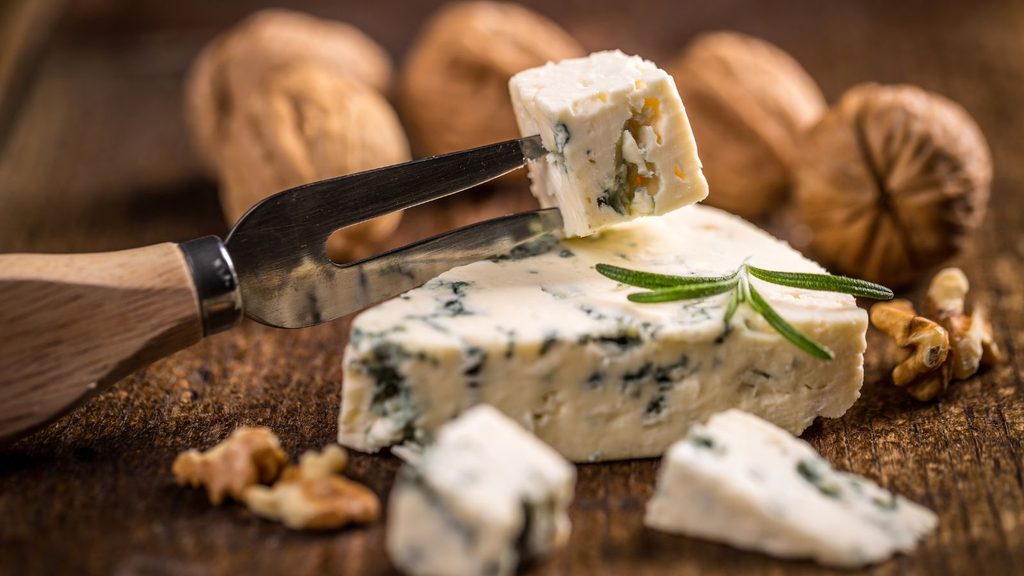
Cashel Blue, created by Jane and Louis Grubb in 1984, is the original Irish farmhouse cow’s milk blue cheese, developed at a time when softer blues were a rarity in the English-speaking world. It is named after the Rock of Cashel, once the seat of the Kings of Munster. Cashel Blue sold in North America is typically aged between 14 and 22 weeks, and in the U.S. it is sold as Kerrygold Cashel Blue.
The Cashel Palace Hotel, a restored 1732 Palladian manor beside the Rock of Cashel in County Tipperary, arranges guided tastings at Cashel Farmhouse Cheesemakers in Fethard, about 20 minutes away. The family-owned business is now managed by the second generation, Sarah and Sergio Furno. Visits include a look at the cheesemaking facilities and a tasting of Cashel Blue Organic and Crozier Blue, Ireland’s only sheep’s milk blue cheese.
What the mold is really making
In most food production, consistency is the goal, and automation is how it gets there. Affinage resists both, because no machine can replicate the daily judgment calls that go into coaxing the right mold through the right wheel at the right time. As the craft attracts more attention from cheesemakers, mongers and educators, competitions such as Affineur of the Year are giving a largely behind-the-scenes discipline a more visible place in the cheese industry.
Jennifer Allen is a retired professional chef and long-time writer. Her work appears in dozens of publications, including MSN, Yahoo, The Washington Post and The Seattle Times. These days, she’s busy in the kitchen developing recipes and traveling the world, and you can find all her best creations at Cook What You Love.