
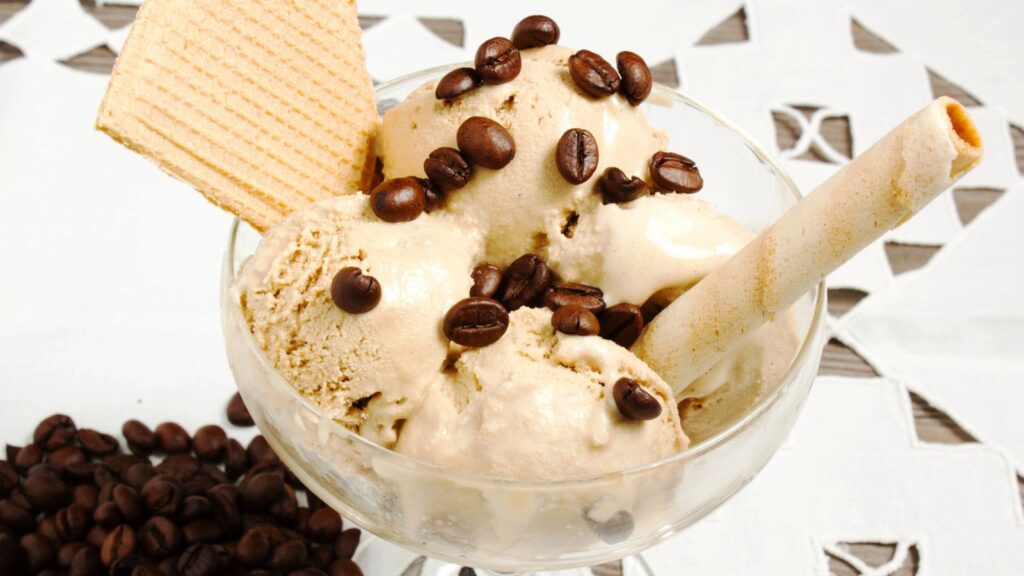
Coffee ice cream doesn’t get much attention in the freezer aisle, but depending on the brand, a single scoop can carry enough caffeine to keep some people awake at night; information most cartons never spell out on the label. It’s also become a shortcut ingredient: pour it over espresso for an affogato, blend it with cold brew into a milkshake or stir it into brownie batter before baking. Both are worth knowing before the next scoop on Sept. 6, National Coffee Ice Cream Day.
This post may contain affiliate link(s). As an Amazon Associate, I earn from qualifying purchases. See Disclosures.
Coffee remains one of the most consistently available ice cream flavors in grocery freezers nationwide, even as the rest of the aisle rotates through seasonal launches and limited-edition collaborations. While newer flavors compete for attention with cookie pieces, candy swirls and seasonal branding, coffee has stayed on shelves by doing one thing consistently well.
Around 66% of American adults reported drinking coffee in the past day, more than any other beverage, including tap or bottled water, while 47% reported drinking specialty coffee in the past day, a record high. Specialty drinkers most often reported chocolate, caramel, brown sugar, toffee, butterscotch and vanilla, the same flavors that dominate the ice cream aisle. That overlap may help explain why coffee ice cream has stayed relevant for as long as it has.
Yes, it has caffeine
Coffee ice cream can contribute enough caffeine to affect sleep, particularly for caffeine-sensitive people. However, many servings contain less caffeine than an 8-ounce cup of brewed coffee, which averages about 80 to 100 milligrams. Depending on the brand, one serving may provide a fraction of that amount, while a pint of a stronger product can approach or match the caffeine in a full cup.
Caffeine varies with the coffee ingredient and recipe, including the amount and type of coffee or extract used, the method of extraction and the serving size. Some brands steep whole beans in the cream base and strain them out. Others fold in brewed coffee, instant granules or ground espresso.
Many brands do not state caffeine in milligrams on the package because FDA generally does not require a quantitative caffeine declaration for foods. If caffeine is added as a standalone ingredient, it must appear in the ingredient list, but caffeine naturally present in an ingredient like coffee or chocolate need not be listed separately.
For most healthy adults, up to 400 milligrams of caffeine per day is an amount not generally associated with negative effects, though caffeine sensitivity, medications and total daily intake can change what is appropriate. Anyone particularly sensitive to caffeine or who has already had several cups during the day may want to reach for a different flavor before bed.
5 ways to use coffee ice cream beyond the scoop
Coffee ice cream works as a base ingredient in ways that other flavors cannot quite match, because the coffee flavor compounds with other coffee-adjacent elements rather than just sweetening them.
An affogato is the fastest way to test this. The Italian dessert is built by pouring a shot of hot espresso over a single scoop of ice cream, and the name means “drowned.” The contrast between the hot espresso and the frozen cream is the whole point, and using coffee ice cream instead of the traditional vanilla doubles down on the coffee flavor from both directions. It takes less than a minute to assemble and works as well after a weeknight dinner as it does at the end of a dinner party.
A blender turns coffee ice cream into a milkshake that tastes closer to a frozen latte than a traditional shake, especially with a splash of cold brew stirred in before blending. After dinner, a scoop paired with amaretto, Kahlúa or frangelico turns dessert into something that bridges the gap between a sweet course and a nightcap.
For something portable, coffee ice cream pressed between two chocolate or espresso cookies makes an ice cream sandwich with more depth than vanilla. And for baking, softened coffee ice cream stirred into brownie batter before it goes into the oven adds a coffee-infused crumb without the extra step of brewing and cooling a separate batch of coffee.
The next time coffee ice cream shows up on a dessert menu, in a grocery freezer or at the end of a dinner table, it might be worth pausing before reaching for the spoon. A flavor that has quietly outlasted every frozen trend around it probably deserves more than a passing scoop.
Mandy writes about food, home and the kind of everyday life that feels anything but ordinary. She has traveled extensively, and those experiences have shaped everything, from comforting meals to small lifestyle upgrades that make a big difference. You’ll find all her favorite recipes over at Hungry Cooks Kitchen.