
Eggnog ads are back for the season, and the drink they promote started out hot. Posset, the medieval drink most culinary historians trace eggnog back to, may have been made in the 17th century by heating milk or cream with cinnamon or nutmeg, then mixing in ale or a sweetened white wine called sack. Settlers brought the tradition across the Atlantic, and pots used to serve posset in the mid-17th and early 18th centuries have been found at New England dig sites. That hot English drink reached American holiday tables through colonial farms and a Christmas Eve riot.
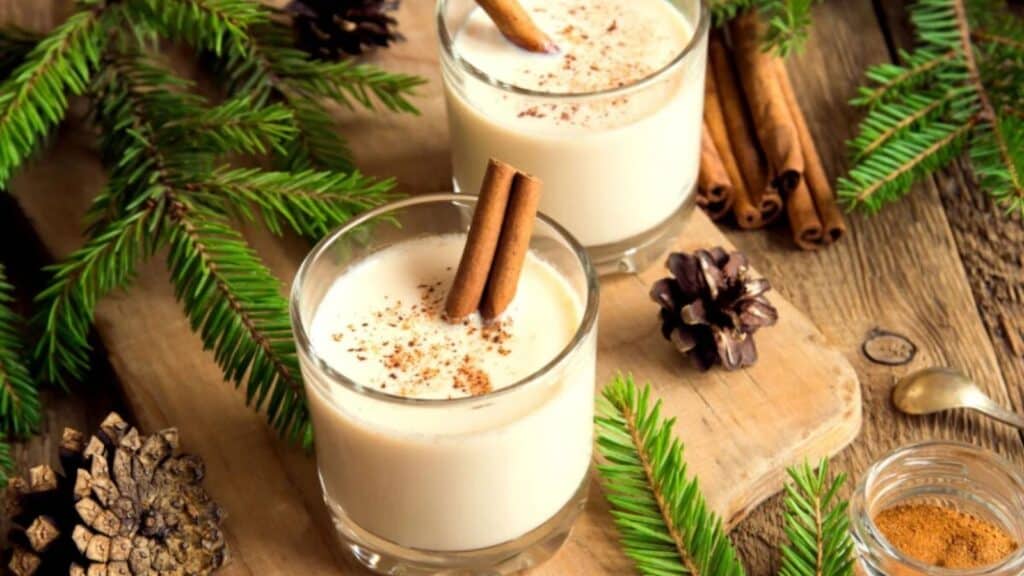
In England, posset was a high point of 17th-century wedding celebrations. The bride’s family might prepare a batch, and the newlyweds and their guests shared it. Eggnog, posset’s modern relative, now turns up in grocery stores long before Christmas.
Posset was touted as a cold cure
Posset was long promoted as a remedy for colds and flu, though people also drank it because they loved it. Heat and alcohol curdled the milk, and drinkers sipped the whey through the spout of a posset cup and ate the curds later. The drink was popular enough that in Shakespeare’s “Macbeth,” Lady Macbeth hides the knockout drops she uses on King Duncan’s guards in possets.
The name has no clear origin
No one is sure where the nog in eggnog came from. It appeared in the late 17th century as a regional term for strong beer in East Anglia, the easternmost region of England, and a 1693 letter describes a bottle of old strong beer that locals called nog. Another theory links the word to noggin, which once meant a small mug. A popular story says the name shrank from “egg and grog,” but no evidence shows anyone used that name. The earliest printed use of the word eggnog that anyone has found is in a New Jersey newspaper from March 1788, in a brief item about a young man who ate 30 raw eggs and drank a glass of eggnog and another of brandy sling.
Mount Vernon’s eggnog used four kinds of alcohol
In the colonies, settlers quickly adapted old recipes to the milk and eggs plentiful on colonial farms. The version made to George Washington’s specifications was served at holiday parties at Mount Vernon, and the recipe called for a pint of brandy, a half pint each of rye whiskey and Jamaica rum, and a quarter pint of sherry. The mixture then sat in a cold place for several days, with frequent tasting along the way.
Christmas eggnog was in print by 1793
A Norfolk newspaper reported in January 1793 on a Christmas Eve gathering at a Northampton courthouse where eggnog was the main drink, an early example of eggnog linked to Christmas in print. After the guests had indulged freely, one offered a bet that nobody could write four extempore verses that rhymed and made sense. Another guest took up the challenge and wrote a long poem praising eggnog.
Strong eggnog caused trouble in the 1800s
Colonial eggnog had a high alcohol content, and it caused problems that lasted into the 19th century. In Baltimore, young men visited houses on New Year’s Day and toasted their hosts with eggnog, still aiming to finish their rounds. At West Point, cadets were forbidden to possess or drink alcohol, but that did not stop a group of them on Christmas Eve 1826. Determined to have their holiday eggnog, they sneaked in gallons of whiskey from nearby taverns, and the night became a drunken free-for-all known as the Eggnog Riot. Cadets smashed windows and furniture and ripped banisters off the walls, and one cadet made an unsuccessful attempt to shoot his commanding officer. In the aftermath, 19 cadets were expelled.
Homemade or from a carton
Some households make eggnog from scratch, while others buy a carton. Powdered eggnog mix existed before 1920, and dairies were selling mix in the 1930s. Supermarkets first sold eggnog in the late 1930s, and by the 1950s it had become a common carton product.
Federal rules set minimums for any product sold as eggnog: at least 6% milkfat, at least 8.25% milk solids other than fat, and at least 1% egg yolk solids by weight; the product must also be pasteurized. A homemade batch isn’t bound by that definition, so it can follow a family’s recipe or one from recipe developers who turn eggnog into pies and cookies. One such option is a chilled eggnog pie with a gingersnap crust.
Ways to use eggnog beyond drinking it
Eggnog is made with milk, cream, eggs, and spice, so it can stand in for some of the dairy in many sweet recipes. It can replace part of the milk in French toast or pancake batter, soak the bread in a bread pudding, or go into a cup of coffee or a bowl of oatmeal. Baking carries the flavor furthest, and eggnog sugar cookies spiced with cinnamon, nutmeg and rum extract turn the drink into a cookie that can be cut and decorated for the holidays. When a carton is left over, home cooks can browse eggnog recipes for more ways to use it up.
Eggnog leaves room for the cook
An early American eggnog recipe never said how many eggs to use, and modern cooks have had to fill in that detail themselves. That open space keeps the drink flexible, since each household decides how rich and how strong to make it. A carton from the store can be a starting point for the same adjusting, with a little nutmeg or a splash of rum.
Jennifer Allen is a retired professional chef and long-time writer. Her work appears in dozens of publications, including MSN, Yahoo, The Washington Post and The Seattle Times. These days, she’s busy in the kitchen developing recipes and traveling the world, and you can find all her best creations at Cook What You Love.