
Fall mocktails keep ending up sweet, thin and forgettable, even when the spice rack is doing everything right. Zero-proof drinks have conquered summer on citrus and bubbles alone, but fall’s warmer, spice-driven flavors need a base with real weight behind them. The fix comes down to two bottles that show up side by side every September and couldn’t be more different once they hit a shaker.
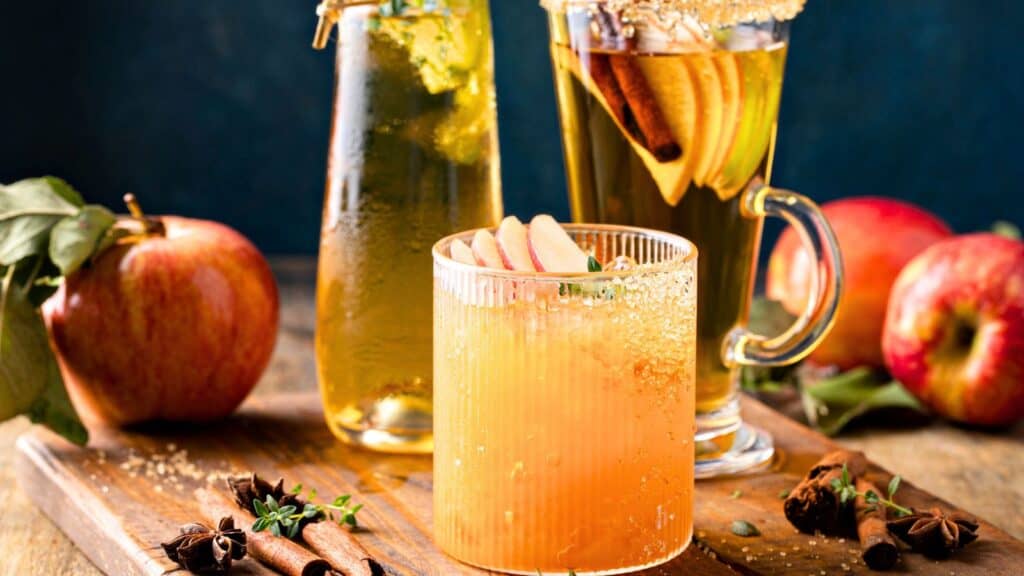
This post may contain affiliate link(s). As an Amazon Associate, I earn from qualifying purchases. See Disclosures.
Fresh-pressed apple cider typically becomes widely available in early fall, though timing varies by region. With it comes a decision that most home drink-makers don’t realize they’re making. Cider and juice land on the same shelf every fall, and most people grab whichever one is closer without thinking twice. For a glass of something cold on a warm afternoon, that probably doesn’t matter. For a fall mocktail built with cinnamon, clove and fresh ginger, it matters enormously.
The two start as the same fruit, but cider is often sold less filtered and cloudier than standard apple juice, giving it a fuller body and a rougher, more complex apple flavor. One can carry a drink through a whole dinner party. The other is a mixer.
The zero-proof drink category is surging
Ready-to-drink spirit-free cocktails have grown 404%, with no/low spirits up 129%. But most of that momentum has built in warm-weather formats. Spritzes, citrus highballs and aperitivo-style builds dominate the nonalcoholic conversation from April through August, leaning on bright acidity and effervescence to do the work a spirit would normally handle.
Fall’s seasonal flavor palette demands warmth, depth and body that a sparkling grapefruit shrub can’t deliver, and the audience looking for those options keeps getting bigger. Low-alcohol cocktails reached 63% awareness and 51% interest among surveyed adults in late 2025, up from 58% and 46% the prior year.
Fall is the hardest season to build a mocktail
Summer drinks get away with simpler builds because citrus acidity and carbonation do their own heavy lifting without alcohol, giving even a lime-and-soda enough backbone to feel like a real drink. Fall flavors operate on a completely different axis. Warm spice, caramel depth, baking-spice richness and orchard fruit all need a base with enough weight to support them, and without it the drink reads thin or collapses into sweetness.
Seasonal product launches grew 9% annually over the past five years and outpaced overall new product activity, with three-fourths of seasonal or limited-edition launches hitting shelves during fall and winter quarters. Consumers want fall drinks that feel intentional, and the base ingredient determines whether they find one.
What cider does that juice can’t
Many drink-makers find that cloudy, unfiltered cider gives spice-forward drinks a fuller apple character than clear juice. Some ciders, particularly those made from tart or heirloom apple varieties, also contribute tannic or astringent notes that help counter sweetness. That drying quality can add structure to a mocktail in a way that echoes, though doesn’t replicate, the role a bitter ingredient like amaro plays in a traditional cocktail.
Where juice delivers a clean, straightforward apple flavor, cider brings a more layered, tart profile that gives warm spices more to work with. The tradeoff is shelf life. Fresh cider should be kept refrigerated and used within the period on the label, which is typically shorter than juice’s. That shorter timespan makes cider a better fit for single-batch entertaining than for drinks that need to hold for days.
Where apple juice still earns its spot
Apple juice works best when the drink needs a clean, sweet apple accent that doesn’t compete with other flavors. A ginger-apple spritz, a sparkling cranberry-apple punch, a batch of mulled mixer for a crowd. These formats want apple as a supporting flavor, not the star, and juice’s mild sweetness and neutral body make it easy to build around.
For large-format entertaining, unopened shelf-stable juice stores more predictably than fresh cider, and once opened, it tends to hold its flavor longer in the refrigerator. For a Thanksgiving punch bowl that needs to taste the same at 2 p.m. and 7 p.m., juice is the practical call.
The seasonal flavor gap is closing
The ingredient side and the demand side are converging on the same window. Apple cider appears in industry flavor forecasts as a key fall 2026 ingredient, part of a broader post-pumpkin-spice flavor architecture alongside chai, pecan and maple. Seasonal innovation continues to accelerate, with fall and winter commanding the largest share of new product launches across food and beverage.
Nearly half of consumers say they plan to cut back on alcohol, with Gen Z at the front of that trend. What they do with that jug once they get home depends on whether anyone told them it belongs in a shaker.
Fall’s drink list starts at the orchard
Fall entertaining is close, and the zero-proof options have more potential than a flute of sparkling cider. The ingredient that gives a fall mocktail enough structure to stand next to a bourbon old-fashioned has been at every orchard farmstand since the first cool morning. Choose cider for its apple-forward flavor and cloudy texture, keep it refrigerated and follow the label date. It just needs to make it into the shaker before it ends up in the mug.
Jennifer Allen is a retired professional chef and long-time writer. Her work appears in dozens of publications, including MSN, Yahoo, The Washington Post and The Seattle Times. These days, she’s busy in the kitchen developing recipes and traveling the world, and you can find all her best creations at Cook What You Love.