
Friendsgiving sounds relaxed until the group chat fills with questions about dinner. Nobody wants to juggle a hot casserole while wondering where to sit or who brought drinks. The Emily Post Institute’s advice helps hosts sort out those details without turning dinner with friends into a formal event.
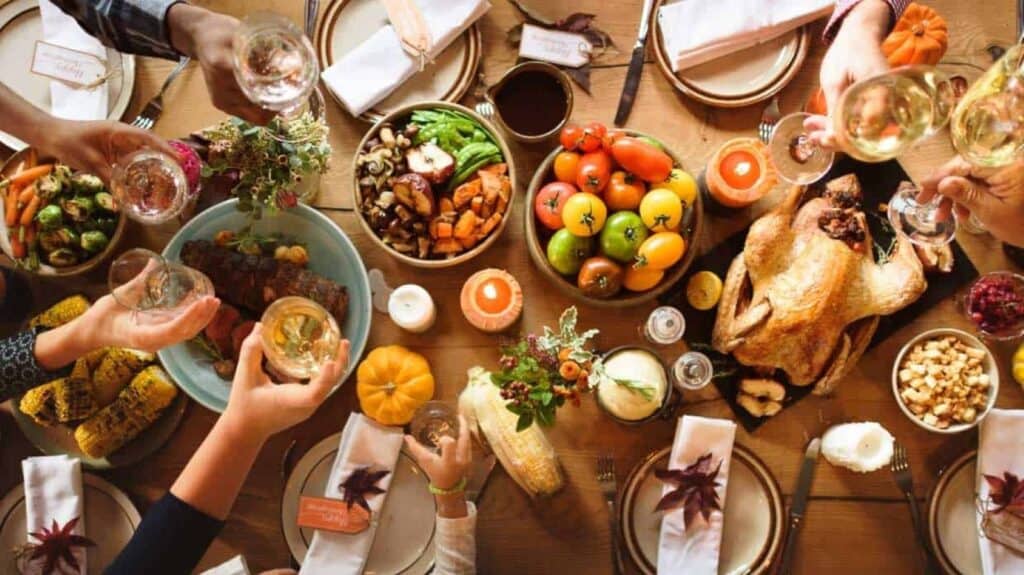
Invitations That Leave Less Guesswork
Start with the date, time, location, and who’s invited, then explain how and when to reply. The Emily Post Institute recommends including those details in party invitations, along with what guests should bring. It also recommends asking guests to reply promptly, even when hosts don’t request an RSVP. For your Friendsgiving, a reply date gives friends a clear deadline.
Give Every Potluck Dish a Place
Four pies sound wonderful until you realize nobody brought a side dish. Lizzie Post, the institute’s co-president, told NPR that clear potluck duties matter most. Name who’s bringing each dish or use a shared sign-up list so everyone can see what’s covered. For friends who don’t cook, Food Drink Life’s Friendsgiving food ideas include easy options like rolls or chips and salsa.
Ask About Food Needs Before Planning Dinner
Before you settle the menu, ask guests about allergies and food needs. The institute’s holiday planning guide recommends checking those needs and making sure guests have enough choice. Ask about ways to make your home easier to use, too, such as whether someone needs help moving around your space. You can ask by text so friends can tell you what would help without sharing with the whole group.

Drinks Belong on the Plan, Too
Wine doesn’t cover everyone at the table. The institute recommends several alcohol-free choices, with cider and hot chocolate among its holiday suggestions. Include drinks when you settle potluck duties rather than hoping a guest will bring them. You can offer to supply drinks yourself or ask someone to bring them, as long as everyone knows the plan.
Make Room for Your Guests
Comfort matters more than matching chairs. Hosts should prepare the party space, set the table, and have food and drinks ready before guests arrive. Think through where friends will eat before you greet them at the door. Planning for the people on your guest list gives you a better starting point than trying to squeeze everyone around a table at the last minute.
Share the Work Without Demanding Help
Filling water glasses or setting the table gives a willing friend a useful job. The institute’s Thanksgiving advice encourages hosts to assign small tasks. It also describes cleanup help as thoughtful, rather than something hosts should expect. Offer a clear job when someone asks to pitch in, while leaving room for a guest to simply enjoy dinner.

Thank the People Who Made Dinner Happen
As friends head home, make your thanks personal. Thank your guests for coming, and recognize contributions to planning, cooking, and cleaning. Mention the dish someone brought or the kitchen help you appreciated. Gratitude belongs to the host as well as the guest, so don’t wait for a thank-you message before sharing yours.
Save Yourself a Seat
Dinner with friends should include time for you to sit down, too. Let the gathering suit the people you invited, even if that means a buffet and seats on the couch. Your friends came to spend time with you, and enjoying their company deserves a place in your plans.