
Every year on June 29, International Mud Day celebrates something many modern childhoods have lost: unstructured, messy outdoor play. Across schools and early learning centers worldwide, children are encouraged to dig, squish, splash and build with mud. What looks like chaos turns into an important part of development.
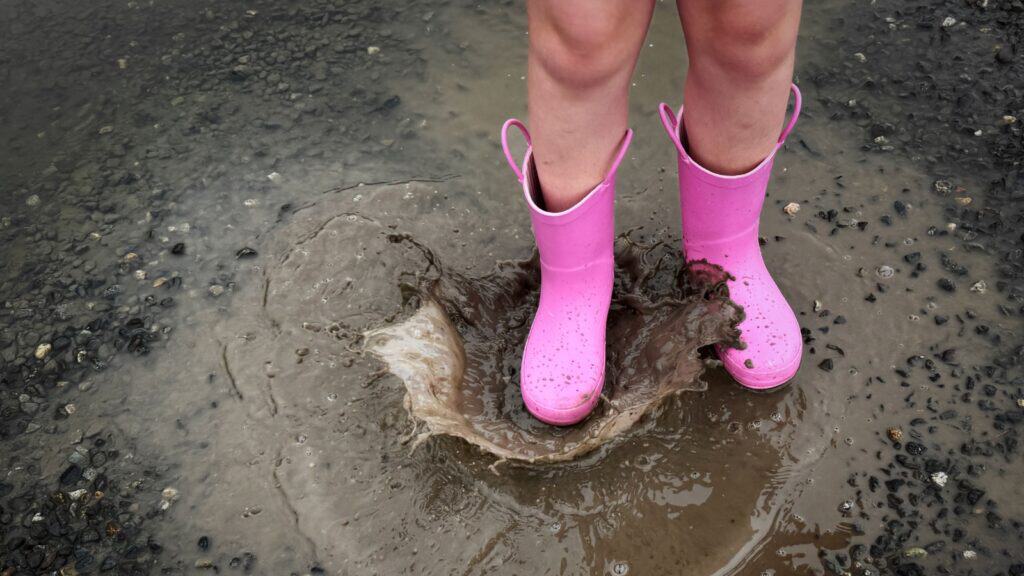
The celebration comes at a time when research continues to highlight the benefits of outdoor play. A ResearchGate study last November found active outdoor play is consistently linked to higher physical activity levels, reduced sedentary behavior and improved mental well-being in children, especially compared with indoor play environments. These findings reinforce a consensus among child development experts that movement-rich, unstructured play supports both physical and emotional health.
Messy play matters for child development
Experts note that outdoor environments provide sensory-rich experiences that cannot be fully replicated indoors. Uneven textures, natural materials and open-ended spaces encourage children to explore, problem-solve and regulate their emotions through play. These findings are supported by a 2025 study which highlights measurable benefits of outdoor play for both physical health and cognitive development, including improved motor skills, attention and problem-solving abilities.
The outdoors has natural materials such as mud, soil and plants that support curiosity-driven exploration and creative thinking. In practical terms, mud becomes more than dirt. It becomes a tool for imagination, motor skill development and social learning, as children collaborate, build and experiment in real time without fixed outcomes.
For many families, this kind of play also reconnects children with nature in everyday settings. Simple outdoor discoveries, from identifying types of flowers and plants to noticing seasonal changes, often become entry points to deeper environmental awareness.
The modern shift away from unstructured outdoor play
Despite these benefits, childhood play has become increasingly structured and screen centered. Experts have noted a steady decline in unstructured outdoor time, replaced by scheduled activities or indoor entertainment.
A study published by the American Psychological Association reframes the conversation around screen use and kids, not as a discipline problem, but as a cycle that’s hard to break. Researchers meta-analyzed 117 studies covering more than 292,000 children worldwide and found that increased screen time can lead to emotional and behavioral problems, and that kids with those problems then turn to screens to cope.
This shift has had a quiet but meaningful effect on how children experience free time. Moments that once involved digging in dirt, building with sticks, climbing trees, foraging for wild berries to make juniper berry tea and inventing outdoor games are now often filled with passive digital consumption.
For many families, International Mud Day serves as a reminder that simple, messy, outdoor play is not just nostalgic. It is a powerful counterbalance to the highly stimulating digital environments that increasingly dominate childhood.
Schools and parents re-embracing outdoor mess
In response to growing awareness of the developmental benefits of outdoor play, many schools and early childhood programs are reintroducing outdoor mud kitchens, sensory gardens and forest play areas. These spaces allow children to engage with natural materials in structured but flexible ways.
The Wild School in Houston, Texas, is a fully outdoor program where children learn through daily nature immersion in all weather. Students explore trails, build, observe wildlife and use mud kitchens and sensory play areas, blending early academics with hands-on, curiosity-driven learning centered in the natural environment.
Parents are also gradually shifting their attitudes. While clean indoor environments were once prioritized, more families now recognize the benefits of outdoor mess. Parents are pushing back against screen-centered routines and deliberately choosing simpler, low-tech outdoor activities because they value the physical, emotional and developmental benefits of being outside, according to Life Is Better Outside.
Nature-based learning environments incorporate seasonal exploration, in which children interact with plants, soil and weather changes as part of everyday play. This led to a renewed interest in “loose parts play,” where natural materials like sticks, stones and pine cones are used as toys. Even overlooked natural elements, such as plants often dismissed as just purple weeds, can become part of sensory learning.
International Mud Day celebrates the fun of getting dirty
Around the world, International Mud Day is celebrated with community events that encourage children to engage with outdoor environments. Schools set up mud pits, sensory stations and water play areas, while educators guide children through open-ended activities that prioritize exploration over instruction.
National Today’s International Mud Day Guide recommends families and schools to take a mud bath by mixing soil and water in a small inflatable pool, build an entire mud city with castles and roads in the backyard or host a mud-cake decorating party using buckets of mud, spoons and muffin tins. These playful setups turn ordinary dirt into a tool for creativity, collaboration and imaginative storytelling.
One community that has made Mud Day a local tradition is the Ithaca Children’s Garden in Ithaca, New York, where Mud Day events bring children and families together for hands-on outdoor play and exploration. Participants gather to squish, sculpt and experiment with mud in a natural garden setting, combining sensory play with creative activities designed to foster curiosity and connection with the earth.
The focus is not on cleanliness or structure, but on experience. Children build, dig, splash and collaborate, often returning to the same activity for long periods of time without formal direction.
Mud still matters
International Mud Day serves as a reminder that some of the most valuable childhood learning happens outside, away from screens and structured routines. In a world where play is increasingly digital and scheduled, mud offers something simple but essential: space to explore, create and learn without limits.
Kristen Wood is a photographer, recipe developer, writer, gardener and creator of Schisandra and Bergamot, a botanical blog. She is also the author of “Vegetarian Family Cookbook,” “Fermented Hot Sauce Cookbook” and “Hot Sauce Cookbook for Beginners.” Her work has been featured in various online and print publications, including Healthline, Martha Stewart, Yoga Journal, Willow and Sage Magazine, Forbes, Chicago Sun-Times, NBC and more.