
Chicken and waffles had been on American tables long before Wells Supper Club opened in Harlem in 1938. Wells built a late-night version that jazz musicians sought between sets, a midnight plate caught between dinner and breakfast. Oct. 20 is National Chicken and Waffles Day, and the sweet-savory combination Harlem’s after-hours kitchens helped define has become one of American food’s most enduring flavor pairings.
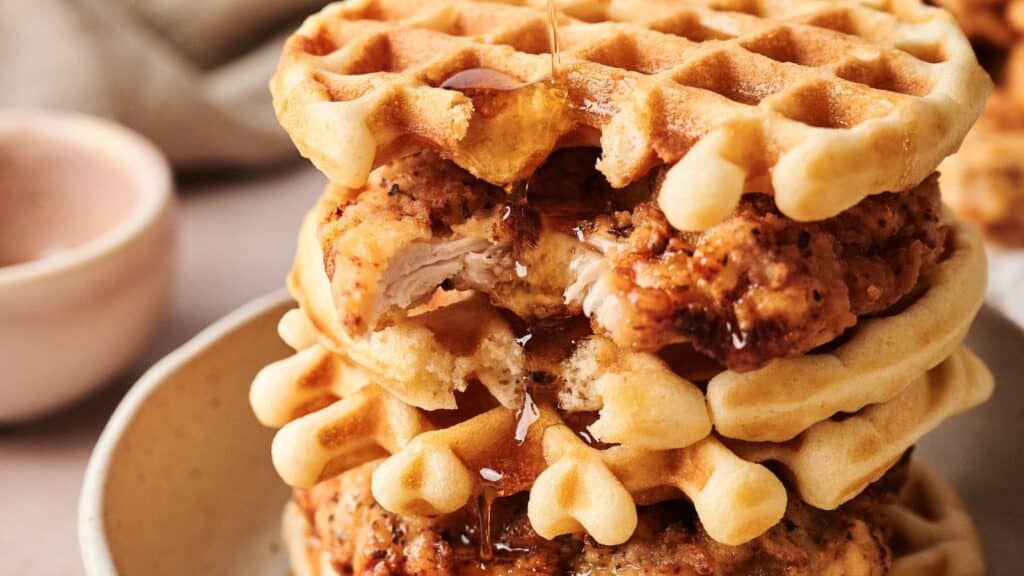
The chicken-and-waffles combination made sense late at night back in 1938. A jazz musician finishing a late set had missed dinner and was hours from breakfast. Fried chicken was dinner, and waffles were breakfast. At two in the morning, the plate that was neither was the one that worked.
Herb Hudson opened Roscoe’s House of Chicken and Waffles in Long Beach in 1975, bringing the Harlem combination to a West Coast audience. Over the next decades, the dish spread well beyond its Harlem origins, appearing on menus across the country before the early-2010s brunch wave gave it a permanent slot. By the 2010s, the dish had traveled from a late-night jazz club counter to brunch menus in cities that had never heard of Wells Supper Club.
Hot honey: Same case, nearly 90 years later
Fusion sweet flavors on restaurant menus are up about 25%, with continued growth predicted through 2028, at a moment when sweet ranks as the most liked basic flavor in Technomic’s consumer taste research. Hot honey follows the same formula: a savory or spicy base, a sweet counterweight and the contrast that makes both components taste more like themselves.
Hot honey has grown by nearly 230% on restaurant menus over the past four years. Pizza, wings, doughnuts and fried chicken sandwiches now share the same flavor principle Wells Supper Club built a dish around in 1938: one component delivers heat and salt, the other brings sweetness, and the distance between them is where the appetite lives.
A 1938 plate got its own industry term
The food industry has given the sweet-savory category a name: “swavory”. Operators are being urged to revisit it in new forms for 2026, including miso caramel and tahini soft serve. Fruit-forward glazes on savory proteins and honey finishes on charcuterie boards are variations on the same template, each one the same contrast rebuilt in a different context. A flavor combination the Harlem kitchen worked out at midnight during the Roosevelt administration now drives formal trend forecasts for the food service industry.
The principle that spread to every daypart
Sweet-savory contrast runs through how major chains have built their morning menus. The same dynamic shows up in maple-glazed chicken biscuits and hot honey breakfast sandwiches at chains from fast-casual to full-service. Chicken items on breakfast menus grew 7.6% in the second quarter of 2025, even as quick-service breakfast traffic fell nearly 9% overall in the same period.
The dish, rebuilt
Chicken and waffles has moved into home kitchens and kept adapting. Part of what makes it adaptable is structural: the waffle’s grid holds sauce in pockets rather than letting it run, so each substitution still delivers the same ratio of crisp base to sweet finish. A cornbread waffle replaces the buttermilk base and takes the sweetness off the waffle, leaving it to the sauce. A cheddar waffle does the same with more sharpness.
A pumpkin waffle brings fall spice into the base without changing the structure. Buttermilk fried chicken spiced with cayenne or smoked paprika puts the heat in the protein, not the sauce. Hot honey instead of maple syrup delivers sweet heat in a single pour. The base, the protein, the bridge: any of the three can change. The combination still works.
Beyond brunch
Sweet-salty products in the snack category have grown nearly 30% over the past 12 months, moving the pairing past restaurant occasions and into the everyday aisle. What started as a specific late-night fix is now a flexible formula across food categories. The combination works, and enough people in enough different contexts have found that out on their own. What started as a fix for one occasion, at one hour, in one city, is now a principle that shows up in a chain breakfast sandwich, a grocery snack aisle and a formal industry trend forecast. That is a longer reach than any kitchen in 1938 had reason to expect.
Mandy Applegate is the creator behind Splash of Taste and seven other high-profile food and travel blogs. She’s also the co-founder of Food Drink Life Inc., a unique and highly rewarding collaborative blogger project. Her articles appear frequently on major online news sites, and she always has her eyes open to spot the next big trend.