
Scratch donut-making is on the rise in home kitchens, driven by a generation of bakers who want the real thing and know that homemade donuts are worth every minute of the process. National Donut Day on June 5 accelerates that interest every year, moving the donut from the drive-through into home kitchens across the country. The donut is one of the more rewarding dishes a home kitchen can attempt, and the three main styles give bakers a clear path to get there.
This post may contain affiliate link(s). As an Amazon Associate, I earn from qualifying purchases. See Disclosures.
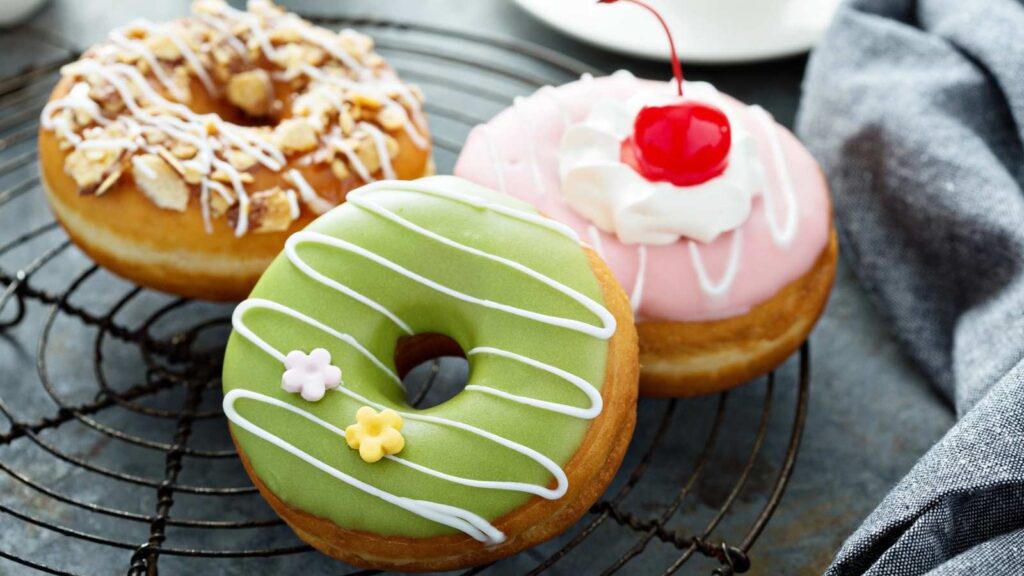
National Donut Day has more history than most people realize. The Salvation Army established it in 1938 to honor the Donut Lassies, volunteers sent to France in 1917 to bake and serve donuts to American soldiers from field huts near the front lines, and later used it as a fundraiser during the Depression. Nearly a century later, donuts remain one of the country’s most enduring sweet treats. About 86% of Gen Z and 81% of millennials identify as sweet treat people, and three donut styles continue to dominate home kitchens: classic glazed, filled and baked. Each style has its own logic, and knowing what separates them makes the difference on the first attempt.
The gap between expectation and result
The glazed donut is the cultural reference point, the one most people picture when they decide to make donuts at home. It is also the style that rewards patience more than any other. Dough given enough time to proof produces a light ring with real interior spring. Oil held at the right temperature gives the exterior a clean, even color, and glaze applied at just the right moment sets into a thin, satisfying coat. Most home bakers find that the gap between a good glazed donut and a great one comes down to one thing: time.
Filled donuts begin with the same yeasted base and build on the same fundamentals of proofing and frying. Once those variables are under control, the filled donut introduces one more skill worth learning. Cooling the donut completely before filling helps keep the interior intact and the cream or jam evenly distributed.
Bakers who treat the glazed donut as a foundation before moving to filled versions tend to get the best results from both. The payoff of a well-made filled donut can be the highest of any style a home baker attempts, and getting there is a matter of building one technique on top of another.
The baked version is a different category
Cake batter piped into a donut pan produces a genuinely different product from the fried versions, one that shares a form but little else. Without yeast, hot oil or a proofing window, it delivers a reliable result in under 30 minutes while asking far less of the baker. The crumb is tighter, and the exterior does not crisp the way a fried donut does; bakers who know that going in tend to be the most satisfied with what they get.
What baked donuts offer is speed, accessibility and a genuinely satisfying outcome, all worth taking on their own terms. That is what makes the baked donut the right starting point for a baker who wants the occasion without the oil, not a compromise but a different undertaking entirely.
What scratch donut-making actually requires
Yeast donuts held 57% of the global donut market share in 2025, and that share belongs almost entirely to the glazed ring; the style that exposes most clearly how much craft the shop version conceals. Taken together, the three styles point to something most recipes do not say directly: be precise about what you actually want from the process, not just what you picture at the end.
The glazed is the highest-reward and highest-skill attempt. The filled version adds an injection technique on top of every variable that the glazed already demands. The baked shares the form but not the process. The choice of style matters less than understanding what each one asks for, and that clarity is what makes the first attempt the most satisfying one.
Technique becomes the reward
A donut shop can hide years of practice behind a single finished pastry, but a home kitchen cannot, and that may be part of the appeal. National Donut Day arrives at a moment when more bakers are willing to trade convenience for understanding, taking on recipes that reveal exactly how much technique sits behind something that looks simple. The result is not always perfect, but the knowledge stays.
Mandy Applegate is the creator behind Splash of Taste and seven other high-profile food and travel blogs. She’s also the co-founder of Food Drink Life Inc., a unique and highly rewarding collaborative blogger project. Her articles appear frequently on major online news sites, and she always has her eyes open to spot the next big trend.