
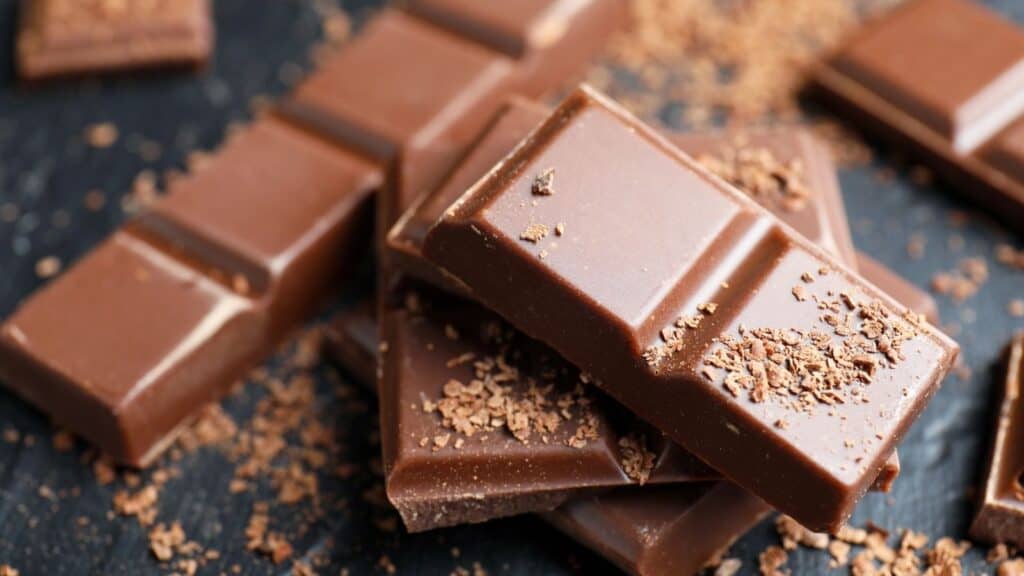
A craft chocolate maker will tell you about cacao percentage, bean origin and roast time before they’ll admit which bar actually outsells everything else on the shelf: milk chocolate. For more than 15 years, the whole pitch for craft chocolate ran through dark bars, as if the candy most people actually reach for wasn’t worth the same care. On National Milk Chocolate Day, that oversight is finally getting a second look.
This post may contain affiliate link(s). As an Amazon Associate, I earn from qualifying purchases. See Disclosures.
Walk into most craft chocolate shops, and the dark bars carry the whole sourcing story on the label, while the milk chocolate next to them rarely gets the same treatment. That gap holds even on July 28, when National Milk Chocolate Day gives the category its one dedicated day on the calendar.
Milk chocolate, by the numbers
Chocolate, candy, gum and mints reached $55 billion in U.S. sales last year, and chocolate alone accounted for 51.7% of every dollar spent on confectionery. Milk chocolate holds the title of America’s most-loved confection across every generation of shoppers. That finding falls within the same period when historically high cocoa prices have been changing almost everything else about how chocolate is made.
What the cocoa crisis reinforced
Two years of turmoil in the cocoa market help explain part of the timing. Cocoa futures spiked to historic highs in 2024, squeezing every maker who buys raw cacao beans. The global price of cocoa fell from just over $5,000 a metric ton in January 2026 to roughly $4,100 by May, the most recent monthly figure available, though cocoa futures have continued to swing sharply since then. That relief hasn’t fully reached grocery shelves either. Manufacturers typically lock in cacao contracts well before it becomes a bar on a shelf, so much of what’s on shelves now was bought before prices eased.
With every bean costing more, the existing dark-chocolate argument became easier to make. A higher cacao percentage was already the justification of a higher price tag, and now the beans behind it cost more, too, so the math lined up. Milk chocolate, built with proportionally less cocoa mass, didn’t get the same boost. If anything, the crisis made that gap even wider.
Fruition, and what craft milk chocolate actually looks like
Some makers never bought the idea that milk chocolate wasn’t worth the effort. Fruition Chocolate Works, a small chocolate maker based in Shokan, New York, sells a lineup of milk and dark-milk bars alongside its dark ones, each tied to a named cacao origin the same way its dark bars are, including a Peruvian-origin dark milk finished with local spring salt and a Dominican Republic-origin dark milk made from a rare Nacional varietal. That Dominican Republic bar, the Dominican Nacional Dark Milk 68%, was the only finalist named in the plain milk chocolate category at the 2024 International Chocolate Awards Americas competition.
A second Fruition milk bar, the Brown Butter Milk 43%, made the finalist list that same year in the flavored milk chocolate category. Neither is Fruition’s first recognition for milk chocolate. An earlier bar, Maranon Milk, won gold, including a specific award for direct trade sourcing, at the International Chocolate Awards World competition back in 2015.
Fruition makes its chocolate at a workshop in the Catskill Mountains rather than a lab, and the company also runs a cafe, ice cream shop and tasting room open daily. The setup lets visitors taste how cacao origin influences each bar, section by section, while milk chocolate is only now beginning to receive the same treatment. Making it well is its own technical challenge, not simply an easier version of dark. The cacao still has to stay distinct once it’s mixed with dairy and sugar, and a rushed conche or weak dairy gives it away fast.
The trend is only getting started
Milk chocolate never disappeared from the top of the list, even as parts of the craft chocolate world treated it as something less serious. What’s changing is the attention it’s finally receiving from makers and competitions that once focused almost exclusively on dark chocolate. More Americans still name milk chocolate their favorite than any other type, so the audience was never the issue. It just took the industry a little longer to catch up.
Craft chocolate spent years treating milk chocolate as an afterthought. As more makers put the same sourcing and techniques into milk bars that they’ve spent years pouring into dark ones, National Milk Chocolate Day is turning into a preview of where the argument against mass-produced chocolate goes next.
Jennifer Allen is a retired professional chef and long-time writer. Her work appears in dozens of publications, including MSN, Yahoo, The Washington Post and The Seattle Times. These days, she’s busy in the kitchen developing recipes and traveling the world, and you can find all her best creations at Cook What You Love.