
National Strawberry Shortcake Day on June 14 arrives at the best possible moment. Across most of the country, June marks the height of fresh strawberry season, when domestic berries are sweet and acidic enough to carry a dessert without much help. The observance offers a good excuse to revisit one of baking’s longest-running arguments: What’s the best base for strawberry shortcake, biscuit or sponge cake?
This post may contain affiliate link(s). As an Amazon Associate, I earn from qualifying purchases. See Disclosures.
The name of the dessert answers it. “Short” in shortcake refers to a dough made crumbly and rich in fat, a description that fits a biscuit closely but not a sponge cake. With California projecting peak strawberry shipments through August and accounting for about 90% of the country’s supply, the fruit is at its best right now. The question is whether the shortcake you build around those berries is worthy of them.
Biscuit vs. sponge cake
The first known American strawberry shortcake recipes, published in the 1840s, were built on a biscuit base: a fat-enriched, leavened dough split in half and layered with fruit and cream. The sponge cake version came later, spreading through the mid-20th century as commercial baking mixes and pre-formed dessert cups made the grocery store shortcut standard.
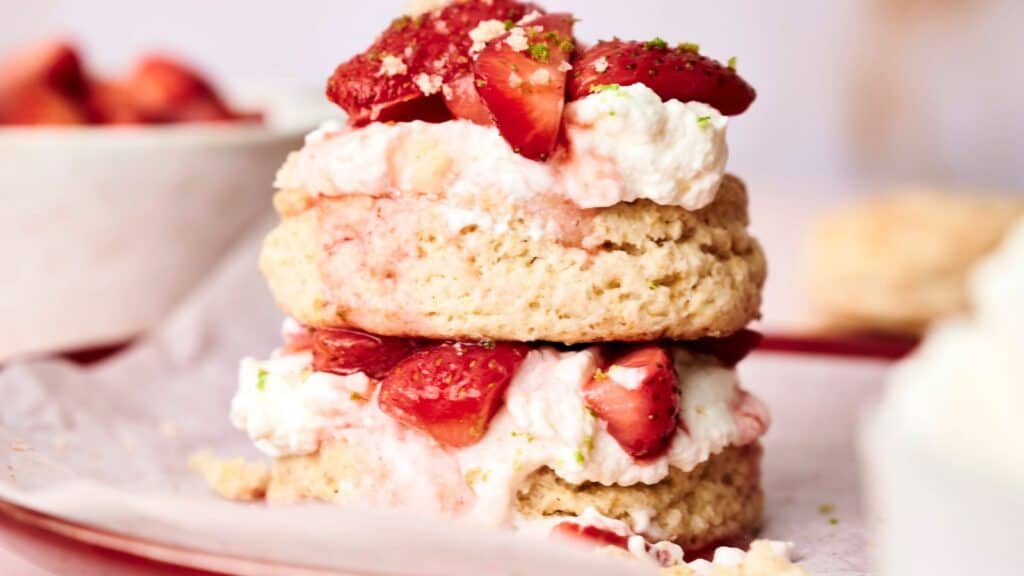
The structural difference between the two bases is significant. A biscuit holds its form against macerated strawberries, which release a considerable amount of liquid. Sponge cake absorbs that liquid and loses its texture, collapsing into a uniform softness that flattens the contrast between pastry, fruit and cream. A buttermilk biscuit softens at the edges where the berries touch it while keeping its interior flaky. That contrast between a slightly savory base and sweet, acidic fruit is what the dessert is built around.
The whipped cream question
The whipped cream question is less about preference than proportion. Peak-season strawberries carry enough natural sweetness that heavily sweetened cream competes with the fruit rather than supporting it. Lightly sweetened cream is the better fit: it adds richness while letting the fruit carry the flavor.
Stabilized whipped cream, typically made with mascarpone or cream cheese folded in, is a different consideration. It holds its structure for several hours, which makes it practical for outdoor serving or advanced preparation. The trade-off is a slightly denser texture that shifts the dessert’s balance. For same-day service with peak-season fruit, that density is unnecessary. For anything involving heat, travel or a time gap between assembly and serving, it is the more reliable choice.
The classic and the upgrade
The classic build is three components held in the right proportions: a biscuit with enough buttery richness to stand up to the berries, macerated fruit with enough acidity and syrup to provide liquid without making the base soggy and lightly sweetened cream that ties the two together without overpowering either. What makes the classic work is restraint, not technique. Each element is at its best when it is not competing with the others.
The more interesting version of this dessert applies the same logic with a deliberate additional layer. Brown butter in the biscuit dough introduces a nuttiness that plain butter does not, deepening the base without changing its structure. A maceration that includes balsamic vinegar and cracked black pepper alongside the sugar adds complexity to the fruit without masking it. Balsamic has a documented ability to amplify a berry’s natural sweetness while its sharpness mellows during resting. Neither change reinvents the dessert. Both make the existing contrasts more pronounced.
Peak season still makes a difference
Year-round availability has not eliminated seasonality. If anything, it has made peak harvests easier to recognize when they arrive. As consumers pay closer attention to ingredient quality, recipes built around a specific moment in the growing calendar continue to stand apart. Strawberry shortcake remains relevant because it is at its best during a season that still matters.
Mandy Applegate is the creator behind Splash of Taste and seven other high-profile food and travel blogs. She’s also the co-founder of Food Drink Life Inc., a unique and highly rewarding collaborative blogger project. Her articles appear frequently on major online news sites, and she always has her eyes open to spot the next big trend.